
Every year the republic counts what its children inhale. Between January 6 and April 4, 2025, enumerators of the National Youth Tobacco Survey put their questions to 23,630 middle and high school students; the average response rate was 82.6 percent. The numbers, analyzed by researchers from the CDC Foundation and Rutgers University, appeared today in a Public Health Alerts report — a collaboration between NEJM Evidence and CIDRAP that exists to translate frontline observations into usable public health evidence.
The ledger reads this way. An estimated 13.4 percent of American students in grades 6 through 12 had ever used an e-cigarette — some 3.7 million young people nationwide — and 5.2 percent, or 1.4 million, were current users. Nicotine pouches, those small white sachets parked between lip and gum, had ever been tried by 4.1 percent and were currently used by 1.7 percent.
The vice, as everywhere, stratifies by age. Among high schoolers, 17.9 percent had ever vaped and 7.1 percent currently did; among middle schoolers, 7.2 percent and 2.6 percent. For pouches, 5.7 percent of high school students had tried them and 2.3 percent currently used them; in middle school the figures were 1.7 percent and 0.9 percent.
Flavors, and a screen that glows
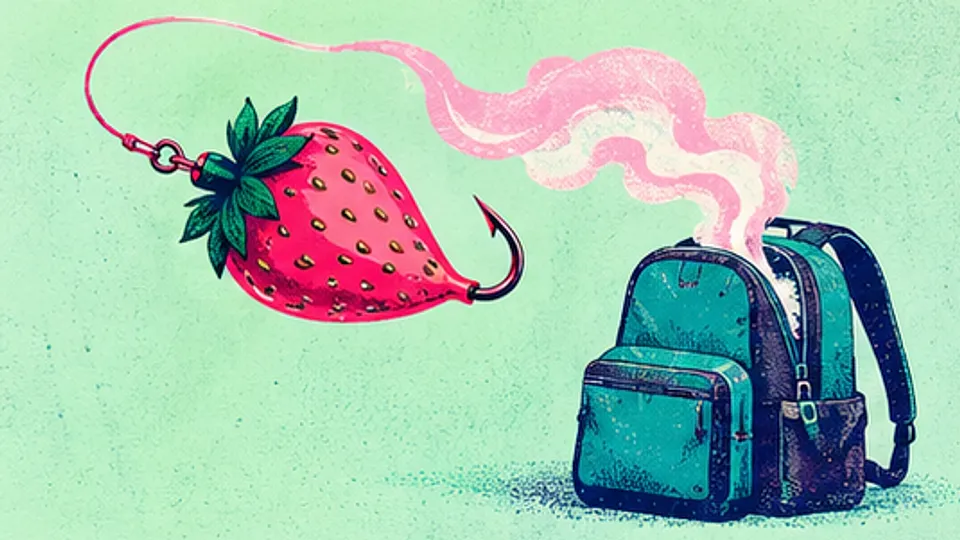
What draws the children is not tobacco but confection. Among current youth vapers, 89.4 percent used non-tobacco flavors: fruit led at 62.1 percent, followed by candy, desserts or other sweets at 32.8 percent, mint at 29.7 percent and menthol at 15.5 percent.
Nearly all youth who used e-cigarettes or nicotine pouches used flavored products, especially fruit-flavored e-cigarettes and mint-flavored nicotine pouches
So wrote the authors. Among current users of e-cigarettes, 27.5 percent vaped daily, and 66.3 percent used disposable devices. One brand towers over the rest: Geek Bar, named by 64.1 percent as what they had used in the past 30 days. The researchers note its novel features include a digital screen that animates during use, which may increase its appeal. The machine, having captured the child, puts on a small light show.
The pouch users, too, chose disguise: 90.8 percent used non-tobacco flavors, most commonly mint at 60.9 percent, then fruit at 25.0 percent and menthol at 18.1 percent.
A long decline that hesitates at the pouch
Read beside the older ledgers, the new numbers continue a retreat — at least for the vape. The FDA, announcing the 2024 survey, said current e-cigarette use had fallen from 2.13 million students, or 7.7 percent, in 2023 to 1.63 million, or 5.9 percent, in 2024 — the lowest level in a decade. This year’s 5.2 percent and 1.4 million extend that slide. The pouch does not retreat: the CDC’s 2024 report put current use at 1.8 percent and found no significant change from 2023; now it is 1.7 percent.
The merchants, for their part, do not stand still either. “Consistent with findings from 2024,” the authors wrote, flavored vaping and pouch use remain predominant among students who use the products, but “top e-cigarette brands did seem to change from 2024 to 2025, underscoring the quickly changing product landscape.”
Nicotine is addictive, and exposure during adolescence can harm brain development.
“Given that there are no safe tobacco products, preventing any tobacco product use among youth is an important public health objective,” the authors write. Their remedies are the old, unfashionable ones: continued surveillance, price increases, comprehensive smoke-free laws that include e-cigarettes, countermarketing campaigns, and comprehensive restrictions on the sale of flavored products.
The survey closes its notebooks in April; the factories in Shenzhen and the flavor chemists do not. Somewhere between the two dates sits a twelve-year-old, being counted.