
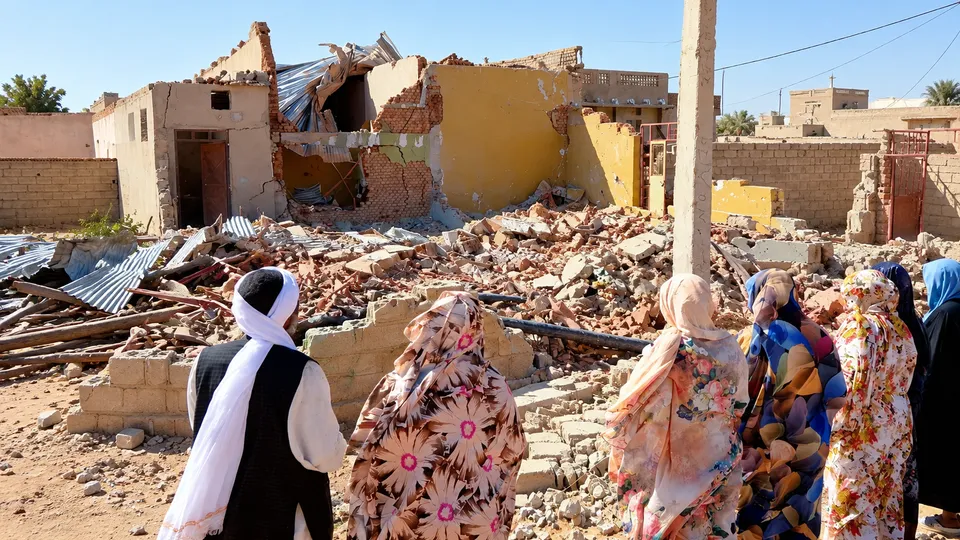
Imtidad Nasser is a neighbourhood east of Khartoum’s international airport. On Monday morning, 19 October, a drone fell on it. Three children died. They were two, four and six years old, according to Emergency Lawyers, a group that records violence against civilians in Sudan’s civil war. The group blamed the paramilitary Rapid Support Forces (RSF), called the strike a violation of international humanitarian law, and demanded independent investigations and accountability.
How the drone came to that house depends on who is telling it. The army’s anti-aircraft defences intercepted RSF drones near the airport, the Sudan Tribune reported, and one of them crashed into a home. A security source told the paper that two drones were shot down that morning over Burri and Nasser, the districts east of central Khartoum that border both the airport and the army’s general command headquarters. The children’s mother was critically injured and taken to intensive care. China’s Xinhua news agency put the dead at four, three of them children, citing a rights group and a medical source.
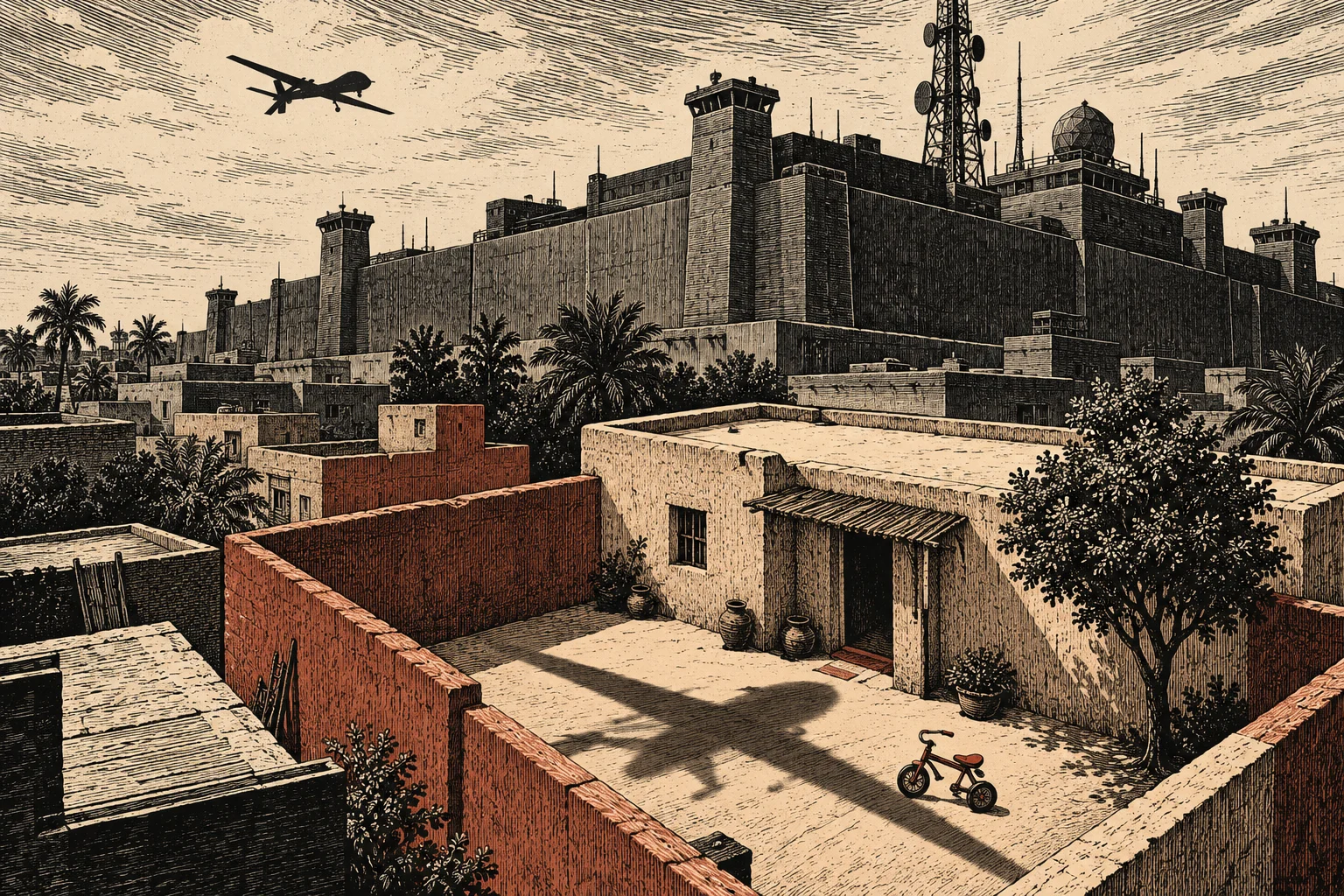
This is how a war of headquarters looks from below. The target is the general command; the people who die live next door to it.
After market day
The capital’s three were a small part of a larger count. Since Friday, Al Jazeera reported, citing medics and rights groups, more than 160 people have been killed in drone attacks in Sudan’s western regions.
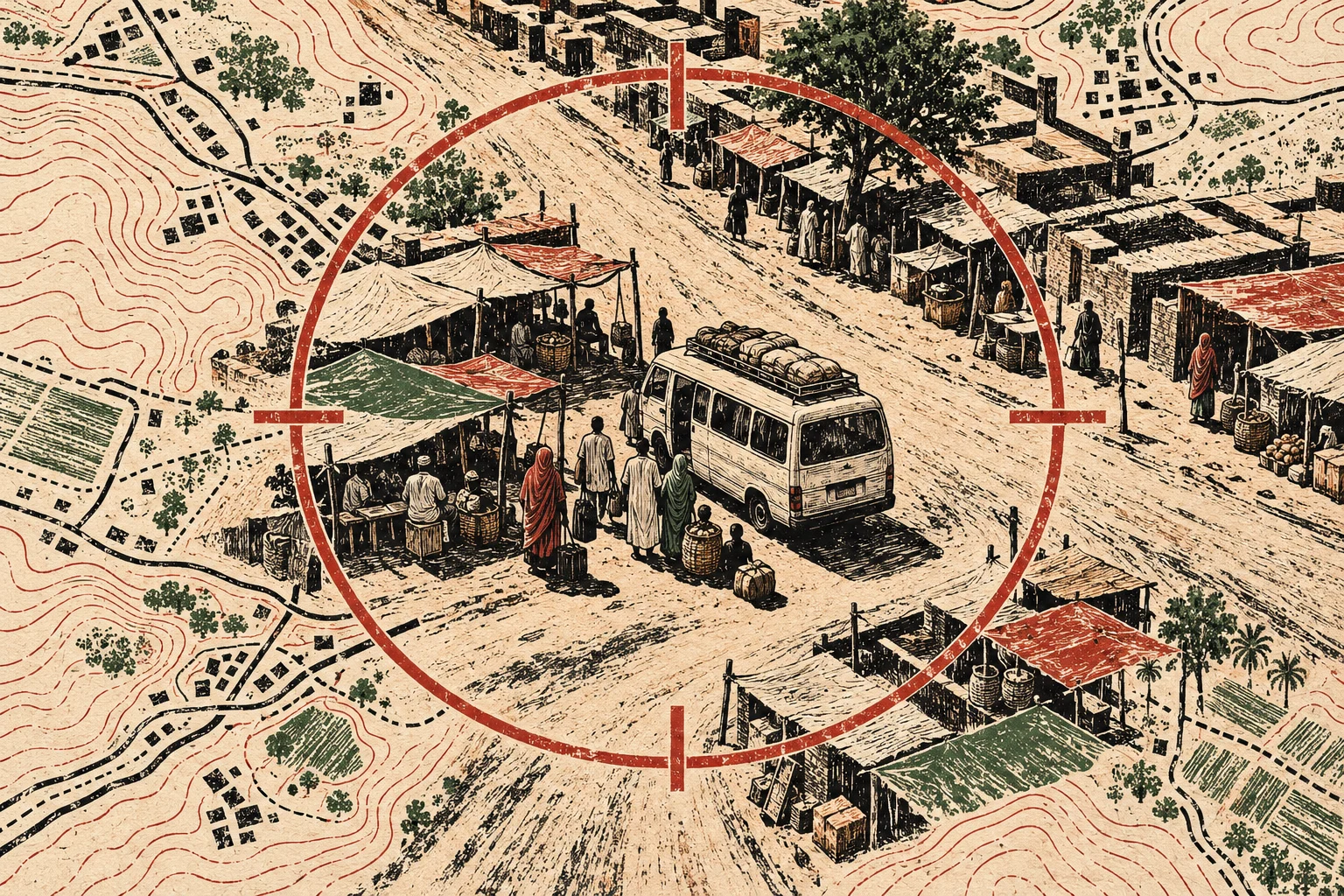
The worst of them came on Sunday evening in Al-Dibab, a town in West Kordofan held by the RSF. Market day had ended. Villagers had gathered at a transport hub beside the market to look for rides back to their homes. A drone struck them there. Residents and medical workers said 80 people were killed. Another 47 wounded were carried to the town of Al-Mujlad, and 30 of them later died, a medical source told AFP. Tasis, the administration the RSF has declared for itself, blamed the army, as did Emergency Lawyers. The Washington Post, which spells the town Al-Dabab, reported that army drones had also hit a market in al-Muglad on Saturday, killing civilians including women and children.
Kordofan has become the war’s centre of gravity. Through it runs the country’s main east-west road, which links RSF-held Darfur through El Obeid to the army’s Khartoum, and both sides want it. A market town with a bus stop on that map is no longer a place where people buy and sell; it is a coordinate.
Nyala, the Blue Nile, the dams
Early on Monday a drone hit Nyala, the RSF stronghold in South Darfur, killing 17 people, seven of them RSF officers, and wounding 23, according to medical and RSF sources. On Friday, by Emergency Lawyers’ account, an RSF drone struck a gathering of displaced people in Blue Nile province near the Ethiopian border and killed 41. The group called it “a humanitarian tragedy.”
On Sunday, in Gadaref state, a military source said air defences had intercepted several RSF drones aimed at the Atbara and Setit dams, about 420 kilometres east of Khartoum. The RSF did not immediately comment.
Read the list again and the shape of it emerges. The army is blamed in Kordofan; the RSF is blamed in Khartoum and on the Blue Nile. Each side has learned to fight with the same instrument, and the instrument goes where the other side’s people sleep, trade, wait for transport or flee. Drone use has grown in recent months, and civilian casualties have grown with it. A front line used to be a place. Now, it seems, any place can become one.
Two men and a merger
All of it began with a quarrel over an organisational chart. In April 2023 the army chief, Abdel Fattah al-Burhan, and the RSF commander, Mohamed Hamdan Dagalo, known as Hemedti, split over plans to fold the RSF into the regular army. In June of this year Hemedti was sentenced to death in absentia for war crimes. A verdict issued without the defendant present has stopped nothing; his forces fight on.
The war is now in its fourth year. The conflict monitor ACLED counts at least 59,000 dead, and aid groups believe the true number is higher. The UN says about 13 million people have been driven from their homes, a displacement aid agencies call the world’s largest humanitarian crisis. This year, by UN figures, 33.7 million people need food aid urgently, 17.3 million of them children, and some 825,000 children face severe acute malnutrition. Even the trucks that carry that food have come under attack from the air.
In New York the language came from the usual podium. On Monday Stephane Dujarric, spokesperson for Secretary-General Antonio Guterres, said the UN was “alarmed by the continued deadly drone strikes across the country that are killing civilians, including children.”
Three days before that, on Friday, the United States had asked the Security Council to press for a humanitarian truce and a wider arms embargo on Sudan. China and Russia opposed widening the embargo. That was the day the drone fell on the displaced in Blue Nile.