
Two iron helmets, three sets of torso armour, two neck guards and two waist guards have been recovered from a roughly 1,600-year-old tomb in Gyeongju, South Korea. Human teeth and part of a lower jaw, provisionally attributed to a teenager, point to a second person in the main burial chamber. The excavators estimate that at least two people may have been buried with the tomb’s principal occupant, but they have not established how any of those accompanying individuals died.
The National Gyeongju Research Institute of Cultural Heritage announced the find on November 20 after excavating Tomb No. 2 in the Hwango-Inwang B district, Arkeonews reported. The fourth-century tomb predates the large stone-mounded wooden-chamber tombs associated with Silla royalty. It therefore records elite burial practice before monuments such as the fifth- and sixth-century Hwangnamdaechong and Cheonmachong mounds, which stand in the same district.
Two chambers, built before the great mounds
Silla, traditionally founded in 57 BC, competed with Goguryeo and Baekje among Korea’s Three Kingdoms. It brought much of the Korean Peninsula under its control in the seventh century and lasted until AD 935. Its later elite burials are known for gold crowns, metalwork and rich assemblages of grave goods. Tomb No. 2 supplies an earlier comparison: wood-built chambers rather than the monumental mounds.
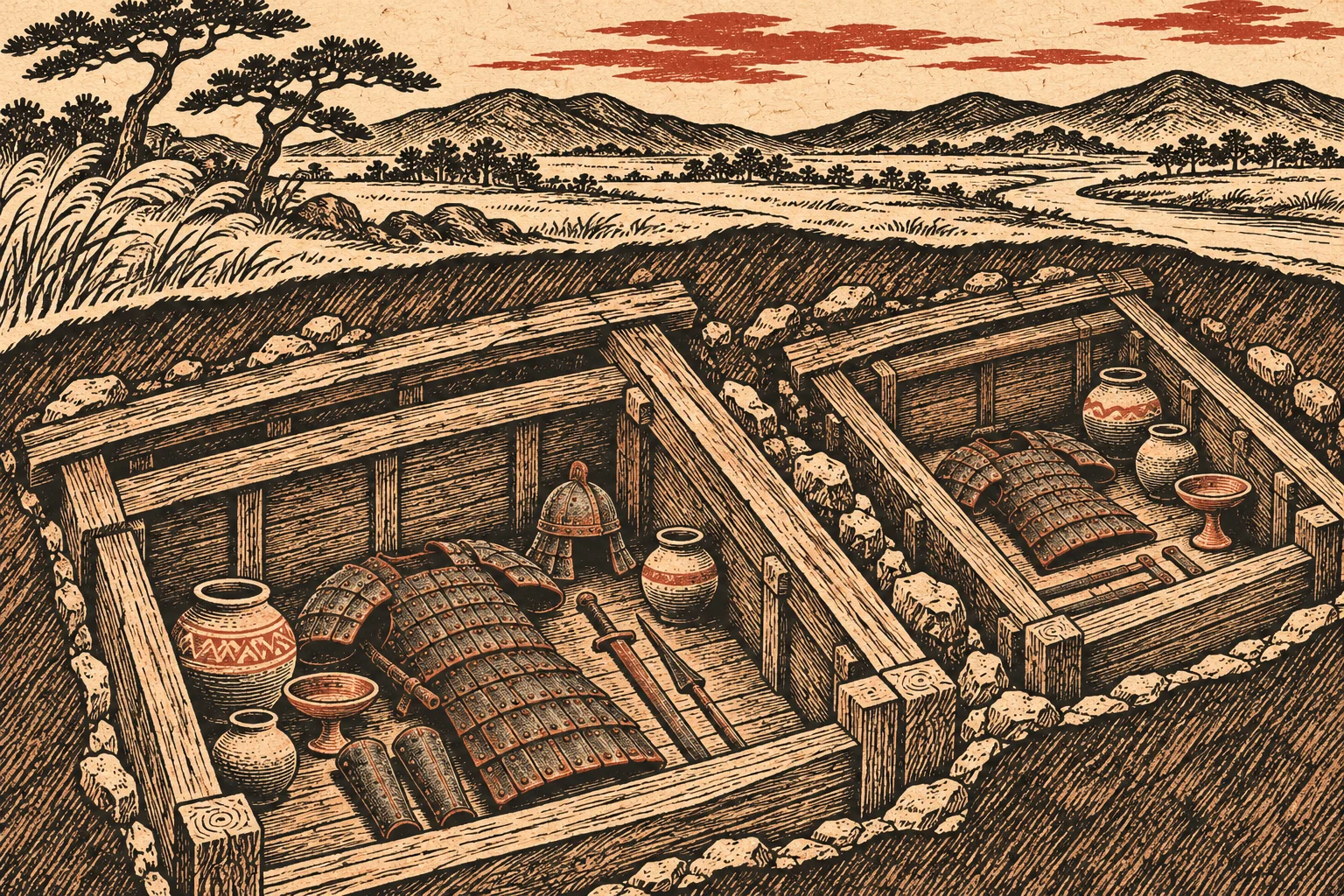
The builders dug separate pits for the two wooden chambers. The main chamber measures 6.8 metres by 3.8 metres, a floor area of about 25.8 square metres; the secondary chamber measures 5 metres by 3.3 metres, or 16.5 square metres. Crushed stone covered most of the main chamber’s floor, while larger stones divided its interior. Grave goods were distributed differently between the eastern and western parts of both chambers, evidence of deliberate placement rather than an undifferentiated deposit.
Plate and lamellar armour in one burial
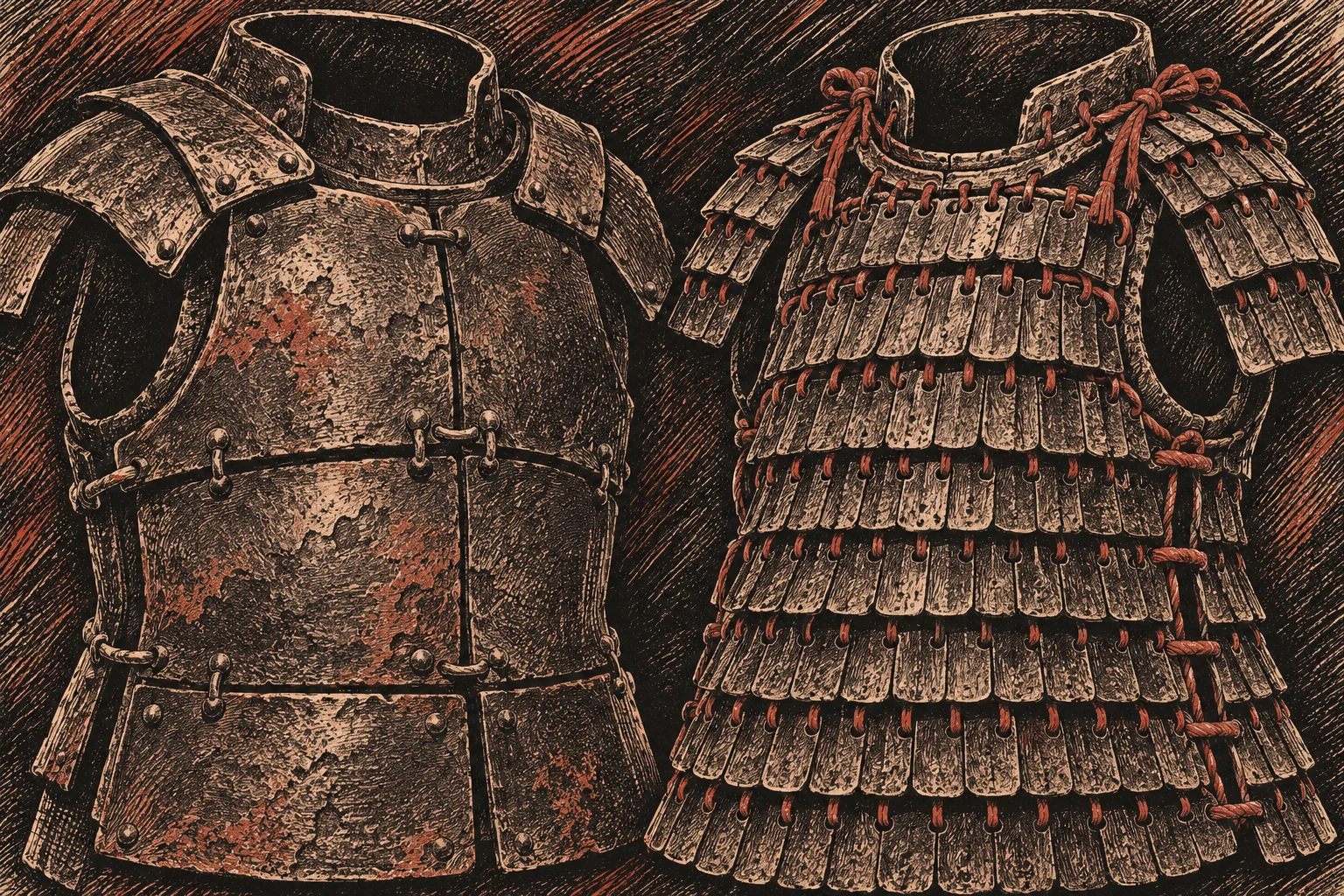
Much of the military equipment lay in the western secondary chamber. Both plate armour and lamellar armour were present and relatively intact. Plate armour uses comparatively large iron plates joined to protect the body. Lamellar armour uses many small plates laced together with leather cord or a similar material, trading larger rigid sections for a flexible assembly. This is the first time archaeologists in Gyeongju have found the two technologies together in this condition, giving them a direct comparison of fourth-century Silla construction methods rather than separate, fragmentary examples.
The secondary chamber also held a complete object assembled from interconnected iron strips. Only fragments of comparable objects had previously been found, and one interpretation identifies them as parts of a horse-saddle frame. Completeness does not establish function: that attribution remains provisional. The object can now be examined as a whole for evidence of its construction and use.
One jawbone and one empty space
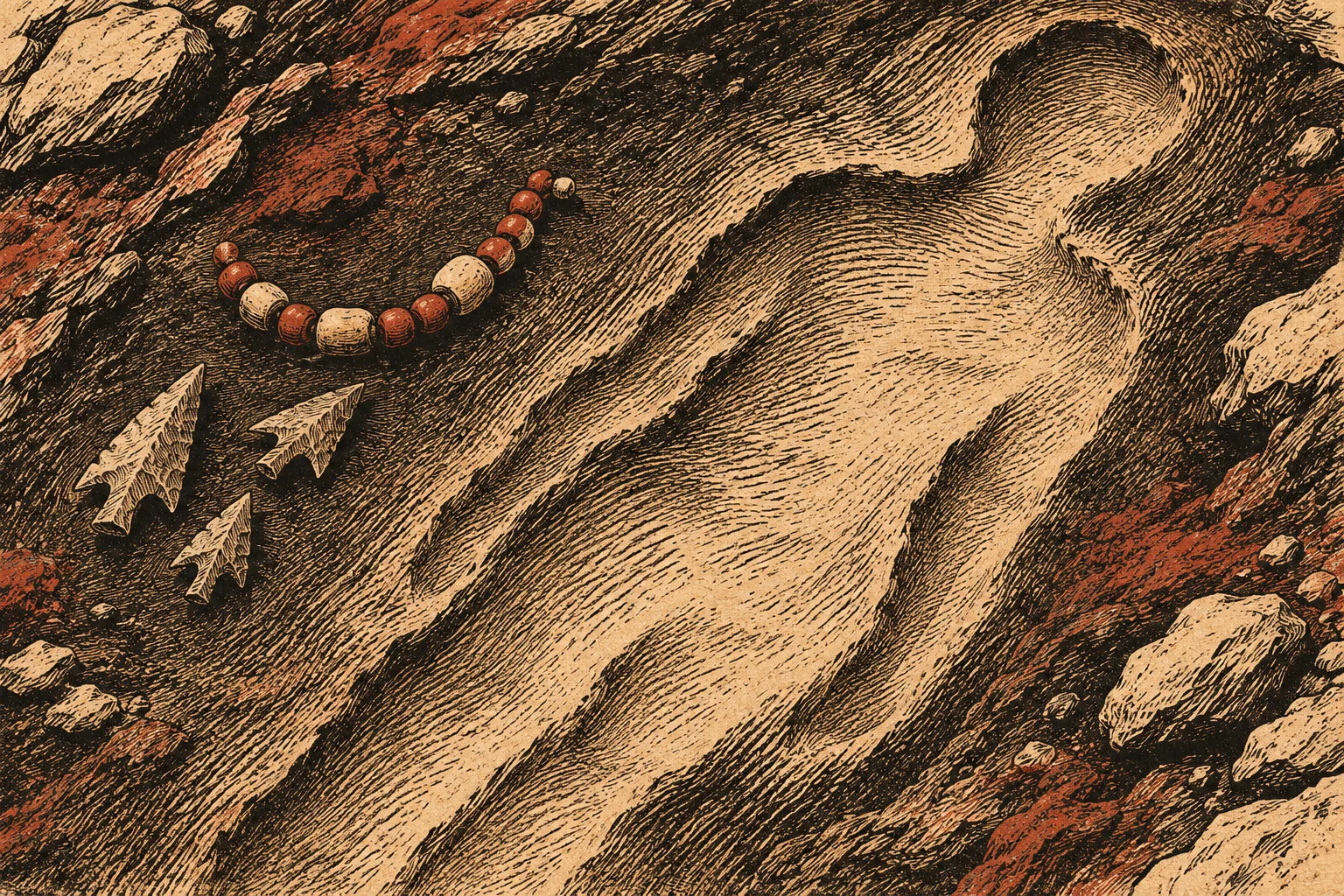
The western main chamber contained arrowheads, armour fragments, a gilded bronze sword-scabbard fitting, curved beads and multifaceted agate beads. Near the centre, excavators recovered the human teeth and lower-jaw fragment. Their preliminary assessment is that they belonged to a teenager; the announcement supplies no firmer age estimate or determination of how that person died.
The centre of the secondary chamber contained a separate space with no grave goods. Researchers think it may have held another person accompanying the main occupant. Taken together, the human remains, chamber divisions and object placements support the estimate of at least two possible accompanying burials. Korean archaeology calls the practice sunjang (순장), or retainer burial: interring other people alongside a deceased elite person. It documents hierarchy and funerary belief, although the empty space and the teenager’s remains do not by themselves demonstrate the manner of death.
Broken pottery and broken armour
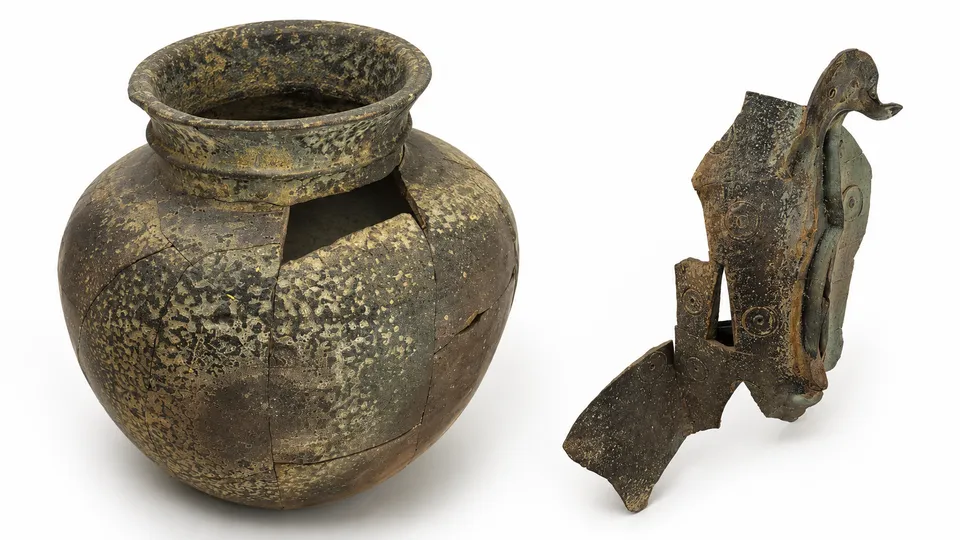
The upper main chamber yielded fragments of short-necked jars, armour and a cylindrical ceramic vessel stand decorated with a duck’s head. Similar fragments appeared in collapsed deposits and across the chamber floor. The excavators interpret that distribution as possible evidence that funeral participants deliberately broke the objects. The practice is called hwegi (훼기): intentional damage to pottery, weapons or other items during a ceremony. Its precise meaning here remains uncertain, but the armour fragments suggest that military equipment could be included as well as ceramics.
The excavation team will compare this fourth-century arrangement with Hwangnamdaechong and Cheonmachong to trace changes in chamber architecture, ceremony and the material expression of rank. The useful comparison is not just which objects became more elaborate, but which practices persisted: compartmentalised burial, weapons as status goods, accompanying burials and ritual destruction.
The institute plans to open the site to the public on November 23 and continue conservation and scientific analysis of the ironwork and burial evidence. The immediate unanswered questions remain narrow and testable: whether the strips formed a saddle frame, whether the empty compartment held another person, and whether further examination can say anything reliable about how the teenager died.