
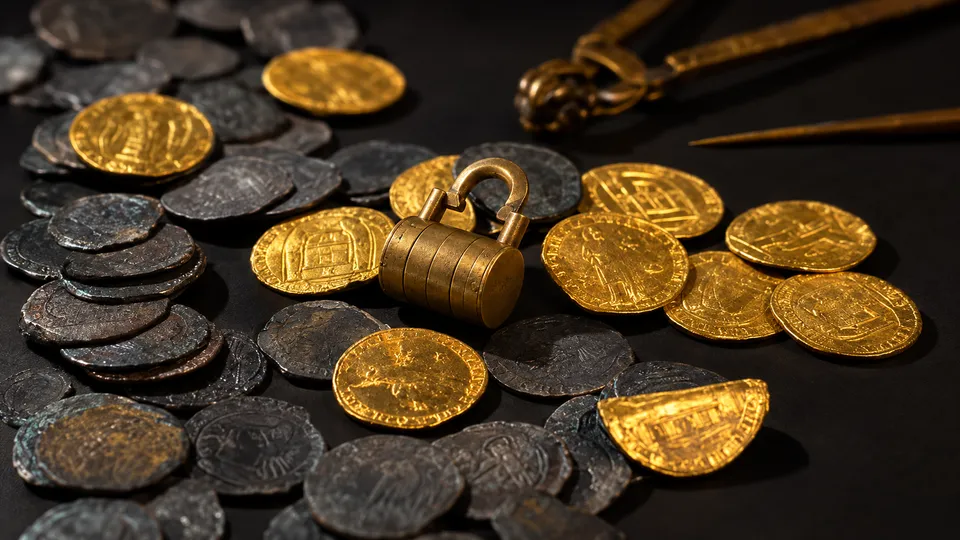
On the evening of 28 December 1583 the Ann Francis, a merchant ship bound home to England from Spain, sailed into a storm it could not outrun. The wind drove it off course and onto Margam Beach, near what is now Port Talbot in South Wales. It was carrying gold and silver coin, personal belongings, navigational instruments and merchandise. Somewhere in that cargo was a small brass lock with four lettered rings. It was set to a word its owner knew and nobody else did.
Finding that word took more than four centuries and an engineering laboratory. It was ANCE.
As Arkeonews reported, researchers from Cardiff University and Amgueddfa Cymru – Museum Wales found the combination by micro-computed tomography, which builds X-ray images into a three-dimensional picture of an object’s insides. Nobody forced the mechanism and the fragile artefact was not damaged. The lock opened. Nobody yet knows what it was meant to protect.
What the sand gave back
For centuries the beach kept the wreck. Then, according to Phys.org, dredging and storms stripped the sand off Margam Beach and the cargo began to come up. Over 21 years, from 1996 to 2017, a metal detectorist named Peter Hughes recovered most of what became the Ann Francis hoard. Museum Wales later acquired it. There were hundreds of objects, among them about 870 gold and silver coins from Spain, Portugal, Germany and the Americas, according to the museum.
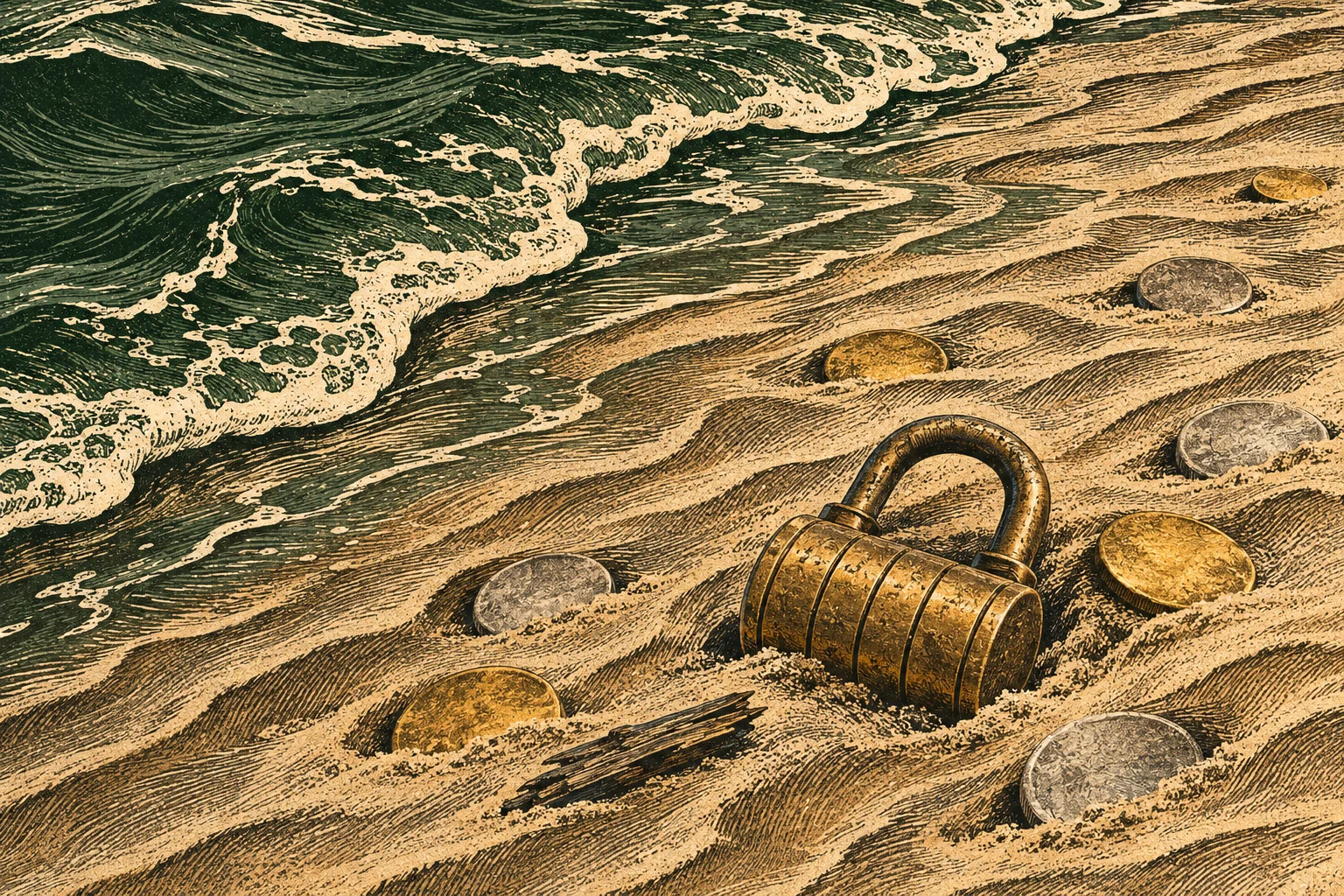
Hughes could see the lock was fine work. After four hundred years underground its rings still turned freely. But a ring that turns is not a lock that opens, and he never found the sequence. He also hoped to find more of the chest it had once closed.
The museum’s collection record calls it a type sometimes known as a Nuremberg lock. It stands 31.8 millimetres at its tallest and weighs 28.5 grams, and it belongs to a 16th-century tradition of letter-operated security devices. Merchants then, like merchants in Tartu’s medieval cloth trade before them, put a great deal of faith in small pieces of metal.
A laboratory built for bones
Dr David Williams is a research associate at the Musculoskeletal Biomechanics Research Facility in Cardiff University’s School of Engineering. His scanner normally looks at bones and other biological structures, and he had never put a padlock in it before.
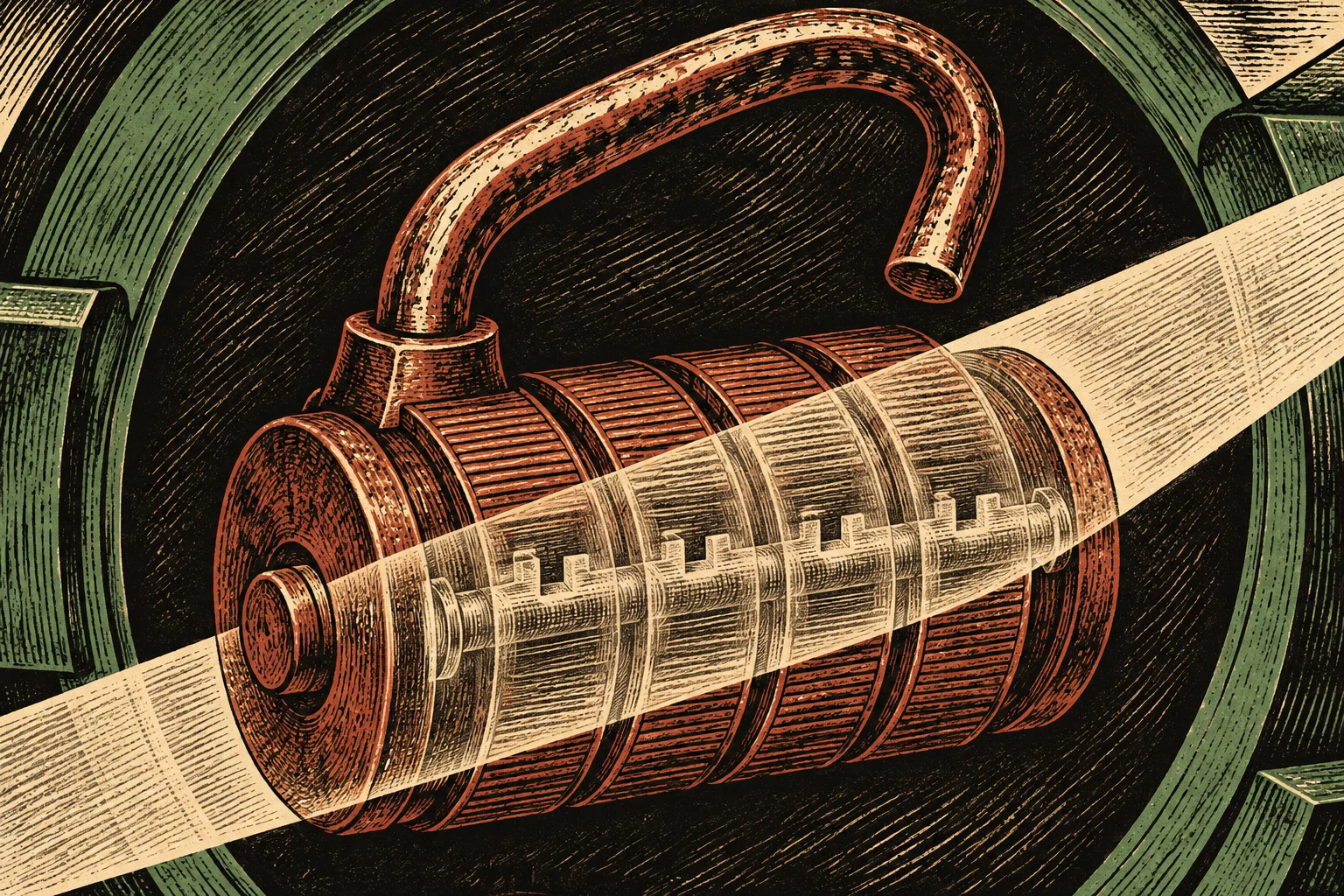
“Micro-CT scanning allowed us to look inside the lock without damaging it,” he said. The three-dimensional image showed how notches inside the lock lined up with letters on the rotating rings, and from that alignment he read off ANCE. The museum specialists still had to try it on the real thing. “I had to wait until later that evening for the museum team to test the combination, so getting the message that we’d cracked it was incredibly satisfying,” he said in the university’s announcement. “It’s not every day you get to solve a 400-year-old mystery.”
One might say, by way of reflection, that every lock is a small confession. Whoever buys one admits that he does not trust the people around him. The owner of this one had reasons.
Three chests, already broken
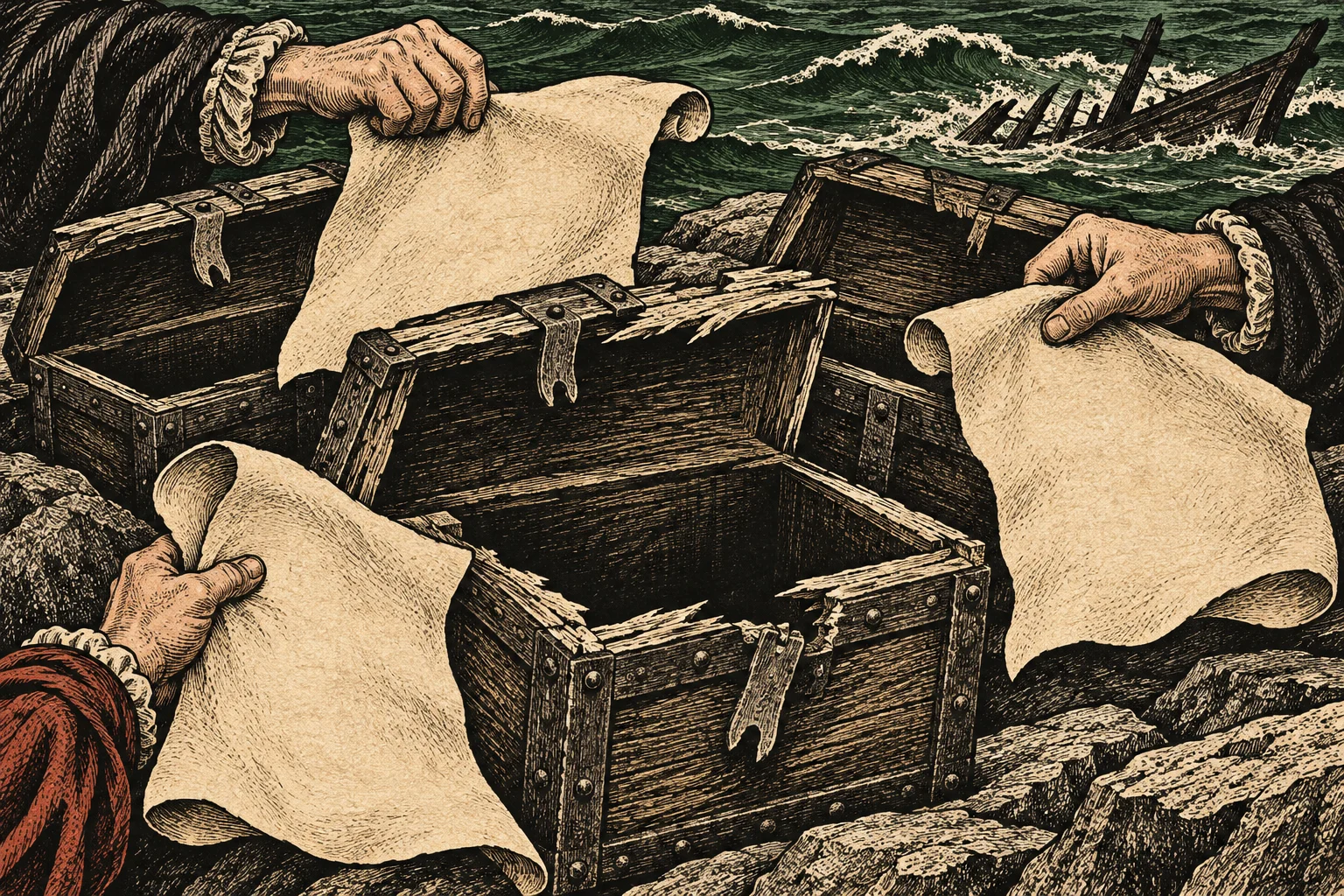
Historical records examined by Museum Wales show that the ship’s owner, Francis Shaxton, came from a merchant family associated with smuggling in Elizabethan England. Once the ship was lost, local authorities and landowners fought over who owned the wreck and what it carried. Court records describe accusations of organised looting. One inventory lists three chests whose locks had already been broken.
It is an old order of events. The storm takes the ship, and then the men on shore divide what the storm left, each holding a claim and a document. By the time the clerks reached the cargo, someone had already been at the chests. The researchers cannot say whether the brass lock belonged to any of those three. A reader may want to picture it as the one lock on that beach that nobody managed to break. That is only a picture. The evidence does not show it.
The word and the box
The lock was found near Spanish silver coins and two coin weights. That suggests it once fastened a small chest of money or other valuables. The researchers also allow that the chest held documents or textiles, which rot and leave no trace. Alastair Willis, senior curator for numismatics and the Welsh economy at Amgueddfa Cymru, notes that Elizabethan combination locks are known in Britain, but this one is in “exceptionally good condition”, and its tie to a precisely dated wreck makes it unique.
Then there is the word itself. A comparable lock in the British Museum opens with MARCI, which reads like a name. ANCE could be part of a name, could have meant something only to its owner, or could just be four letters picked to be hard to guess. “We are left wondering if the code meant something to its owner,” Willis said.
The coins around it show the age the lock belonged to. There were European currencies, and silver minted in the Spanish-controlled territories of the Americas, Atlantic wealth on its way through ports and merchants’ strongboxes. Some of it ended up in the sand at Margam.
The lock is now part of Tides of Treasure at the National Waterfront Museum in Swansea, on show until September 2027. Next to it are rare gold coins from the reign of Ferdinand and Isabella of Spain and a boatswain’s whistle. Its four rings still turn as freely as they did in Hughes’s hands, and anyone who reads the label now knows where to stop them.