
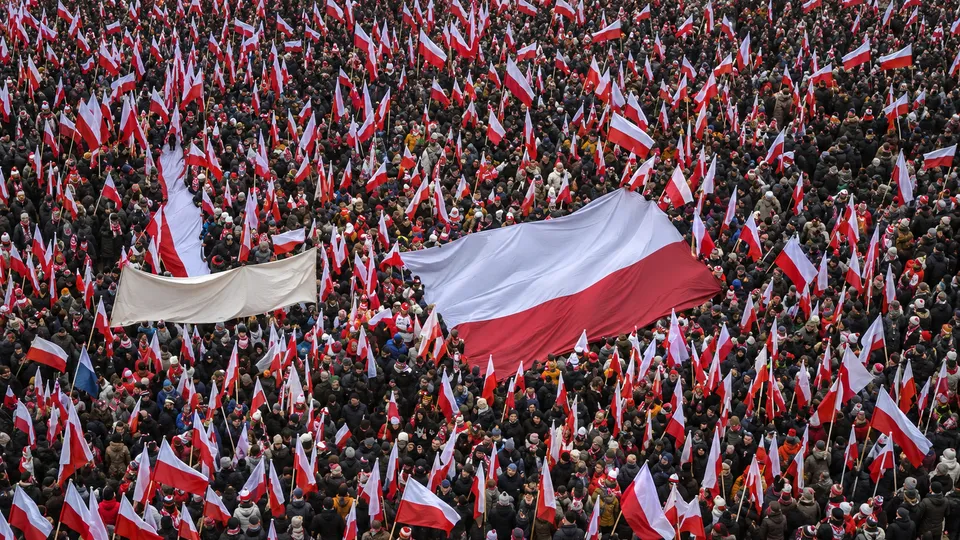
They came in their tens of thousands to central Warsaw on Wednesday, carrying the red and white flags of Poland through streets thick with police. It was November 11, Independence Day, and the capital held its annual nationalist march, Al Jazeera reported — but this year the country marched with a wound still open. Four days earlier, in Krakow, six people had been shot dead in one of the rarest events in Polish life: a mass killing.
On Saturday, a 24-year-old man drove into the Main Square, in the heart of Krakow’s Old Town, and opened fire on the crowd there, PBS News reported. Six people were killed and 15 wounded before police shot the attacker. By Tuesday, Reuters was describing him as the dead gunman.
Poland declared two days of national mourning from Sunday. Flowers and candles rose at a makeshift memorial on Slawkowska street, close to the Main Market, where an Al Jazeera correspondent’s dispatch recorded bullet holes in the window of a coffee garden. The defence minister called the attack an “act of terror.”
The argument over the gunman’s mind
Then came the quarrel that Poland always has with itself. Hours after the shooting, according to Reuters, Interior Minister Marcin Kierwinski said the attacker had been influenced by far-right ideology — igniting what became a bitter political dispute over motive. On Tuesday the justice minister offered his evidence: the gunman had visited websites about Anders Behring Breivik, the Norwegian mass killer, and there were signs he may have been influenced by right-wing extremism.
Prime Minister Donald Tusk responded by calling for restraint and urging unity after an attack linked to far-right ideology, as Al Jazeera reported. It is a strange unity that a state requests on the very day its nationalists fill the capital’s streets. The government asked the country to stand together; November 11 answered in its own way, with flags and boots, in the shadow of six coffins in Krakow.