
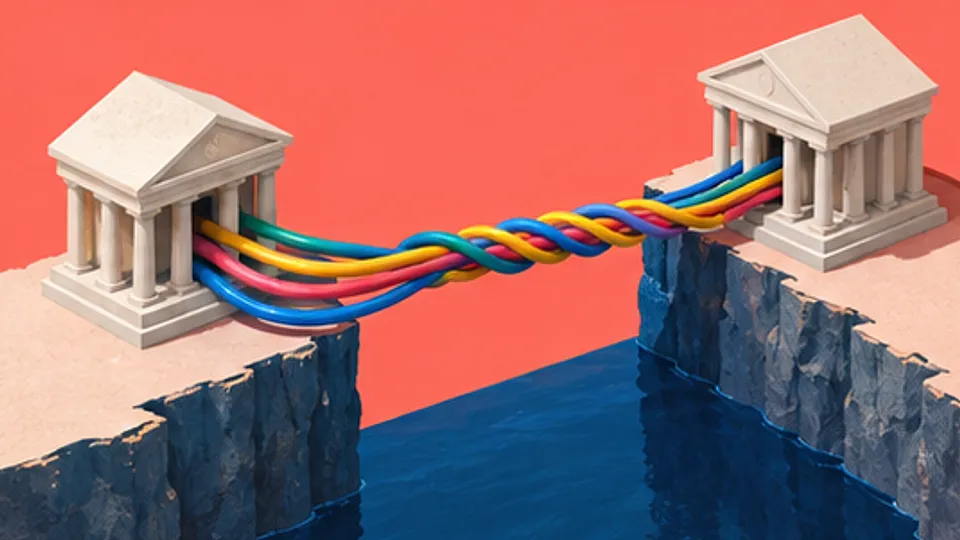
Five European payment services, including Spain’s Bizum and Italy’s Bancomat, said this week that they would combine into a single cross-border network, the continent’s most direct attempt yet to give consumers an alternative to Visa and Mastercard.
The new company, called the European Network for Payments, will be based in Madrid and connect the national systems of its founders: Bancomat, Bizum, Wero, operated by EPI Company, SIBS-MB WAY of Portugal and the Nordic service Vipps MobilePay. Together they serve about 130 million users in 13 European countries, more than 70 percent of the population of the European Union and Norway.
Rather than replace the apps Europeans already use, the venture will link them through a common technical and operational layer built on European standards and instant account-to-account transfers. The rollout will come in phases: cross-border person-to-person payments first, then e-commerce, then purchases in stores. Other European payment schemes could join later, the companies said.
“Fragmentation has long been the ‘biggest hurdle’ for European payment schemes,” said Martina Weimert, the chief executive of the European Payments Initiative. Shareholders will have to absorb operating costs in the early years, she said, while the company builds enough volume to earn its own fees.
Fernando Rodriguez, the deputy general manager for international expansion at Bizum, said ENP had already chosen a chief executive and was recruiting staff.
European policymakers have made payments sovereignty a priority as a fragmenting global order raises concerns about access to payment systems. The companies said the European Central Bank’s plan for a digital euro by 2029, essentially an online wallet guaranteed by the E.C.B. but run by private companies including banks, could eventually complement their project. In Ireland, consumers already have Zippay, which allows instant payments between banks using only a mobile phone number.
“The creation of the European Network for Payments reflects a growing focus on connecting the payment systems Europeans already use, rather than replacing them,” said Marcel Hörauf, a partner at the law firm Mayer Brown. Whether it amounts to real European payment sovereignty, he said, depends on how E.U. payment regulations develop, whether merchants accept it and whether member states back it politically.
Others were blunter. “These all require Google or Apple devices both by the seller and the buyer,” one Hacker News commenter, petcat, wrote. “I’m not sure that replacing Visa and MasterCard is really that big of a sovereignty move considering the pervasive dominance American mobile OS tech has.”