
On Sunday, 8 November, Israeli authorities released Abed Abou Shhadeh. They had held him for five days and charged him with nothing. As Al Jazeera reported, the journalist from Jaffa, a Palestinian citizen of Israel, came out with an account of his case that went well beyond him. The detention, he said, was part of “political measures” aimed not only at him “but to intimidate Arab society as a whole”.
Outlets spell his name in different ways: Abou Shhadeh, Abu Shehadeh, Abou Shahadeh. The state appears to have known exactly whom it wanted.
The night in Jaffa
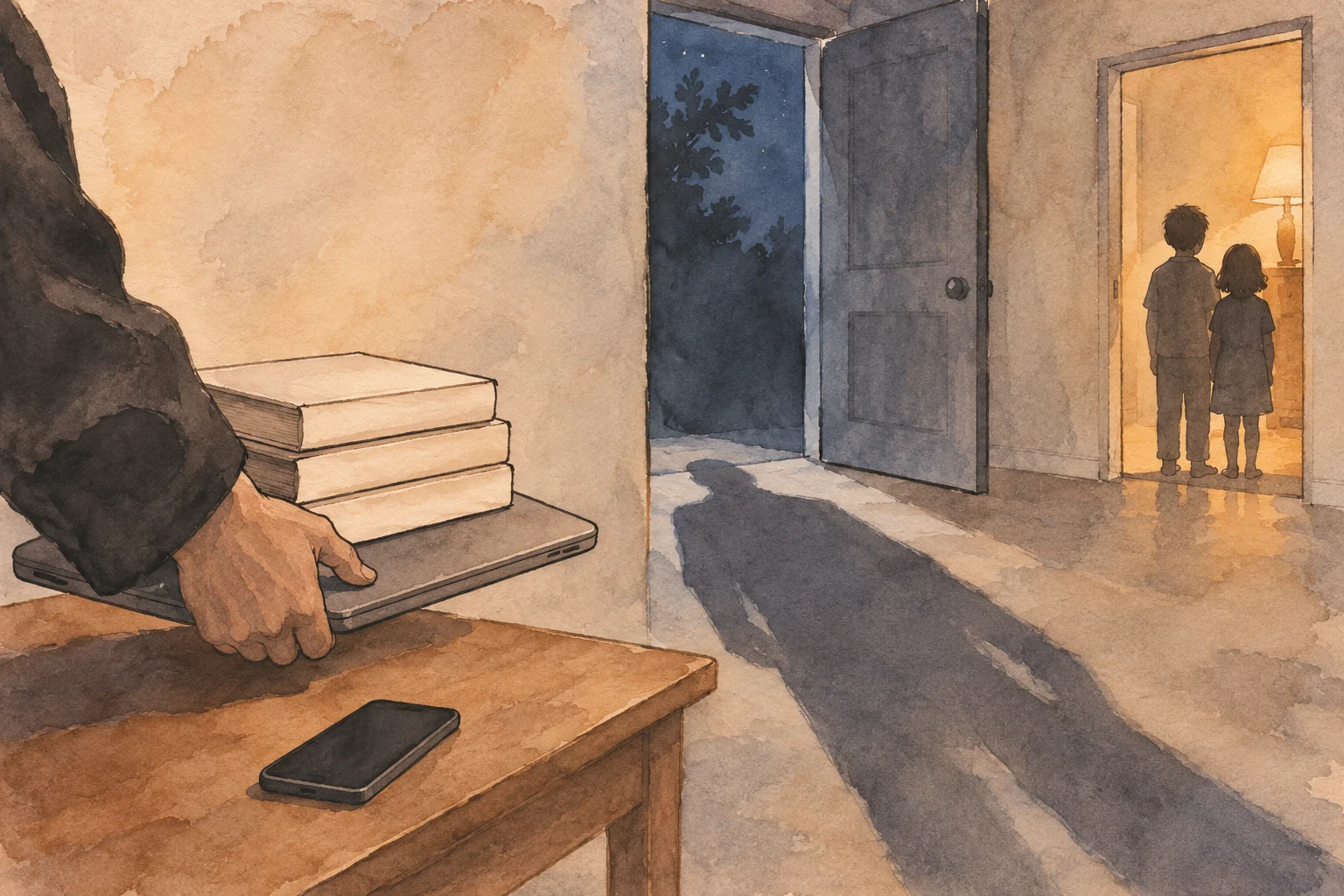
The arrest came late on Tuesday, 3 November. According to his lawyer, fifteen Israeli security officers entered his home in Jaffa in the middle of the night. They took his electronic devices. They took his books. His two children watched.
Only later did his defence learn where he had been taken: an interrogation facility of the Shin Bet, Israel’s internal security service, in Petah Tikva, near Tel Aviv. Jewish Currents described the police operation as a late-night raid on a working journalist, a man who had appeared as an analyst on Al Jazeera and on al-Midan, a podcast for the Arab48 website.
The evidence was a conversation
The suspicion against him was “contact with a foreign agent”. According to Adalah, the legal rights group on his defence team, the authorities suspected he had taken foreign money to support Israel’s Arab voters. The case reportedly rested on a public conversation he held in Qatar with Azmi Bishara, the Palestinian intellectual and former member of the Knesset. Adalah said the police raised no allegation against him other than that interview, which dealt with the Israeli election campaign and with Palestinians and which anyone can still watch. The group called the case “a campaign to silence Arab journalists and political activists”, The New Arab reported.
So the material evidence came down to a recorded interview, published and available to anyone. It was enough for a night raid, a cell in Petah Tikva and an extension in court.
That extension came midweek, when an Israeli court kept him in custody until Sunday. Al Jazeera reported on 5 November that dozens of protesters, among them Israeli left-wing activists, had gathered outside the Tel Aviv Magistrate’s Court to demand his release. Hassan Jabareen, Adalah’s founder, put it plainly: “There is no evidence that [Abou Shhadeh] received money from anyone.”
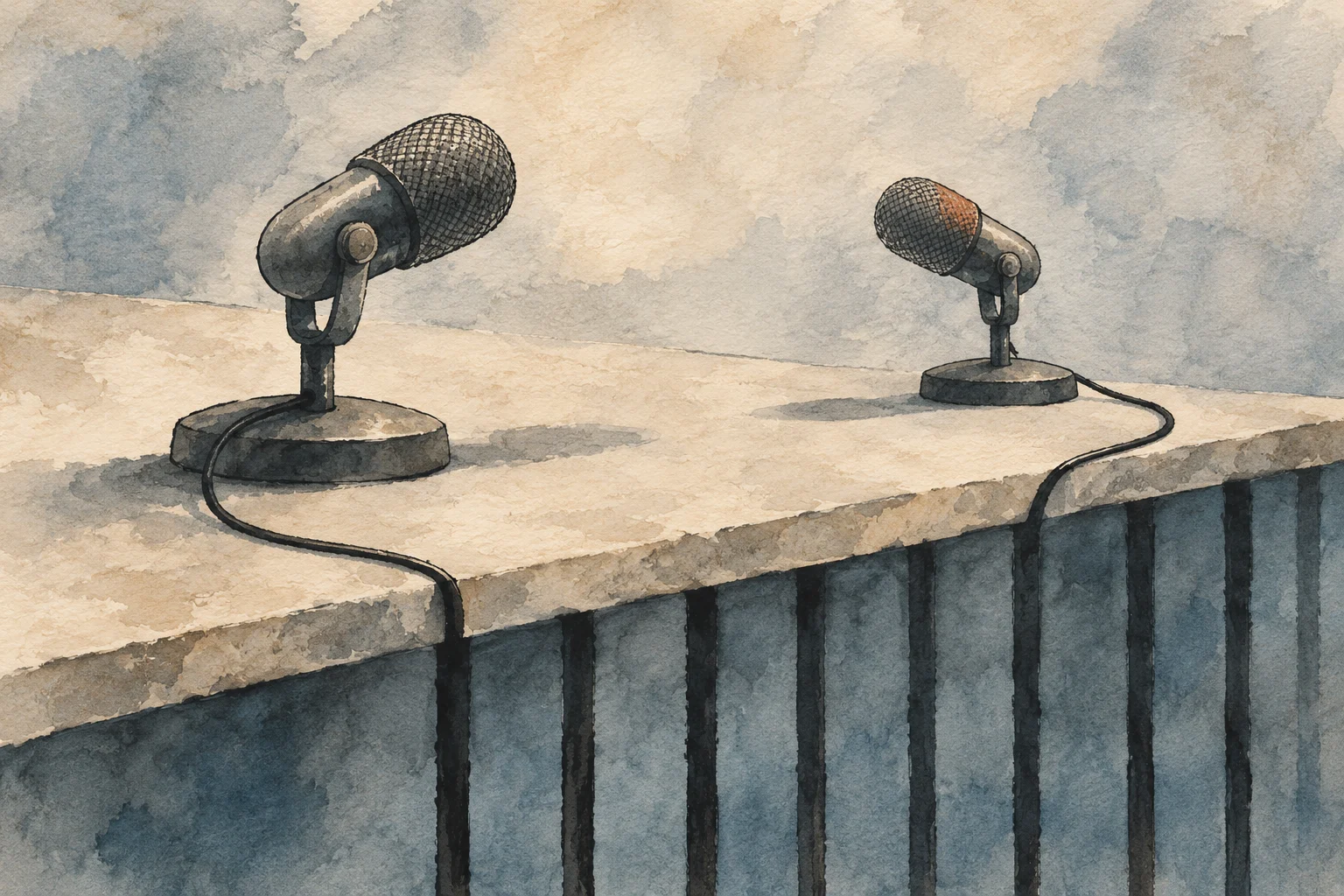
His lawyer, Hadeel Abu Salih of Adalah, said the subjects he had discussed were much like those covered every day in Israeli media, and that by Thursday it was clear the police lacked “any evidence in this context”. The difference, she argued, was the speakers. “This is now being criminalised only because the speakers are Palestinians,” she said. “They were trying to say that he’s not a journalist, that he’s a political counsel.”
In this the case follows an old bureaucratic method, offered here as reflection rather than finding. A power that cannot ban a profession can try to reclassify the person. Call the journalist an adviser and his words become an act, and an act can be investigated.
The ballot behind the cell
The arrest came during Israel’s 2026 election period, as right-wing figures were calling for a crackdown on Palestinian parties after the vote. Jabareen called the detention “part of the campaign against the votes of the Arabs and Palestinians in Israel”, an attempt to “delegitimise their votes”. The authorities, he said, had tried to use the case to suggest that Arab citizens take part in Israeli elections illegally.
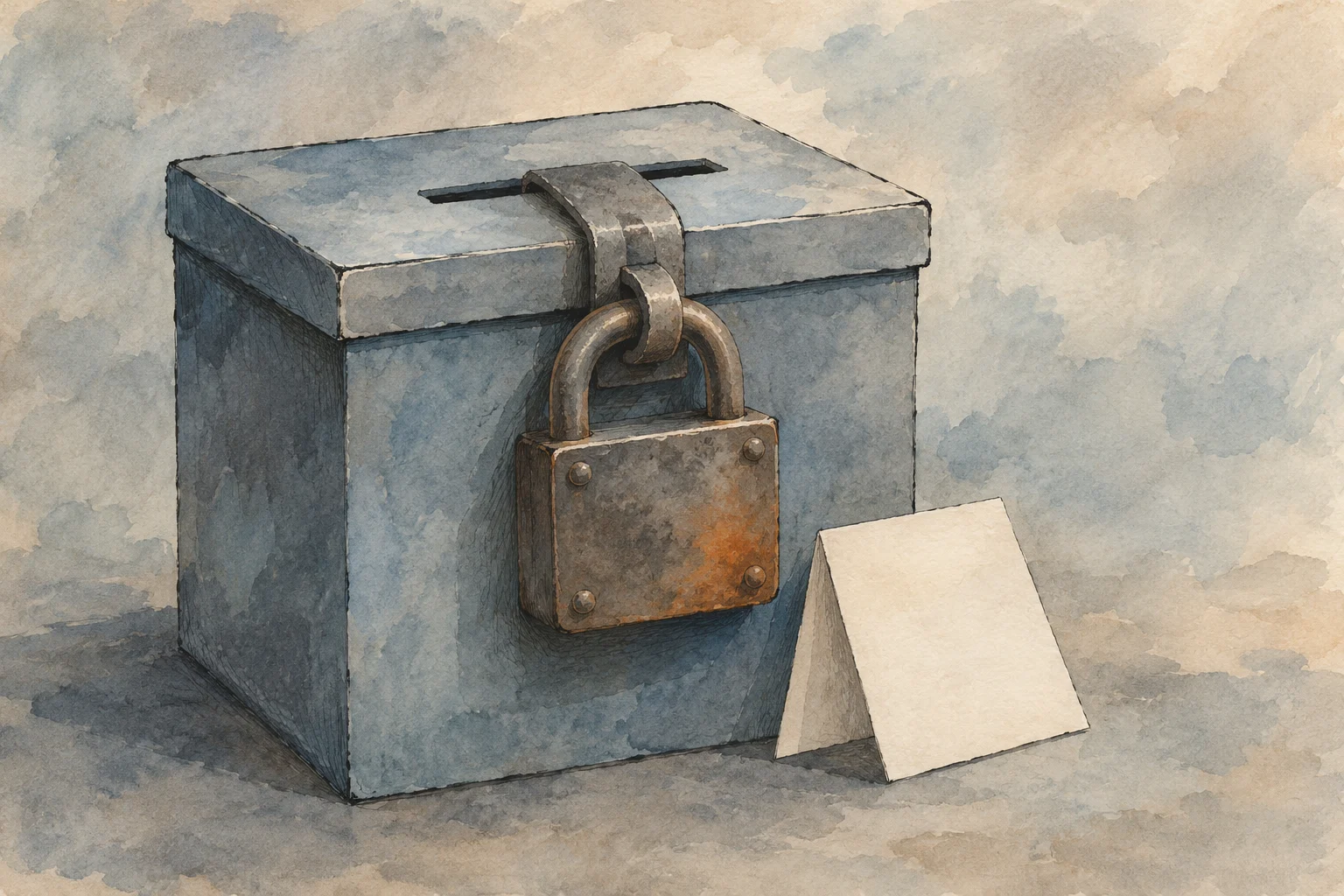
Sami Abu Shehadeh, who leads the Balad party and is reported to be a relative, said the detention belonged to a right-wing effort to discredit the election results. In October he had himself withdrawn from the race after a warning from the Supreme Court.
The case also reached Washington. According to the Jerusalem Post, three congressmen-elect, Brad Lander of New York, Daniel Biss of Illinois and Scott Wiener of California, wrote jointly to Israel’s ambassador to the United States, Yechiel Leiter, to raise concerns about the detention, which they said appeared to be linked to the Bishara interview. Lander knows something of Israeli custody himself: in October he was detained with dozens of rabbis at an olive harvest in the occupied West Bank.
Afterwards
Abou Shhadeh said he would go on working as a journalist. The right answer to what had been done to him, he said, was to affirm “that we are on the right side, that our path is the path of truth.”
The state has not explained why it held him for five days. His devices and books were seized that Tuesday night, and the reports do not say whether he has got them back. Jabareen offered his own account of the journey that started it all: “He travelled to Doha as a journalist … he came back as a journalist.”