
A federal intelligence center warned police in California that city council meetings about Flock cameras could draw extremists, and told officers to watch for “emotional confrontations” from residents opposing the surveillance, as 404 Media reported on Tuesday.
The bulletin went out in July from the Orange County Intelligence Assessment Center, a government-run fusion center, to police departments across the state; 404 Media obtained it under a public-records request. It concedes there have been “no specific and credible threats found” tied to such meetings, then tells police to keep watching anyway. “City-hosted events (i.e., city council meetings) may be viewed by extremists as a desirable target,” it reads. “Partners are encouraged to review for signs of suspicious activity.”
Suspicious activity, by the document’s definition, includes “excessive clothing,” “unusual questions or behavior,” people loitering and unattended bags. It goes on to catalogue what could “present public safety risks” at the meetings: turnout exceeding room capacity, counterdemonstrations by camera supporters, traffic and parking congestion, “media presence,” “social media amplification” and disruption of council business, from coordinated chanting to refusing to yield the podium. Heated disagreements, it says, “could escalate into minor physical altercations.”
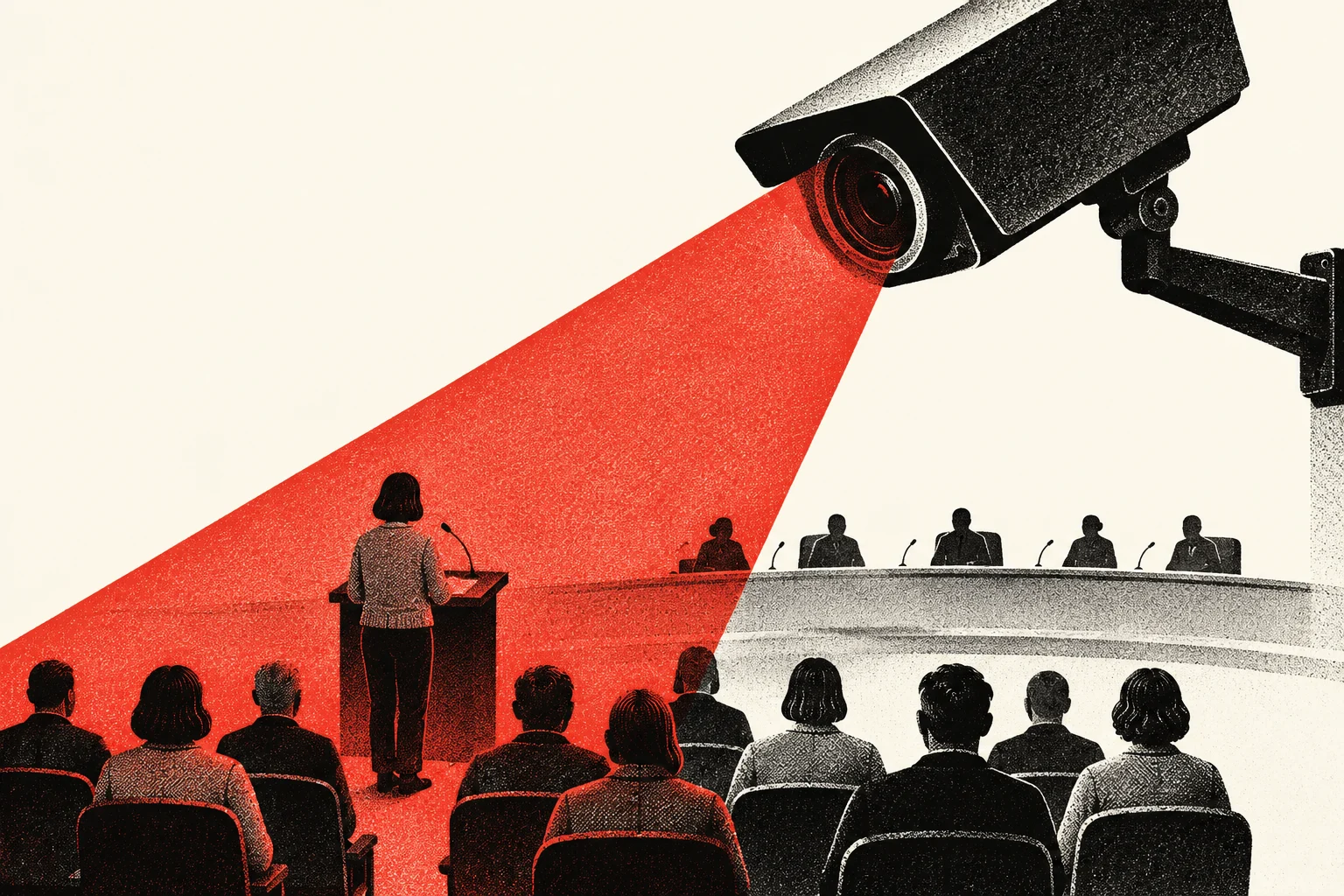
The bulletin raises the possibility of “extremist-related activity” while allowing that “there is no publicly available information indicating extremist involvement.” It warns that genuinely concerned residents may show up in large numbers “because the issue involves surveillance, privacy, immigration concerns, and public safety,” and says any credible threats toward officials, staff, organizers or attendees should be “treated as a significant public safety concern and evaluated promptly.”
The Los Angeles Police Department’s decision to end its Flock contract gets particular attention. Anti-surveillance organizers may treat it as a “high-profile local example that could increase turnout and place additional public pressure on City Council members” to cancel their own contracts, the bulletin says.
The warning resembles earlier ones obtained by 404 Media and other journalists about the DeFlock movement and the vandalism of Flock cameras. 404 Media has also documented a string of arrests at council meetings about Flock and data centers in which people were taken into custody for speaking slightly too long, talking out of turn or cursing at council members, none of them illegal acts.
Flock’s license-plate cameras now appear across the country in large numbers: a researcher’s recent map counted about 300,000 devices.
The bulletin closes by nodding to the rights at stake. “The OCIAC recognizes that Americans have constitutionally protected rights to assemble, speak, and petition the government,” it reads. “The OCIAC safeguards these rights and only reports on First Amendment protected activities for operational planning in the interest of assuring the safety and security of the demonstrators and the public.”