
A Florida Atlantic University neuroscientist has received a $448,664 grant from the National Institutes of Health to study a newly identified type of cell that produces myelin, the insulation around nerve fibers, the university announced on Friday.
The researcher, Laura Fontenas, Ph.D., an assistant professor of neuroscience in FAU’s Charles E. Schmidt College of Science and a member of the FAU Stiles-Nicholson Brain Institute, will investigate cells her team recently found in zebrafish and named motor exit point glia. The work could inform research on diseases in which myelin is lost, including multiple sclerosis.
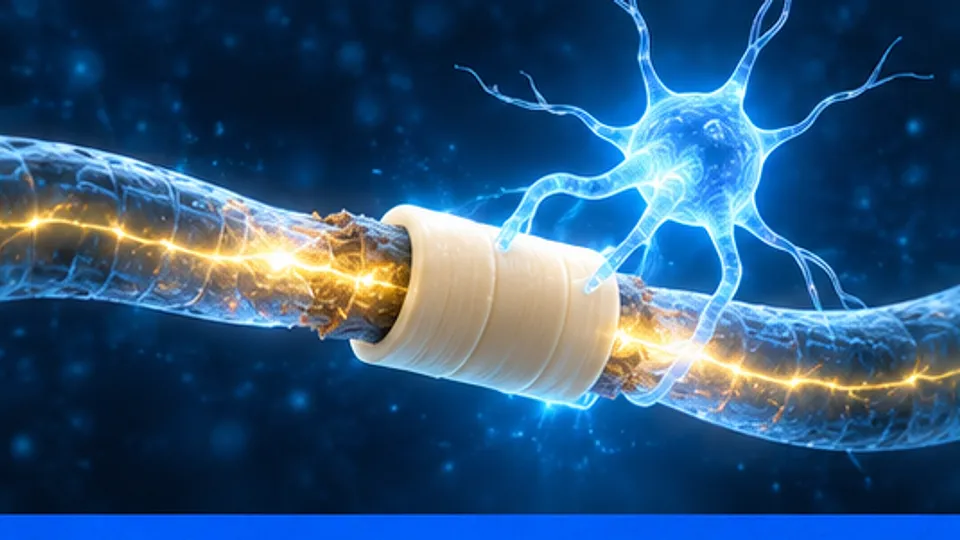
Myelin wraps nerve fibers in the brain, spinal cord and peripheral nerves, and damage to it disrupts the electrical signals those fibers carry. In the central nervous system, myelin is made by cells called oligodendrocytes; in the peripheral nervous system, by Schwann cells. Motor exit point glia appear to straddle that divide. They originate in the spinal cord, then migrate into the peripheral system and produce myelin around motor nerves.
The project, titled “Molecular mechanisms underlying motor exit point glia function,” will test whether the boundary between the two systems is more flexible than scientists had assumed. Dr. Fontenas’s team has three objectives: identify the genes that control the cells, determine whether peripheral myelin-making cells can migrate into the spinal cord and repair damaged myelin there, and test whether central-nervous-system cells can function on peripheral nerves.
The question matters in multiple sclerosis, where myelin is damaged in the brain and spinal cord while peripheral myelin remains intact. If healthy myelin-producing cells can be redirected to damaged areas, that could open a route toward repair.
“I’m excited to receive this NIH grant because it gives us the opportunity to understand a completely new population of glial cells,” Dr. Fontenas said in the university’s announcement. “We hope this work will reveal fundamental mechanisms of glial cell migration and myelin formation that other scientists can use to better understand nerve repair.”
The lab will combine live time-lapse imaging, reverse genetics, gene-expression analysis and newly developed transgenic zebrafish lines to track the cells as they migrate, meet motor axons and lay down myelin.
The grant also carries a teaching component. Undergraduates in South Florida will use the project’s molecular markers, reporter lines and genetic tools to build their own hypothesis-driven research projects in neuroscience.
“We hope to uncover new mechanisms that could ultimately help scientists develop better approaches to repairing myelin damage,” Dr. Fontenas said, “while also giving students invaluable opportunities to contribute to this important area of neuroscience research.”