

The Federal Aviation Administration said on Tuesday that its artificial intelligence traffic-planning tool now covers the airspace of all 22 en route control centers, two months after a debut over Washington.
The system, called SMART, for Strategic Management of Airspace, Routes and Trajectories, has helped reroute 180 flights since it went live in airspace around the capital on Sept. 21, the agency said. By the FAA’s count, each of those flights saved an average of 10 minutes and almost 80 gallons of fuel. Those are the agency’s own figures, and it is betting they will hold up across the country, as Jeremy Hsu reported for Ars Technica, which put the system’s cost at $875 million.
“After a successful initial rollout to the National Capital Region in September, the FAA will now use SMART in the airspace of all 22 centers across the country to reduce delays, reduce fuel consumption and improve the travel experience for the flying public,” the agency said in a statement posted on Nov. 10.
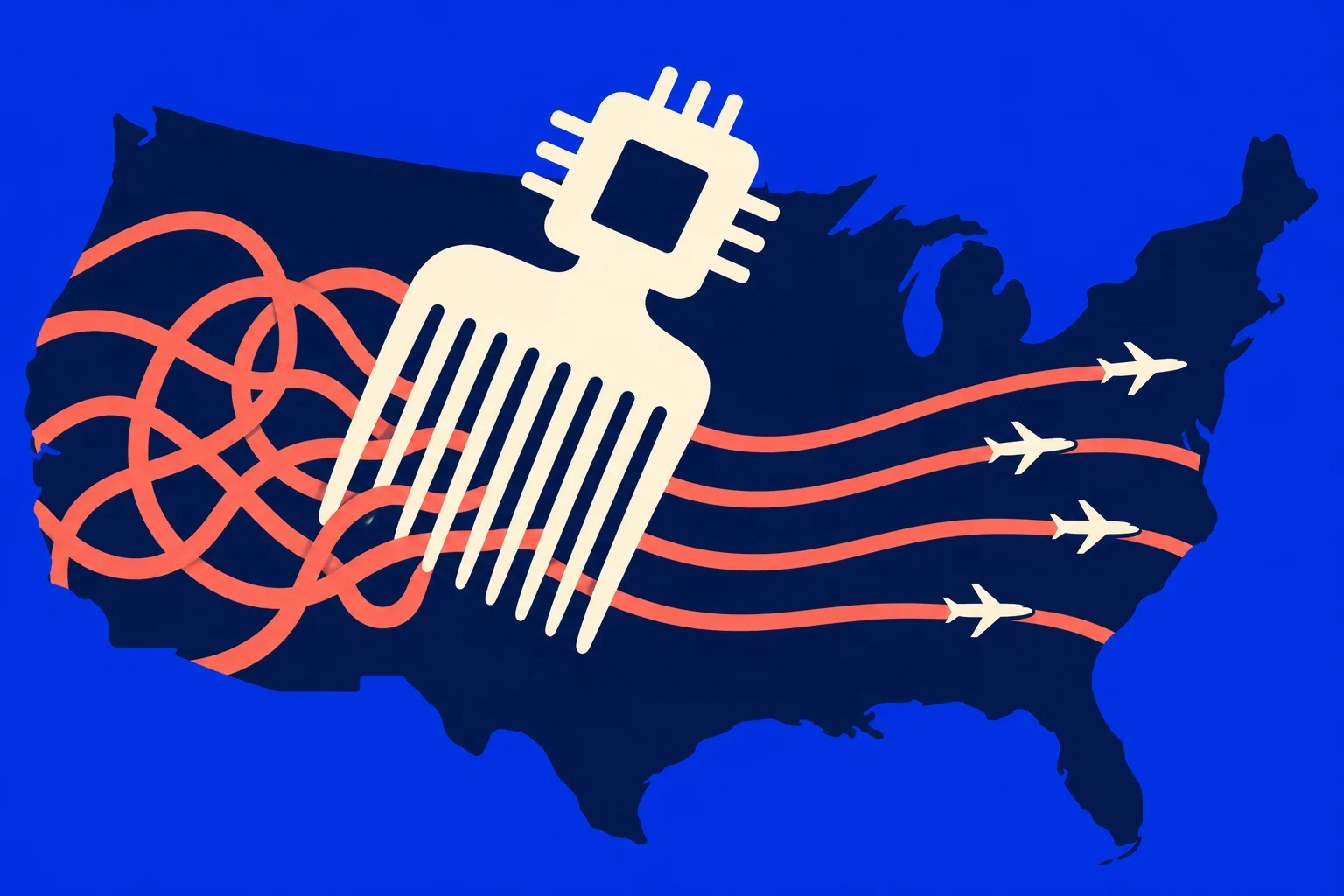
The FAA told FLYING magazine the same day that the tool was “now active in the airspace of all of the nation’s air route traffic control centers.” Transportation Secretary Sean Duffy and the FAA administrator, Bryan Bedford, introduced it at a new center in Washington, and Mr. Duffy has pointed to the 180 rerouted flights as proof that it cuts delays.
According to an FAA fact sheet, SMART is cloud-based and pulls together “weather patterns, flight paths, traffic flow and controller staffing metrics” to forecast where traffic will bunch up. It then recommends schedules, picks routes and sets the order in which planes should arrive.
It doesn’t give orders to pilots. A team of FAA specialists in Washington has to sign off on each recommendation before it goes out to air traffic facilities, the agency said, and controllers keep the final say over what reaches the cockpit.
Airline executives have backed the expansion. The people who would act on the tool’s advice are another matter. The National Air Traffic Controllers Association, the union for the country’s air traffic controllers, has said it was not involved in designing or testing the system.
Lawmakers have also asked how SMART was tested and who was consulted. The nationwide rollout went ahead despite those earlier congressional concerns about testing and oversight, AVweb reported.