

Ethiopian government forces and an allied militia entered the Tigrayan town of Adwa on Sunday without a fight, residents told AFP, as reported by Al Jazeera. Fighters from the Tigray People’s Liberation Front had pulled out the day before. Adwa is roughly 40km (24 miles) from the Eritrean border. On Saturday, federal troops and allied militias had entered Adigrat, a strategic city about 30km (19 miles) from that border; three residents confirmed it to Reuters, and Associated Press footage showed military vehicles rolling in while some residents welcomed them. The same Sunday, Ethiopian Airlines resumed flights to Mekelle, Tigray’s capital.
So the army is moving north, toward a neighbour Ethiopia says has invaded it. That is the part that makes this more than a civil war.
The letters
On Friday, Ethiopia told the UN Security Council that Eritrean troops had advanced as far as 60km (37 miles) into Tigray. Foreign Minister Gedion Timothewos, Al Jazeera reported, called the alleged incursion “a blatant act of aggression that engages Ethiopia’s inherent right to self-defence”, invoking Article 51 of the UN Charter without saying what measures Ethiopia was taking. According to the Associated Press, which obtained the letter, it accused Eritrea of deploying infantry and mechanised units and of financing, arming and directing insurgents, but did not identify the occupied areas or offer evidence. Reuters separately reported a letter dated October 8 describing an “all-out invasion”.

It helps to understand what Article 51 does. It is not a permission slip. It says the Charter does not impair a state’s right to defend itself against an armed attack, and it requires that such measures be reported to the Council. So invoking it is partly a notice filing: we are doing something, here is our legal theory, please note the date. It does not establish that an attack happened. It does, though, put on the record that whatever comes next will be described as defence.
Eritrea filed its own on Saturday. Foreign Minister Osman Saleh rejected the incursion claims as a pretext for an Ethiopian offensive and urged the Council to condemn Ethiopia’s “deplorable declaration of war” and take “deterrent measures”. An offensive, he warned, would cause “huge devastation to the peoples of both countries and destabilise the whole region”. Both governments, in other words, have told the UN the other one started it.
The port
Underneath the letters sits the Red Sea. Ethiopia has been landlocked since Eritrea’s independence in 1993 and relies heavily on Djibouti for trade. Prime Minister Abiy Ahmed repeated on Monday that Ethiopia must have sea access. Eritrea fears that means its port of Assab, and its letter accused Addis Ababa of trying to acquire sovereign access by force.
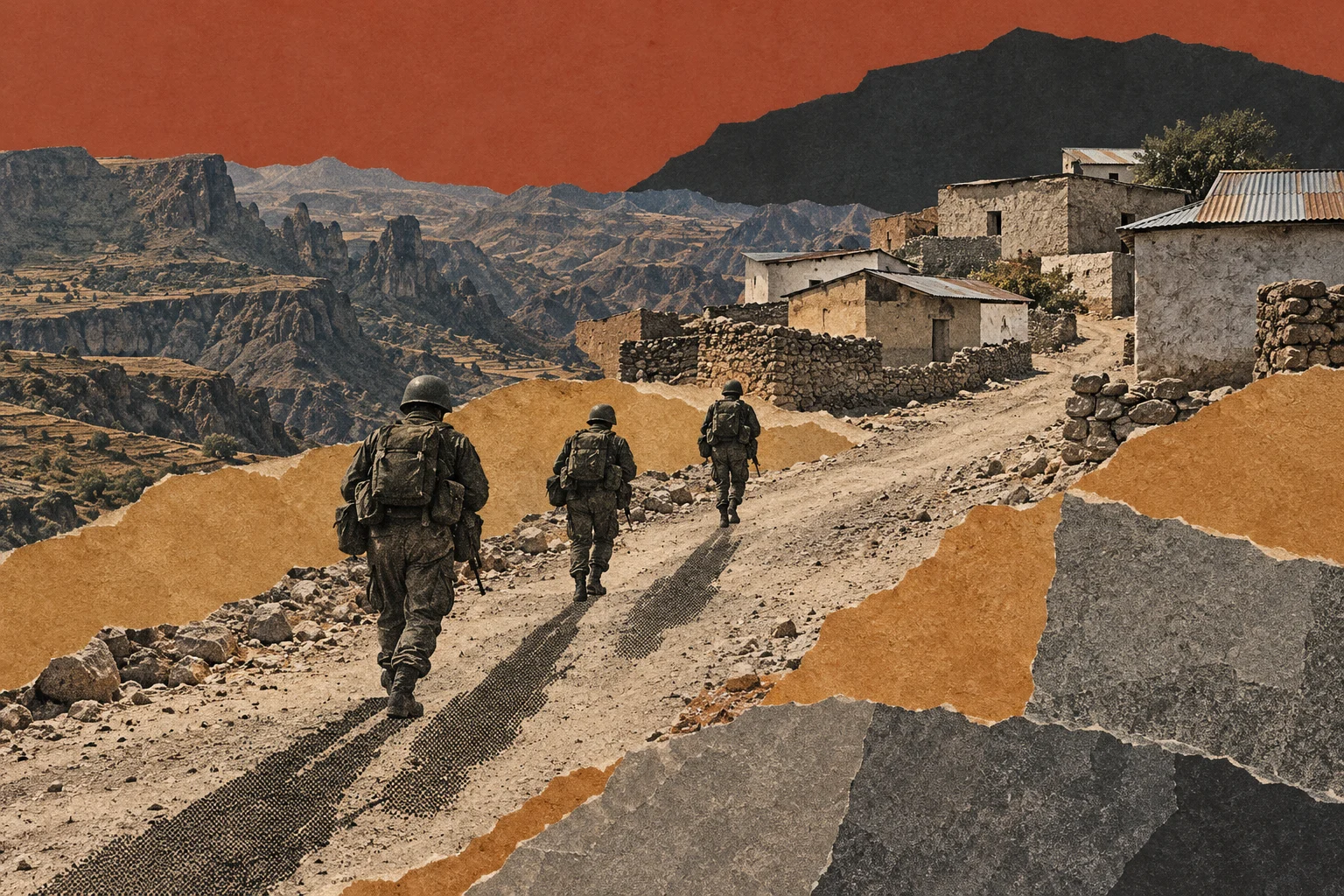
Tom Gardner, a correspondent for The Economist, told Al Jazeera that the government’s “strategic goal number one is access to the Red Sea, but also removing Eritrea’s government from the picture.” The two countries fought a border war from 1998 to 2000, then allied against the TPLF in the 2020-2022 Tigray war, which killed hundreds of thousands of people amid allegations of massacres, sexual violence and widespread hunger. Gardner calls that alliance an exception driven by shared hostility to the TPLF. Eritrea was not party to the November 2022 Pretoria agreement, and relations soured afterward; this month Eritrea severed diplomatic ties.
What is actually verified
Not much, cleanly. The current round began on September 23, when a rebel alliance including the TPLF attacked federal forces across Tigray, Amhara and Afar. The rebels took Mekelle and its airport, then announced a withdrawal on October 3. Ermiyas Ababu, a commander of the government-allied Tigray Peace Force, says government and allied forces took Abiy-Adi on Thursday and Idaga Hamus early Friday; residents told Reuters the same about Idaga Hamus. He also says his personnel saw Eritreans entering Adigrat and Idaga Hamus, claims Al Jazeera could not verify.
The US-based monitor ACLED reported Eritrean troops crossing near Zalambessa and coming under Ethiopian drone attack on the way to Idaga Hamus. The Critical Threats Project said it could partly confirm reports that Eritrean forces moved south through Adigrat between October 3 and 7 before pulling back north on October 8. Eritrea denies the allegations. Matthias Rompel of Justus-Liebig-University Giessen told Al Jazeera that the incursion claims and “particularly allegations that Asmara is orchestrating the rebellion against Addis Ababa, remain difficult to substantiate independently.”

The outsiders
Then there are the neighbours with money in the game. A second Al Jazeera analysis notes that on September 25 the UAE condemned the TPLF’s attacks, with minister of state Sheikh Shakhboot bin Nahyan Al Nahyan backing Ethiopia’s sovereignty while calling for an end to hostilities and adherence to Pretoria. The UAE’s interests are partly logistical: DP World operates Berbera in Somaliland, linked since 2025 by a shipping route to Jebel Ali, an extra corridor for Ethiopia-bound cargo. Whether that buys Abu Dhabi any leverage over the TPLF or Eritrea is unclear.
Saudi Arabia has said nothing public. Chatham House reported in November 2025 that Riyadh had offered to mediate between the two countries; a June 2026 SWP analysis said earlier Saudi mediation failed partly because it did not deal with Ethiopia’s interest in Assab. The Soufan Center has described Saudi Arabia and Egypt as backing Eritrea against Ethiopia’s sea ambitions, an assessment of alignment, not evidence of military support. Egypt, locked in its Nile dam dispute with Ethiopia, hosted Eritrea’s Isaias Afwerki in June. Ethiopia’s army chief, Field Marshal Birhanu Jula, accused Egypt and Sudan last month of supporting armed groups including the TPLF, without evidence; Egypt’s foreign ministry spokesperson Nader Zaki reaffirmed non-interference without addressing the specific charge.
Hossamaldeen Ibrahim of the Bloomsbury Intelligence and Security Institute told Al Jazeera that the countries are past “inching”: “The situation has entered a high-risk phase of limited but direct military confrontation with a real possibility of rapid escalation into interstate war.” Losing diplomatic ties, he said, removed the “last formal mechanism for crisis management.” Rompel’s view is that “the space for diplomatic de-escalation is rapidly narrowing.”
The last mediation reportedly failed because it tried to work around the port. The troops now heading toward the border are not working around anything.