
Epic Games has told the team building its Marvel-and-Star-Wars shooter for Disney to stop writing code and drawing art by hand. Every line of code and every art asset on the project is now to come from AI models, with human developers reduced to directing and reviewing the output, according to a Bloomberg report citing unnamed people familiar with the project and internal employee messages. One of the game’s directors put it to staff in blunter terms than Epic’s public statements have: “no more hand-written code,” with art to be “generated with full AI workflows.”
The shooter is the first release under the $1.5 billion deal Disney struck with Epic in February 2024, in which Disney took a minority equity stake in the privately held studio in exchange for building a Marvel, Star Wars, Pixar and Avatar “games and entertainment universe” around Fortnite and beyond. It was slated to ship in March 2027. That date is gone. Bloomberg reports no new date has been set, and that development had already fallen behind schedule before the AI mandate, because Epic underestimated how many developers and how much calendar time the project needed.
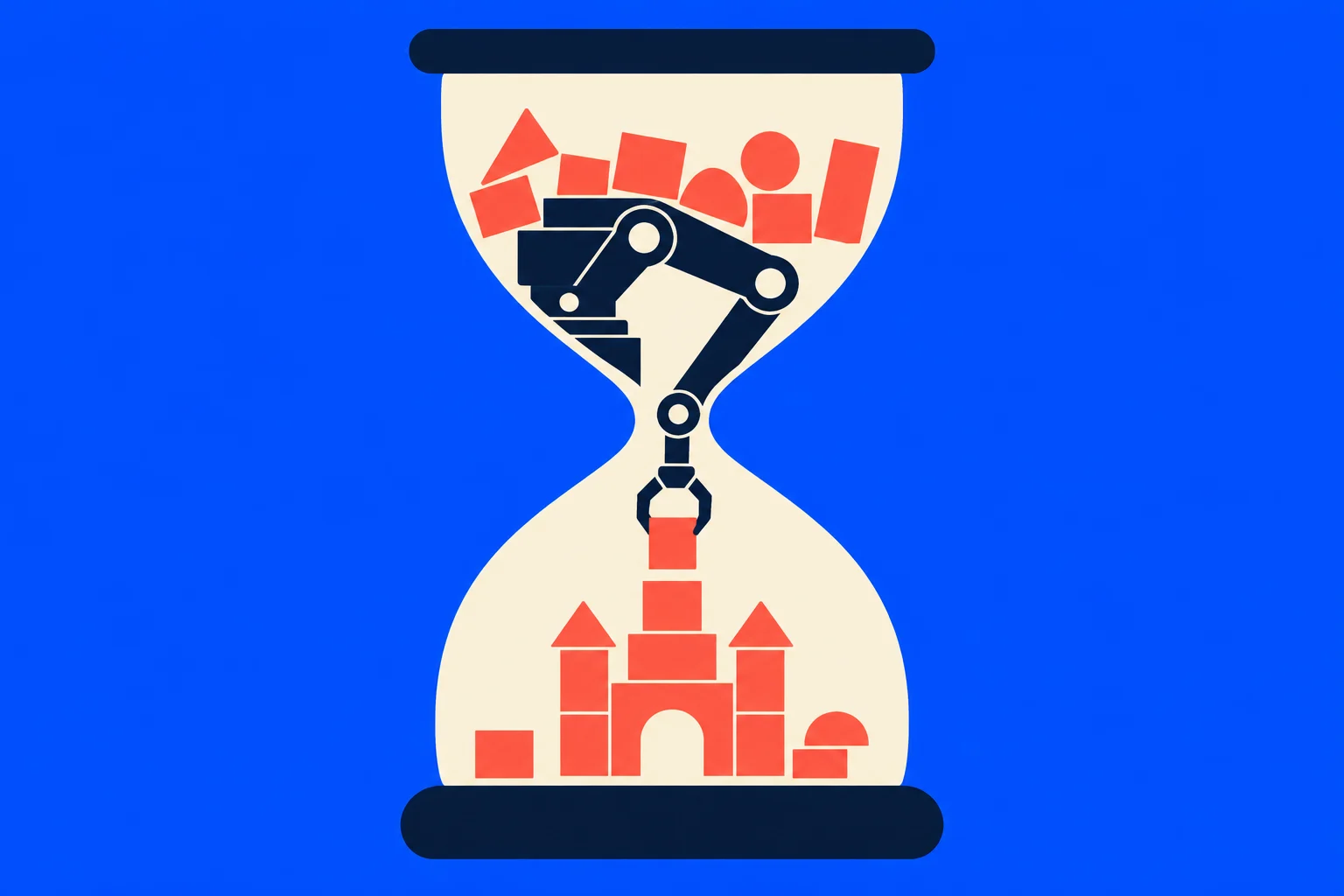
That ordering matters. A studio that is behind schedule and then declares an AI-first rebuild is not the same story as a studio that was on schedule and chose AI anyway. The former looks like a studio trying to recover lost time with a new tool; the latter would be a bet that the tool is simply better. Bloomberg’s reporting, as described by Ars Technica, supports the first reading: the delay predates the mandate, and the mandate is being sold partly as the fix for it.
What “AI-first” means on this project
The models doing the work include Anthropic’s Claude, per the internal messages Bloomberg reviewed. In practice this means the shooter’s codebase and art assets are to be generated by prompting a model and then having a human developer check, adjust and re-prompt, rather than writing C++ or Blueprint logic directly or hand-painting textures and concept art. Epic has not published a technical account of the workflow — no architecture diagram, no description of how generated code is tested, no figure for what fraction of the current codebase is AI-authored versus legacy human code carried over from before the mandate. Until it does, “full AI workflows” is a description of intent, not a measured state of the build.
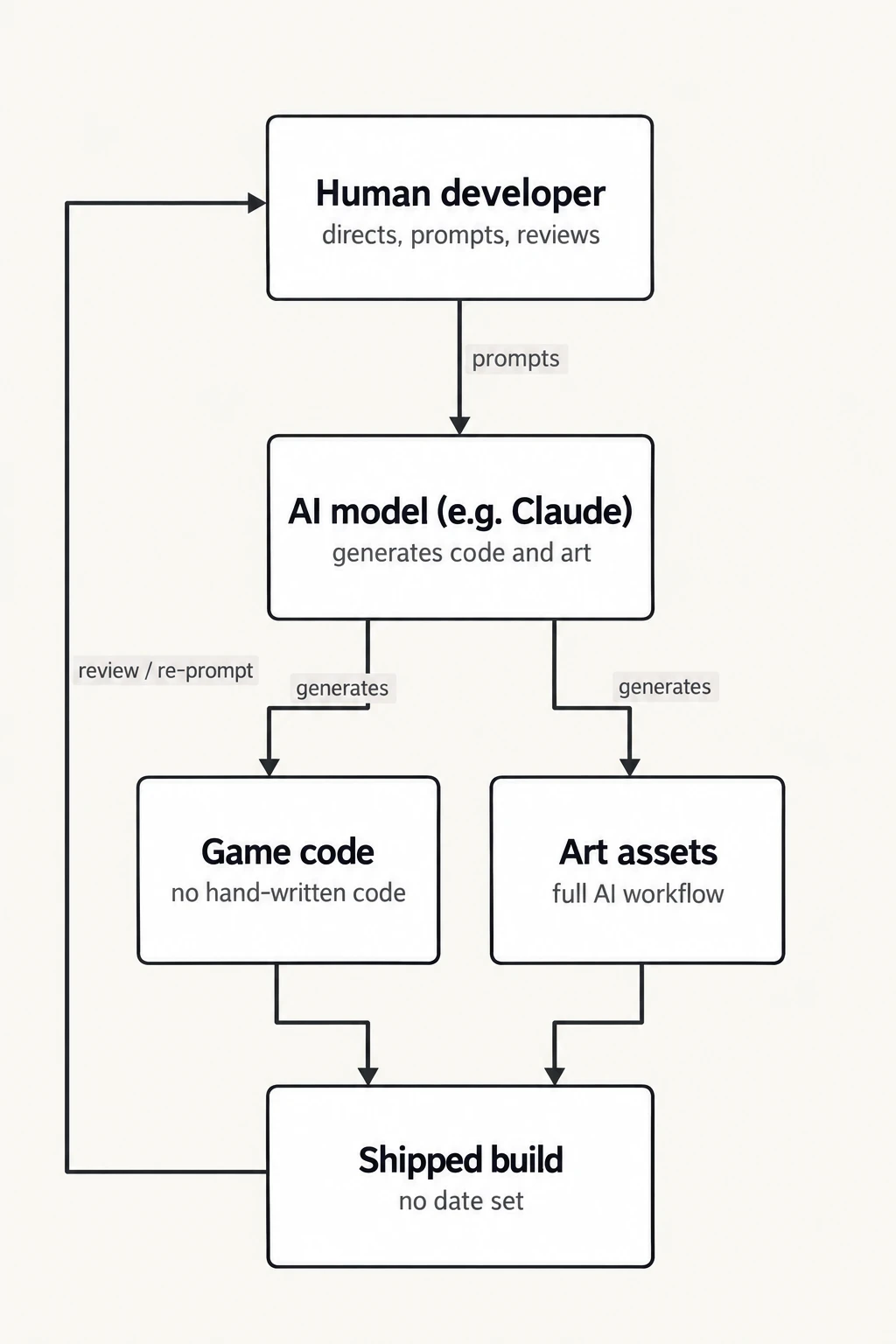
| From | To | How |
|---|---|---|
| Human developer (directs, prompts, reviews) | AI model (e.g. Claude) (generates code and art) | prompts |
| AI model (e.g. Claude) (generates code and art) | Game code (no hand-written code) | generates |
| AI model (e.g. Claude) (generates code and art) | Art assets (full AI workflow) | generates |
| Game code (no hand-written code) | Shipped build (no date set) | |
| Art assets (full AI workflow) | Shipped build (no date set) | |
| Shipped build (no date set) | Human developer (directs, prompts, reviews) | review / re-prompt |
Based on Bloomberg, via Ars Technica
The announcement reportedly caught the project’s own staff off guard, surfacing on a video call in early October. Developers on the call questioned how the team would catch and fix errors in AI-generated content at scale, and whether the approach would deliver results Epic was expecting, according to Bloomberg’s sourcing. Neither question has a public answer yet: Epic has not released error rates, review-time figures, or a comparison of AI-assisted versus hand-built development velocity on this project or any other.
Timing against the layoffs
Epic laid off more than 1,000 employees on March 25, 2026, citing declining Fortnite engagement and over $500 million in identified cost reductions, out of a company that employed roughly 4,000 people after the cuts. One of those laid off, a programmer of nearly seven years named Mike Prinke, was undergoing treatment for terminal brain cancer at the time; his wife, Jenni Griffin, said in a public post that the layoff also cost the family his health coverage, with his cancer treated as a pre-existing condition that barred new coverage, as Newsweek reported. Sweeney responded to the backlash by saying the company would “solve the insurance” for the family, and an Epic spokesperson said laid-off staff receive at least four months of severance pay plus extended company-paid healthcare.
Sweeney addressed the obvious inference directly in his October 12 post announcing the AI pivot, writing that the layoffs “aren’t related to AI”: “We have a huge pivot underway here at Epic, moving developers around to retool for maximum AI acceleration. The aim isn’t to do the same stuff with fewer people, but to enable everyone here to build MORE and BETTER stuff, and to bring the benefits to all teams using Unreal.” The response online was not uniformly convinced. One widely shared reply read simply: “you fired 1,000 people, tim.” A different strand of reaction, from accelerationist corners of the tech industry, praised the move as Epic going “all-in with Super Intelligence.”

We have a huge pivot underway here at Epic, moving developers around to retool for maximum AI acceleration. The aim isn’t to do the same stuff with fewer people, but to enable everyone here to build MORE and BETTER stuff.
Epic’s official line, from communications director Jake Jones, is narrower and more cautious than Sweeney’s post: the company is “embracing AI-accelerated development, led by Epic developers who are the visionaries and creative drivers for everything we do.” That framing keeps humans in the loop as a matter of policy; the “no hand-written code” instruction reported from inside the project describes something closer to a floor, not a ceiling, on how much of the work AI is doing. Sweeney separately said on October 7 that revenue for sellers on Fab, Epic’s marketplace for Unreal Engine assets, rose in September, which he attributed to developers buying more pre-built content blocks to feed into AI-assisted scene construction — a claim about marketplace activity, not about the Disney project, and one for which Epic has not published the underlying figures.
The gap between Epic’s two framings — developers as “creative drivers” versus a director’s instruction that there be no hand-written code at all — is the thing to watch as the shooter moves through whatever development cycle replaces the abandoned March 2027 date. It will show up first in whatever Epic or Disney says publicly about a new release window, and second in whether Unreal Engine’s broader developer base, who were told the AI tooling exists to help them build “more and better,” see that benefit or mainly see their own employer’s internal product as the test case for replacing them.