
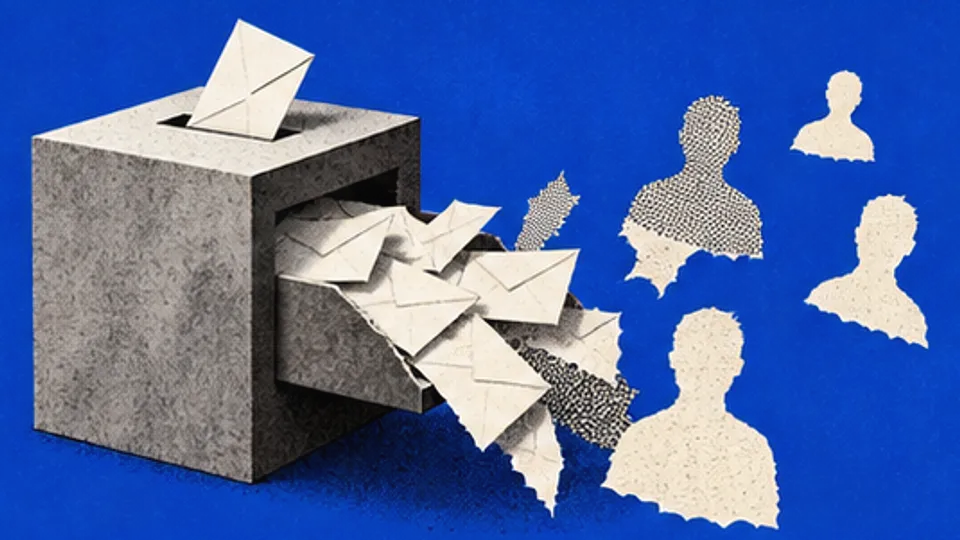
The concrete object in this story is an outbox. In Goa, the state’s chief electoral officer wrote eight emails in a week to officials in New Delhi after identifying nearly a hundred voters who had been mistakenly removed. The deadline passed. There was no response. The voters stayed off the list, according to reporting by The Indian Express, because editing access sat in the capital and not with the local officer who had found the error.
That small failure sits inside a very large machine. India’s Election Commission is an autonomous constitutional body charged with running elections in the world’s largest democracy, a process long admired for scale and complexity. Al Jazeera’s account of the Indian Express investigation says the commission has three members of equal rank: Gyanesh Kumar, the chief, plus Sukhbir Singh Sandhu and Vivek Joshi. Indian law requires decisions by majority.
The documents and interviews described a commission splitting along that simple arithmetic. Sandhu and Joshi formally objected on record at least 14 times over 10 months as Kumar issued measures by circumventing them, the reports said. Sandhu called the method “unauthorised and illegal.” The objections covered the new voter-registration mandate, deletions and restorations, appeals against deletions and the security of the list—in short, everything the commission undertook.
The revision
Since June last year the commission has been revising voter lists state by state under the Special Intensive Revision, or SIR. More than 13 million names have been struck off during the exercise, Al Jazeera reported. Critics say the burden fell hardest on the poor, migrants, minorities and other vulnerable groups, because the drive can demand old birth, land and education records, and a decades-old spelling mismatch can be enough to erase a voter.
The commission maintained that access to the rolls was highly secured and decentralised, with judgment made by local officers even in remote districts. The internal record points the other way: ECINet, a digital platform logging nearly a billion voters, became more centralised, giving New Delhi greater control over edits. Opposition parties went to the Supreme Court, which largely signed off on the process. In India the franchise reaches beyond ballots, because several welfare schemes are tied to voting rights.
In West Bengal, Al Jazeera previously reported, the exercise removed nine million residents just days before state elections held in April and May. Muslims made up nearly 34 percent of the deleted voters in a state where they are about 27 percent of the population; Narendra Modi’s Hindu-majoritarian BJP then came to power there for the first time. The BJP and SIR supporters say the aim is to remove the dead, the fraudulent and illegal migrants, and have cast many Muslims cut from border-state rolls as “illegal Bangladeshi migrants,” despite hard evidence that Indian nationals were also victims.
As the revision spread, the net caught bigger fish. Notices went to Foreign Minister S. Jaishankar and his wife, other politicians, judges, senior bureaucrats and several former ambassadors—people asked to prove they were Indian after years of representing India abroad. The dispute therefore moved from opposition complaint to broader scepticism about opaque software, matching against old rolls, and the criteria for flagging “logical discrepancies.”
The Election Commission used to be a very reputed institution. Now, it is totally dysfunctional – and that’s an understatement.
The speaker is S.Y. Quraishi, who headed the commission from 2010 to 2012. “Today, that faith has shaken. It is very shocking for the nation,” he told Al Jazeera. Milan Vaishnav of the Carnegie Endowment said the SIR “fundamentally inverts India’s model of electoral democracy”: where the state once tried to register the last man or woman, “it is now the voter who must prove his or her entitlement to remain on the electoral rolls.”
Rahul Gandhi, the opposition leader, has accused the commission of “treason” and promised its leaders will be tried if Congress returns to power. Quraishi said he hoped the revelations would wake up the Supreme Court, the central government and Parliament, adding, “the reputation of the Election Commission has gone into the dumps.” In Goa the eight emails remain unanswered. The list is the institution.