
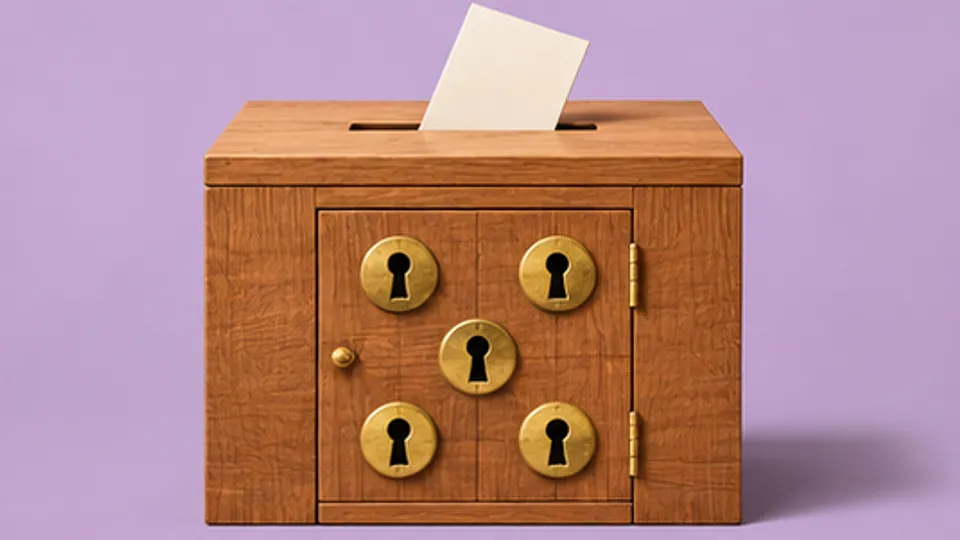
It is an odd kind of election. Everyone knows who the voters are, and everyone knows who the candidates are. The votes are secret, and before long everyone knows those too. Writing for Al Jazeera, Edna Mohamed compares the method to the boardroom of a corporation worth billions: secret ballots, coloured slips of paper, straw polls, quiet pressure to produce a consensus, and over all of it the threat of a veto. This is how the United Nations chooses its secretary-general, the official at the top of a huge and sprawling organisation whose job is to defend international laws and habits that are now coming apart.
The calendar does not move. António Guterres’s second five-year term ends on 31 December 2026, and his successor’s begins on 1 January 2027. Guterres has said he expects to be home in Portugal on New Year’s Day. His decade in the post ended with Ukraine and Gaza out of reach of the quiet diplomacy that is the office’s only real tool.
The letter and the habit
Article 97 of the UN Charter is short. The 15-member Security Council recommends a candidate and the General Assembly appoints. The Assembly has never turned down a council choice, so in practice the decision belongs to the five permanent members: China, France, Russia, the United Kingdom and the United States. The ten elected members this year are Bahrain, Colombia, the Democratic Republic of the Congo, Denmark, Greece, Latvia, Liberia, Pakistan, Panama and Somalia. They have votes but no vetoes. Africa, as rews has noted before, supplies much of the council’s agenda and none of its permanent seats.
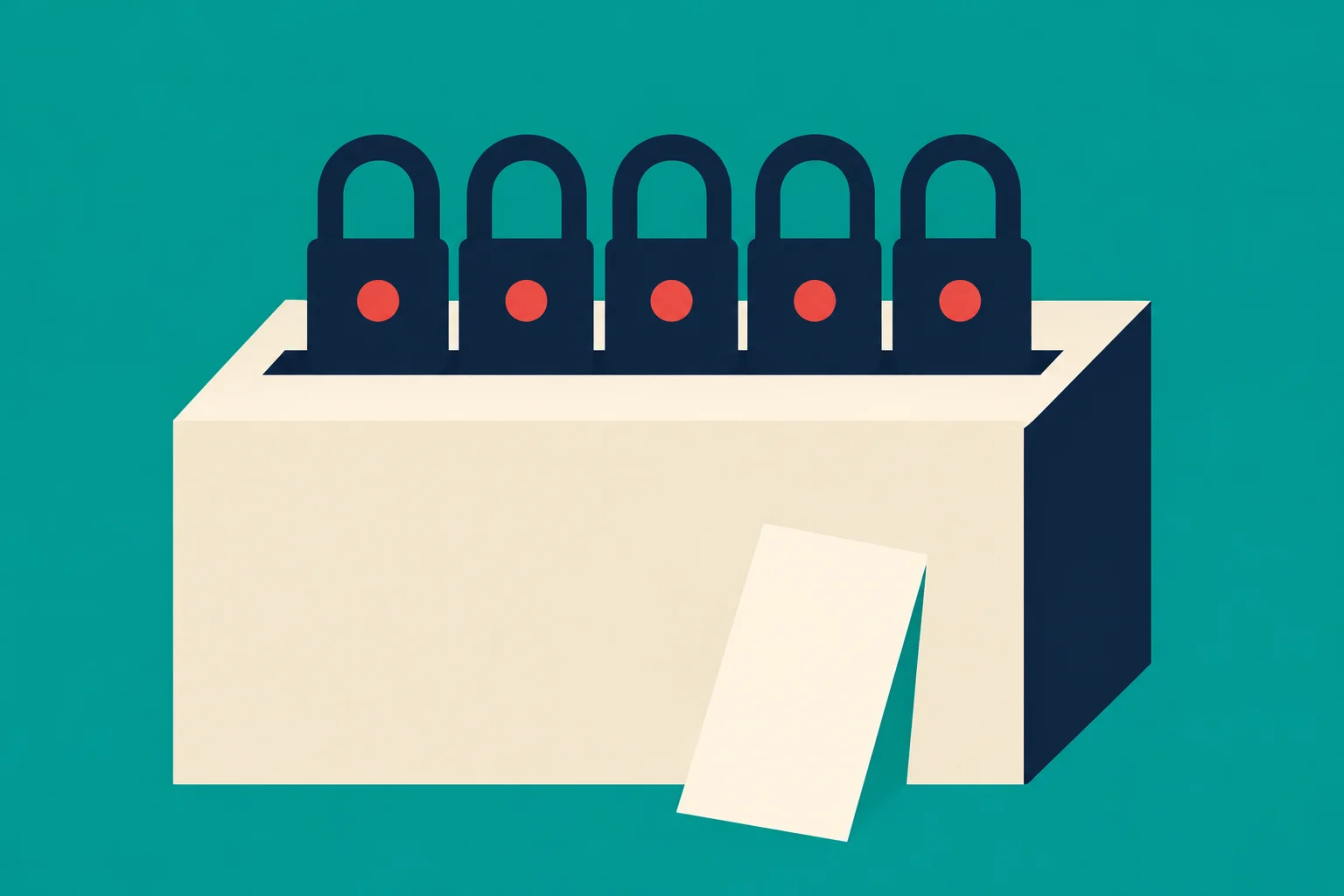
The procedure is a ritual of half-measures. In anonymous straw polls each member marks a candidate “encourage”, “discourage” or “no opinion”. A candidate needs at least nine encouragements and no discouragement from a permanent member before a formal vote. Later rounds can use coloured ballots that separate the five powers from the ten, so a veto shows up as a colour on the tally. Nobody is supposed to see the tallies. They leak anyway.
Eight names
Eight candidates remain. Rebeca Grynspan of Costa Rica heads UNCTAD, the UN’s trade and development body, and helped broker the 2022 Black Sea Grain Initiative; she could become the first woman and the first Jewish person to lead the UN. Rafael Grossi of Argentina has run the International Atomic Energy Agency since 2019 and has worked to prevent nuclear escalation in the Russia-Ukraine war. Iran has criticised him, arguing that his reports gave the United States and Israel a pretext to attack it. The others are Carolyn Rodrigues-Birkett, Guyana’s UN ambassador; Lana Zaki Nusseibeh, the UAE’s minister of state for foreign affairs; María Fernanda Espinosa Garcés, a former General Assembly president from Ecuador; Feridun Hadi Sinirlioğlu of Türkiye, who heads the OSCE; Ivonne A-Baki, an Ecuadorian politician; and Olara Otunnu, a Ugandan politician.

The count
The council has held eight straw polls without agreeing on anyone. The race has changed leaders more than once. Grossi was considered the favourite before the first poll on 30 July; Grynspan’s showing that day made her the favourite overnight; Rodrigues-Birkett overtook her in the second poll on 21 August. After the sixth poll in mid-October, no candidate had the backing of all five permanent members. In the seventh, the council went back to plain ballots, and Grynspan’s lead grew to 11 encouragements against four discouragements.
The eighth poll took place at 1:15pm New York time on 5 November, according to Security Council Report, and again the ballots did not separate the powers from the rest. Diplomats’ accounts put Grynspan further ahead with 12 encouragements and three discouragements. Grossi had nine, four and two “no opinion”. Rodrigues-Birkett had eight, five and two. How the permanent members voted is unknown. A candidate with three discouragements could be one veto away from defeat, or three, or none.
The bureaucracy produced its own small irony. Security Council Report says Türkiye nominated Sinirlioğlu on 1 November. His dialogue with the General Assembly was scheduled for 6 November and his informal session with the council for 9 November, yet he was on the ballot on the 5th. The voters had to judge him before hearing him. It was the second time in this selection that a candidate went into a straw poll before meeting either body.
One could put it this way: in this system, the hearings are for the public and the decision is made somewhere else. That is a reflection, not something on the record. But the record does not contradict it.
If the clock runs out
The Charter says nothing about what happens if there is no choice by 31 December. There are a few precedents and a few improvisations. In 1950, when the council was deadlocked, the Assembly extended a secretary-general’s term without a council recommendation. In 1996, Kofi Annan emerged as a compromise candidate. Other options are a shorter term for whoever is chosen, or a senior UN official serving as interim chief. Al Jazeera’s Gabriel Elizondo, asked about Guterres simply staying on past his term, had no tidy answer: “What would happen? Nobody knows because that’s never happened before.”
The calendar has politics of its own. Before the eighth poll, the Stimson Center reported speculation that Russia might block any straw poll during Latvia’s council presidency in November, which would push the next round into December under Liberia. The 5 November poll went ahead regardless. Each later round leaves less time before the deadline.
The grumbling outside
Jane Kinninmont of the United Nations Association–UK says the council “continues to guard its secrecy tightly”, and she sees “growing resentment” over the veto. “It seems hard to defend the idea that any single power should be able to veto a candidate,” she said. Her proposed reform would have the council shortlist two or three names and let the General Assembly, where all 193 members vote, choose among them.
Elizondo was blunter about how likely that is: “the five permanent members just want to keep it the way that it is.”