
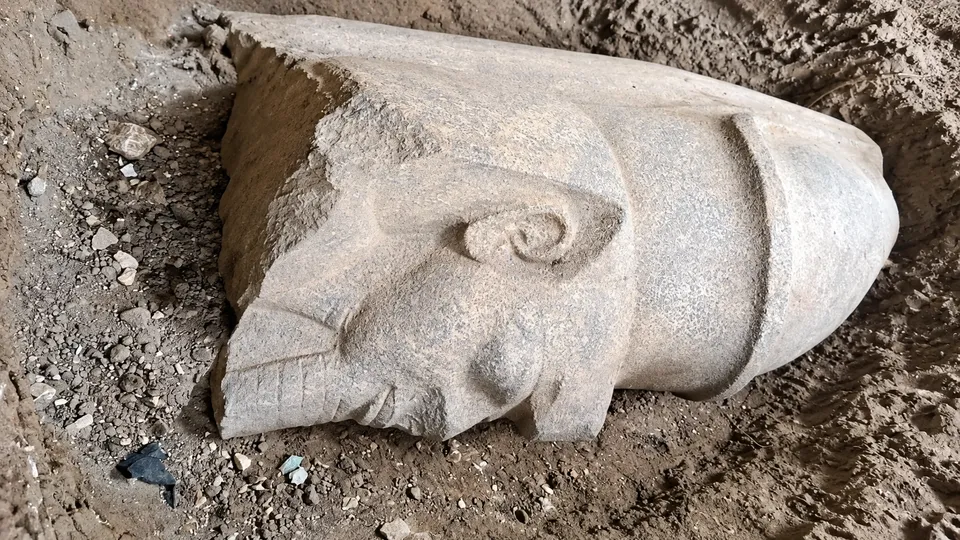
Egyptian archaeologists have dug up the head of a colossal statue of Ramesses II in a Nile Delta village after a resident noticed an inscribed stone on his land, Egypt’s Ministry of Tourism and Antiquities said on Tuesday.
The rescue excavation at Behbeit el-Hagar, in Gharbia Governorate, found the remains of two large royal statues and a pink granite block carrying the pharaoh’s titles. Hisham El-Leithy, the secretary general of the Supreme Council of Antiquities, said the head alone measured about 1.60 meters, a little over five feet, and that the complete statue, base included, probably stood about 8.5 meters tall, or roughly 28 feet.
It began with one man and a shovel’s worth of ground. The resident was working the plot in front of his house when he saw the stone, and instead of digging further he called local antiquities officials, Arkeonews reported. Inspectors confirmed the block was ancient, and the Supreme Council sent a specialist committee and an excavation team, according to Heritage Daily.
The head shows the king in the double crown, the headgear that stood for rule over both Upper and Lower Egypt. Part of the statue’s back pillar survives with it, and it bears his Horus name, Hor Ka Nakht Mery Maat. That inscription leaves no real doubt about whose statue it was. Ramesses II reigned from about 1279 to 1213 BC.
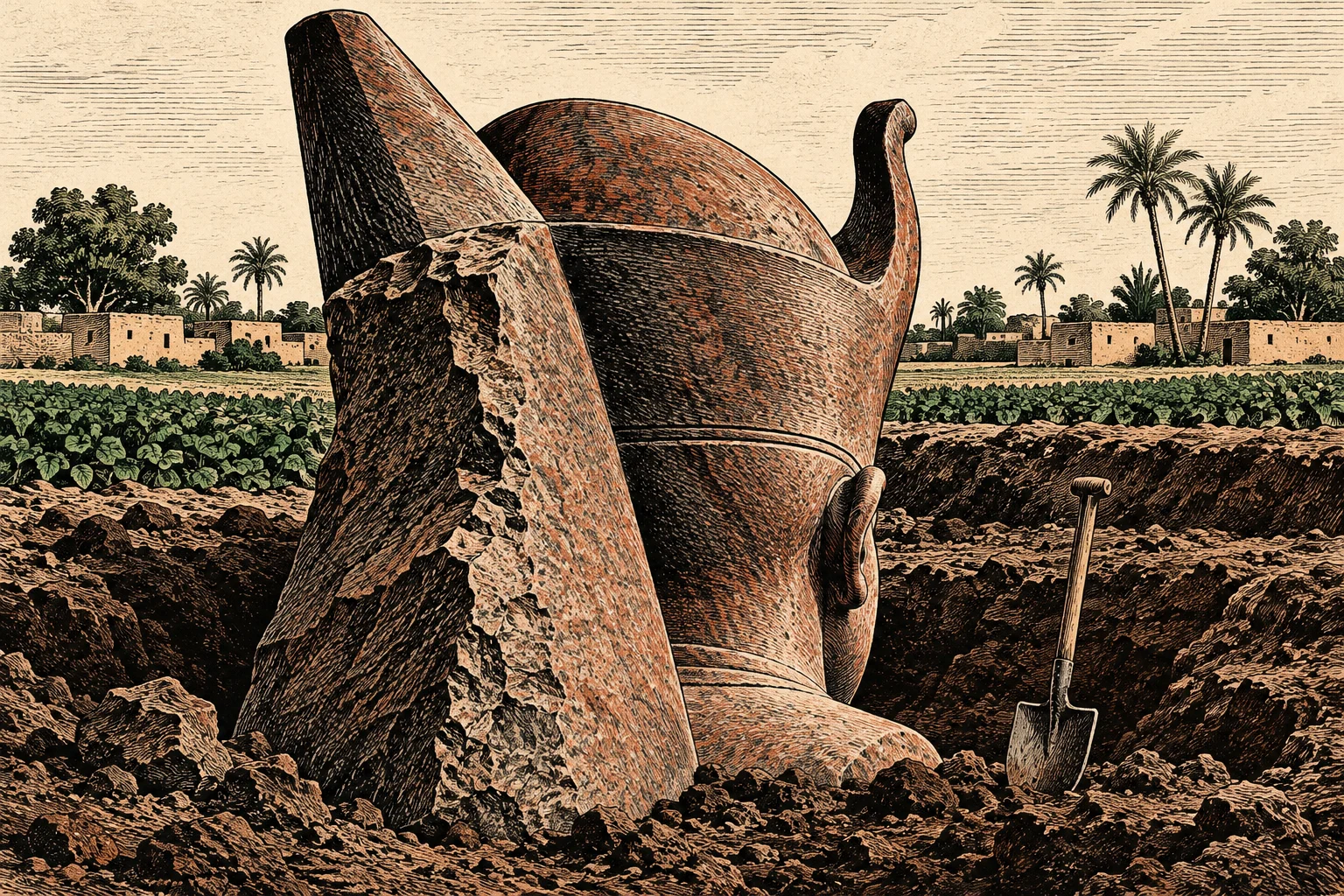
The second statue is in rougher shape. Its surviving portion is about 2.40 meters long, and the legs and base are gone, but the face is still clear and the king wears the striped nemes headdress. Officials believe it shows the same pharaoh because its features look so much like the first, Ahram Online reported. Archaeologists haven’t confirmed that yet.
About a meter north of that figure, the team found the granite block, roughly 1.30 meters long. What is left of its hieroglyphs includes two of Ramesses II’s royal titles, Nesu Biti, or King of Upper and Lower Egypt, and Sa Ra, Son of Ra.
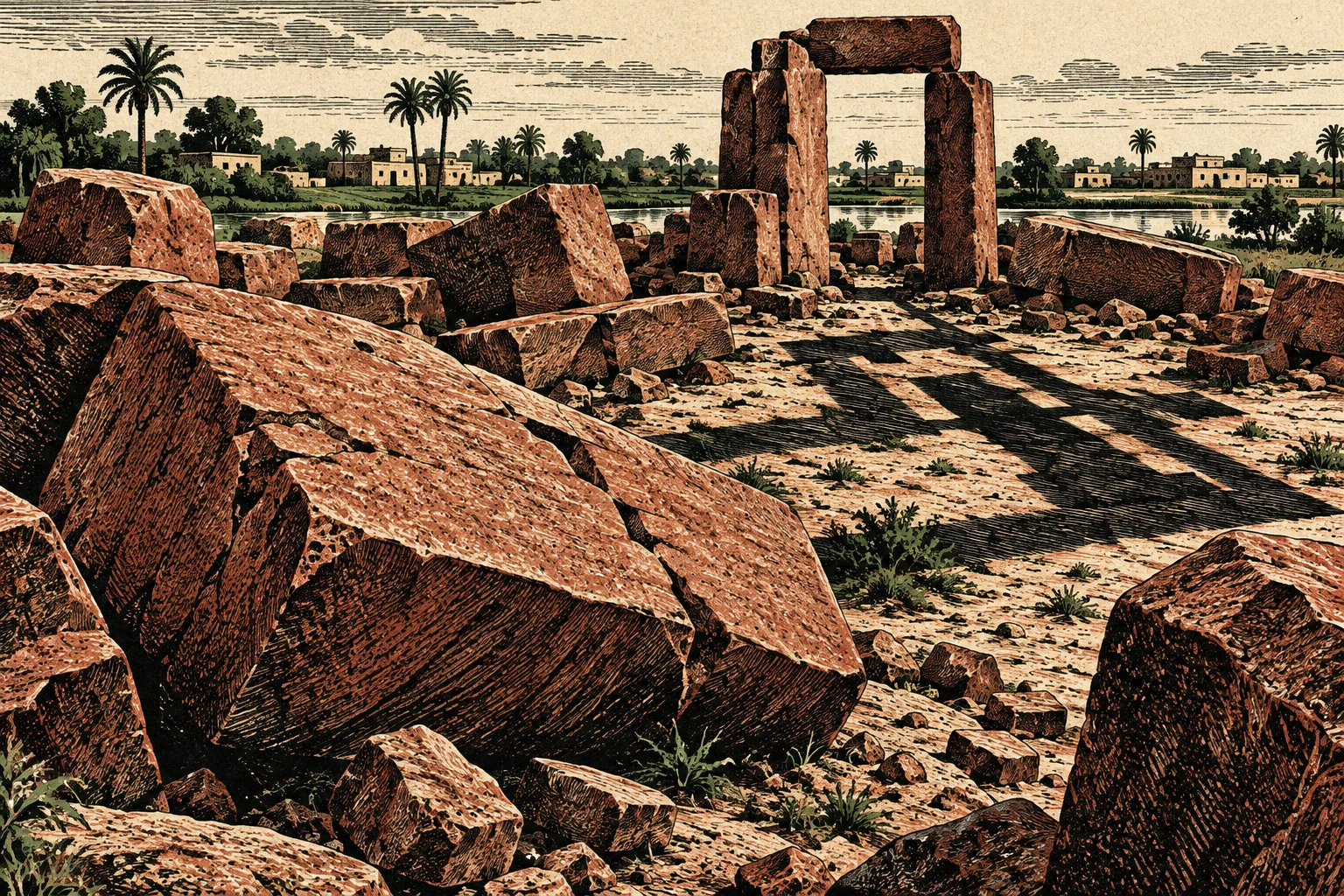
The find is odd for the place. Behbeit el-Hagar is known for the ruins of a temple to the goddess Isis, now mostly a field of huge granite blocks. Most of that sanctuary was built under Nectanebo II in the fourth century BC, and later Ptolemaic rulers finished and expanded its decoration. Ramesses II ruled about nine centuries before any of it went up.
There were earlier hints. In a 2017 study, the Egyptologists Mahmoud Emam and Ehab Abd el-Zaher looked at two architectural fragments bearing Ramesses II’s cartouches that had turned up during infrastructure work near the temple. They suggested the pieces could point to a building from his reign, or possibly older, standing there before the temple complex took shape.
The new statues don’t settle that. It isn’t clear whether they were first put up at the spot where they were found or were hauled there later for reuse. Dr. El-Leithy’s team is still working out how the two statues, the block and the surrounding remains relate to one another, and whether more architecture survives under the village.
Sherif Fathy, the minister of tourism and antiquities, thanked the resident for reporting the stone and called the discovery an important addition to Egypt’s archaeological record, one that would shed more light on the site’s history, Gulf News reported. The ministry said excavations and studies at the site would continue.