
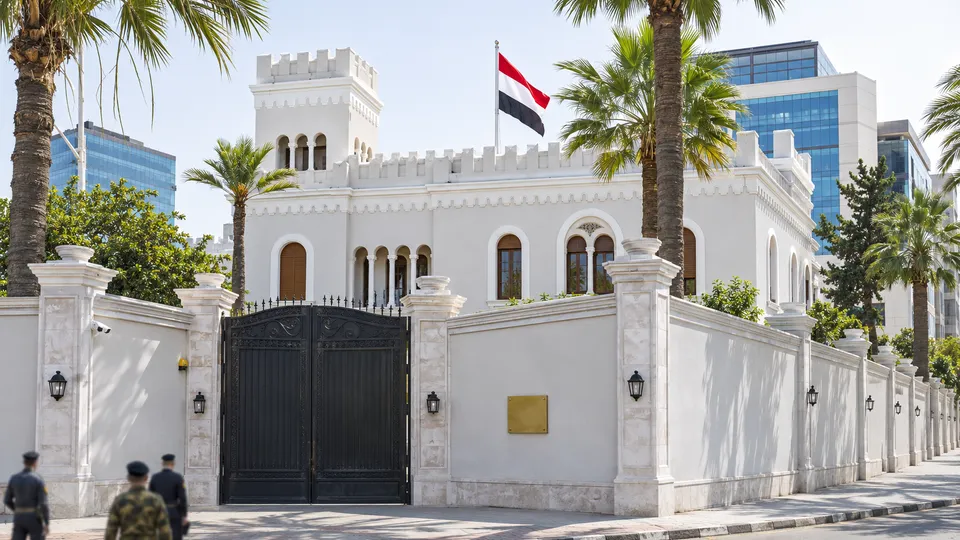
Egypt reopened its embassy in Tripoli on Saturday, 12 years after closing it, as Foreign Minister Badr Abdelatty visited the Libyan capital for talks with the government that his country’s longtime ally in the east has spent years fighting.
Mr. Abdelatty opened the historic building with Libya’s acting foreign minister, Taher al-Baour, a few hours after he landed, and met Prime Minister Abdulhamid Dbeibah of the internationally recognized Government of National Unity, Asharq Al-Awsat reported. The talks covered trade, energy and a disputed maritime boundary. He also met Libya’s acting oil minister inside the reopened embassy. The Foreign Ministry in Cairo said in a statement that the move marked a rapprochement with the western-based administration.
At the ceremony, Mr. Abdelatty said the building’s history “aligns with the deep-rooted human and cultural ties that characterize Egyptian-Libyan relations,” and called it part of Tripoli’s memory, according to Egypt Today. The Dbeibah government called the reopening “a step reflecting the development of bilateral relations between the two countries.”
Egypt shut the mission in 2014, when many foreign embassies left Tripoli as rival governments set up in the capital and the east. That January, Cairo pulled its staff out after five Egyptian diplomatic employees were kidnapped in two separate incidents.
The 12-year figure needs a footnote. A senior Egyptian delegation went to Tripoli in February 2021 to discuss reopening the embassy and consulate, and Euronews reported that Egypt’s diplomatic mission resumed work in the city that May. What reopened on Saturday was the historic headquarters. It was not clear how much Egyptian diplomatic work had gone on in Tripoli in the meantime.
The maritime dispute was on the table. Mr. Abdelatty raised Egypt’s objections with Mr. Dbeibah to a 2019 memorandum between Turkey and the government then in Tripoli, which Cairo says infringes on its maritime zone, and urged that Egypt’s concerns be settled under international law. Libya’s eastern-based parliament, which first opposed the deal, ratified it only weeks ago.
The visit is a turn for Cairo, which has been among the most prominent backers of Khalifa Haftar, the eastern commander whose self-styled Libyan National Army fought the Tripoli government. Hazem al-Rayes, a Libyan political analyst, told Mohammad Mansour of Al Jazeera that Cairo was trying to adjust its approach to Libya, and that no Egyptian foreign minister had visited Tripoli in five years. “Egypt is no longer the Egypt of five years ago,” he said.
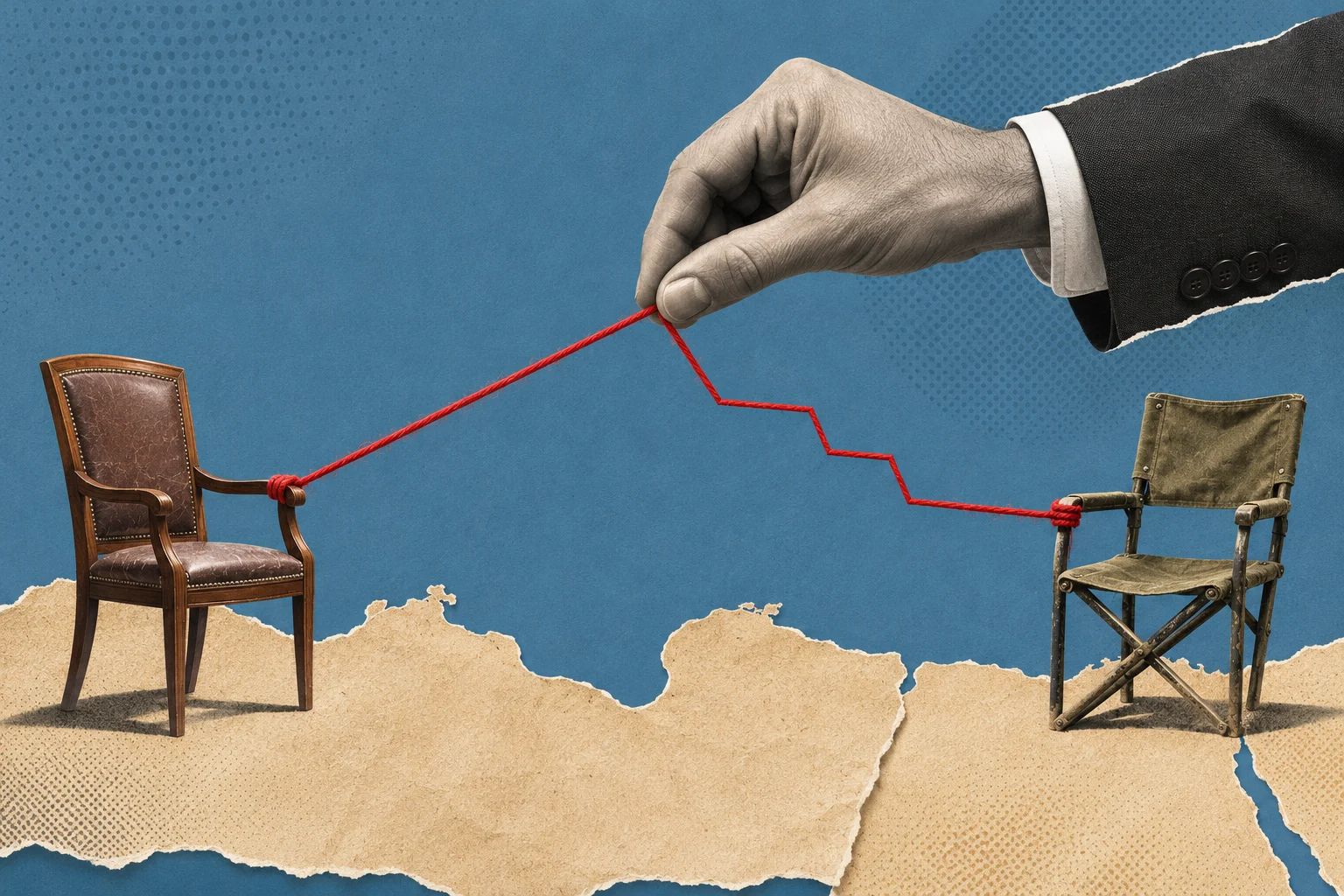
Mr. al-Rayes said Cairo’s ally in the east had drifted away, leaving Egypt to deal with “the legitimate government.” Eastern Libya has been warming to Ankara. In July, Turkey and the Libyan National Army agreed to cooperate on military facilities and surveillance systems, and to train eastern officers in Turkey. Saddam Haftar, Khalifa Haftar’s son and deputy commander, has also visited Turkey and Qatar, both of which backed the UN-recognized government in Tripoli.
Badr Hassan al-Shafei, a professor of African studies and conflict resolution at Cairo University, said Egypt had concluded that relying on Khalifa Haftar alone “may not be the right bet,” especially since Turkey intervened. The embassy, he said, is also a message to the commander not to act alone. On the sea boundary, Mr. al-Shafei said Cairo wants to protect its gas and oil interests in the eastern Mediterranean, and is now negotiating with the government that signed the deal instead of objecting from outside.

Money is part of it. Egypt may look for work in reconstruction and in reviving Libya’s oil sector, and Mr. al-Shafei pointed to priority for Egyptian workers, better conditions for those already in Libya and openings for Egyptian companies. Cairo is also worried about the spread of the Rapid Support Forces in neighboring Sudan, a paramilitary group Khalifa Haftar has been accused of supporting.
Libya has been split since Muammar el-Qaddafi fell in 2011. Its rival camps have signed what they call a “4+4 agreement,” a road map toward possible presidential and legislative elections within two years, and Mr. al-Rayes said the new regional consensus made a broader deal more likely.
Elias al-Barouni, a political science professor at Nalut University, called the reopening “an indicator of a shift in Cairo’s method.” He said the fight was about power, institutions, resources and the future of the military, not only about who leads the government, and that agreement among Cairo, Ankara and Washington would not be enough without a Libyan national project. Libya, he said, needs “a settlement that ends the division, not a deal that redistributes the division.”