
On 24 September 2026 Benjamin Netanyahu stood up to address the United Nations General Assembly in New York, and many delegations walked out of the hall. Serbia’s stayed in their seats. It was a small moment in a long war, but it says a good deal about a region where every government seems to keep its own private account with Israel.
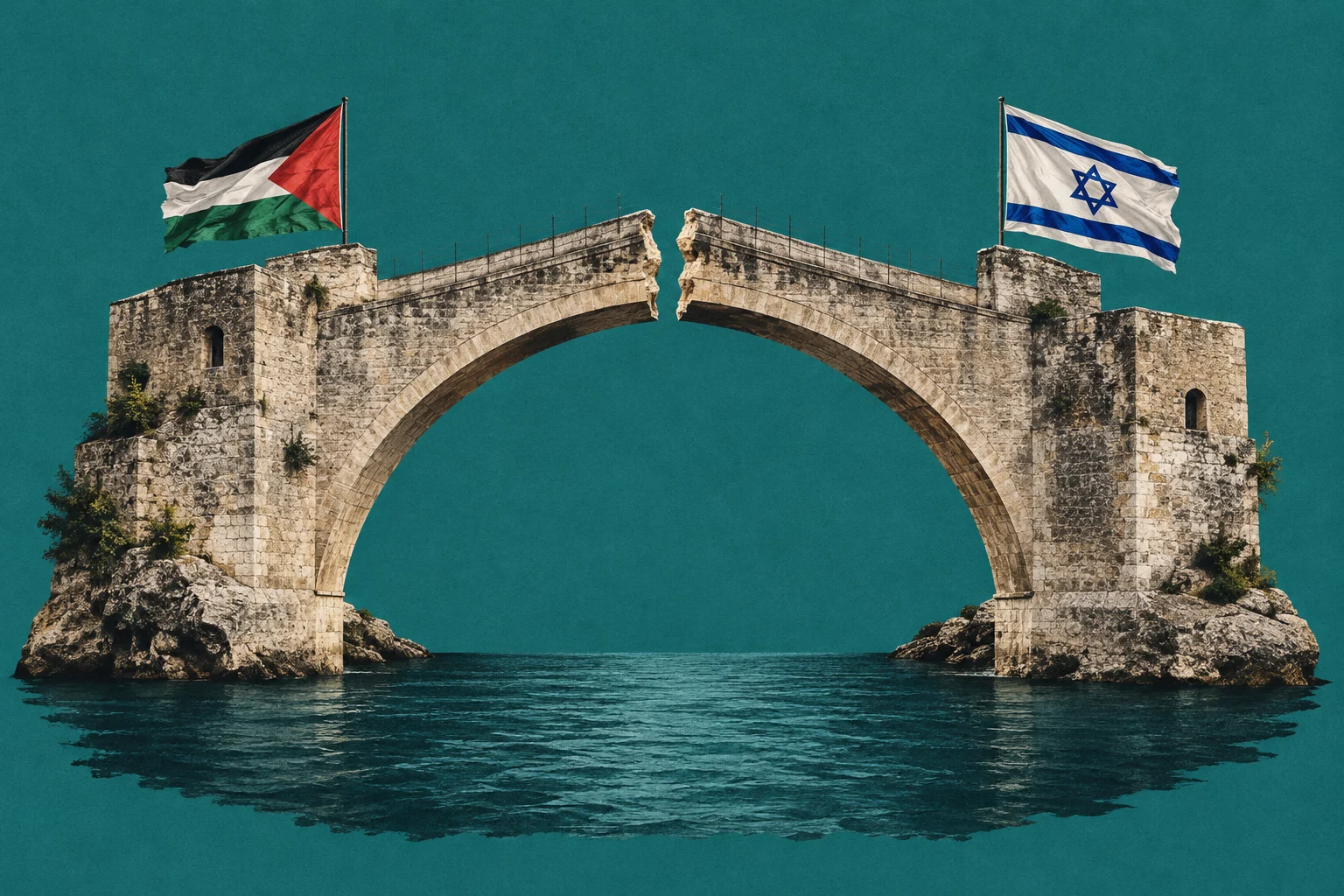
Writing for Al Jazeera, Mario Pejovic sets that account against the rest of Europe, where opinion has moved during what the outlet calls Israel’s genocidal war on Gaza. Unconditional solidarity has given way, in much of the continent, to concern over how Israel is fighting, with Spain and Ireland the loudest critics. The Balkans have joined no such current. Marko Prelec of the International Crisis Group says the region’s states have “almost no common positions at all.” His summary is blunter: “Each country goes its own way.”
Prelec does not deny that the revulsion is real, above all among Bosnian Muslims. But he argues that most governments act on interests that have little to do with Gaza. Florian Bieber of the University of Graz puts the motive in two words: positions grow out of “domestic politics and also national narratives.”
Two Bosnias
In Bosnia and Herzegovina the split runs along the same ethnic lines that cut through everything else in the country. Bosniak leaders, and much of the public in the Federation, stand with the Palestinians. Bieber says Bosniaks read the Palestinian experience against their own suffering under Serb nationalist aggression in the 1990s. Republika Srpska’s leadership is openly pro-Israel, and some Croat figures lean the same way.
The analyst and journalist Bosko Jaksic sums up the reasoning of Milorad Dodik, the former Republika Srpska president, in an old proverb: “The enemy of my enemy is my friend.” That logic lets Dodik keep his friendship with Israel alongside his closeness to Moscow and his praise for Donald Trump. Prelec sees the entity’s courtship of Likud as a hunt for allies for its separatism, and as a back door into MAGA circles and the Trump administration.
One reflection suggests itself. A small polity that wants to be noticed in Washington learns to send its letters by way of whichever capital Washington already listens to.
Belgrade’s double ledger
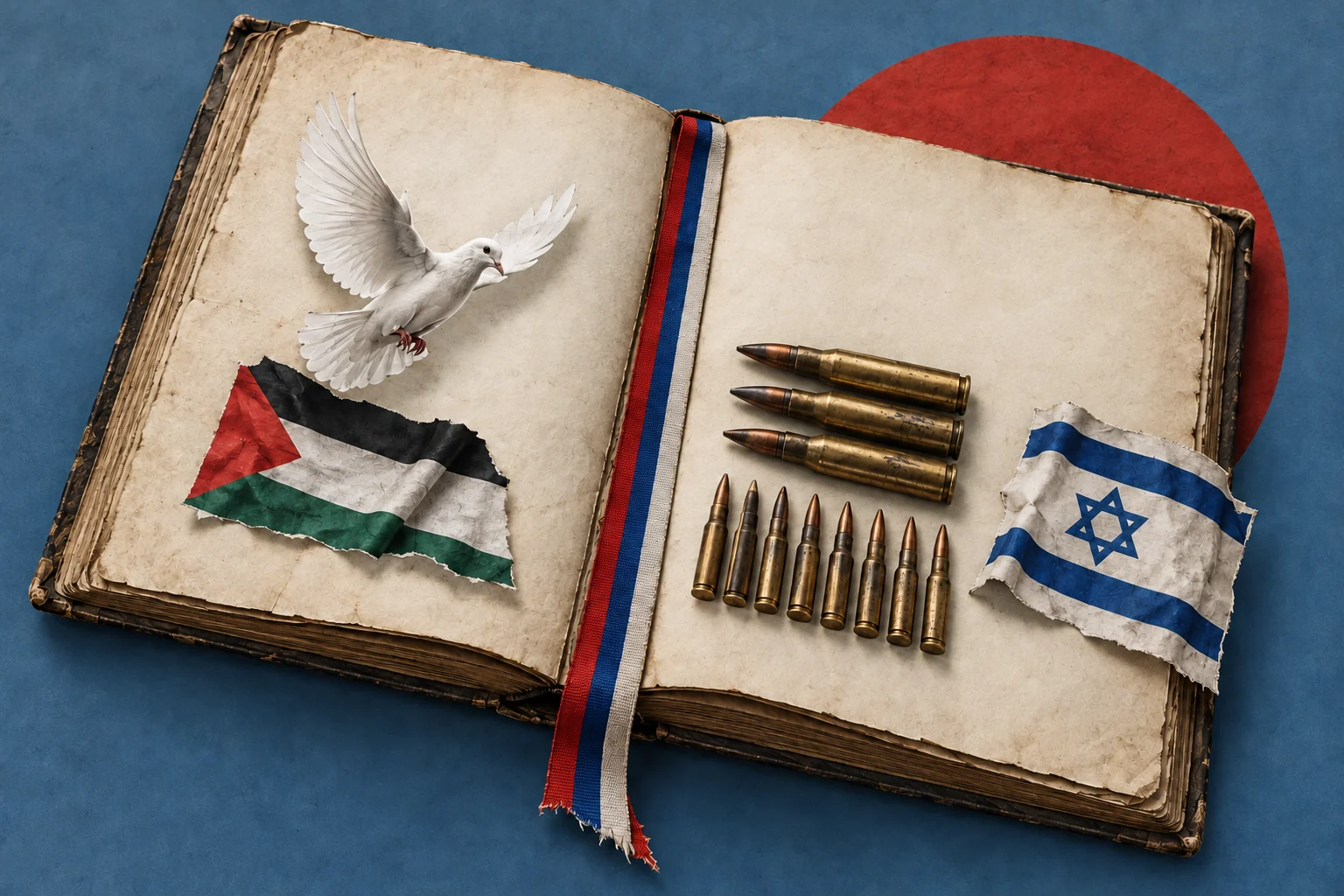
Serbia keeps two sets of books. On paper it has long been friendly to Palestine and has voted for Palestinian membership of international bodies. Since October 2023, though, it has exported arms and ammunition to Israel, and in September it opened a drone assembly plant linked to Israel.
Vuk Vuksanovic of King’s College London says the Serbian arms industry “has not been particularly picky” about its customers. He describes a security tilt towards Israel over the past three years, held in check by diplomatic caution at multilateral forums because Belgrade also values its ties with the Islamic world. What Serbia wants, he argues, is the protection of Israeli lobby groups and a way in to the Trump administration. Jaksic says President Aleksandar Vucic uses his relationship with Netanyahu to get closer to Trump, and he warns that Serbia “risks being accused of complicity in genocide.”
Jerusalem has its own place in the region’s story. Under the 2020 Washington Agreement, Kosovo and Israel recognised each other and Kosovo opened an embassy in Jerusalem. Serbia promised the same year to move its embassy there, and never did. Jaksic calls Israel’s growing influence in the region “evident”: in investment everywhere and, in Serbia’s case, in military cooperation. He suggests some leaders may be trying to buy themselves protection from US sanctions. In Albania, Prime Minister Edi Rama keeps warm relations with Israel. After cyberattacks his government widened its work with Israeli cybersecurity firms, while staying close to both Washington and Brussels.
Left and right in the north
Further north the dividing line is ideology. In Croatia, Prime Minister Andrej Plenkovic keeps to a cautious, mainstream EU position, while President Zoran Milanovic has condemned Israel’s conduct in Gaza as disproportionate. The result is a state that speaks with two voices.
Slovenia shows the same division played out over time. Its former centre-left government imposed an arms embargo on Israel, banned imports from the settlements, barred Netanyahu and other senior officials from entering, and recognised Palestine. The conservatives of Prime Minister Janez Jansa are now trying to undo those measures. Bieber calls it a “classic left-right division”: populists and the far right see Netanyahu as one of their own, and the alliance confirms their view of Islam as a threat.
The southern rim
Montenegro and North Macedonia say what EU and NATO members are expected to say, calling for a ceasefire and for aid, and avoid quarrels with anyone. Romania and Bulgaria are cautious and sometimes lean towards Israel, pairing careful statements at the UN with defence and intelligence cooperation tied to the United States.

Greece has gone furthest. Its military and energy partnership with Israel began, together with Cyprus, as a counterweight in the eastern Mediterranean. In April, Athens signed a deal worth about $750m for Elbit’s PULS rocket artillery, as Breaking Defense reported. On 31 August came a far larger contract, which the Times of Israel reported as a record €3bn ($3.5bn) agreement under which Israel will build Greece a multi-layered air defence system using David’s Sling, Spyder and Barak MX. Israel’s defence ministry called it the “largest defense export deal in the history of Israel-Greece relations, and one of the largest in the history of the State of Israel.” There were public protests against it. Al Jazeera has reported that Athens plans to spend about 28 billion euros ($32bn) by 2036 on the shield, known in Greece as Achilles Shield, and on F-35s and frigates, at a time when relations with Turkiye have soured.
Gaza is far from all of these capitals. What Belgrade, Banja Luka, Tirana and Athens are really talking to, in their dealings with Israel, is Washington, the arms market or a rival at home. Something similar has happened further east, in Modi’s India. The analysts agree the relationship is largely transactional. Meanwhile the Bosniaks who see their own 1990s in the news from Gaza have no factory and no contract to set against those interests. All they have is their memory.