
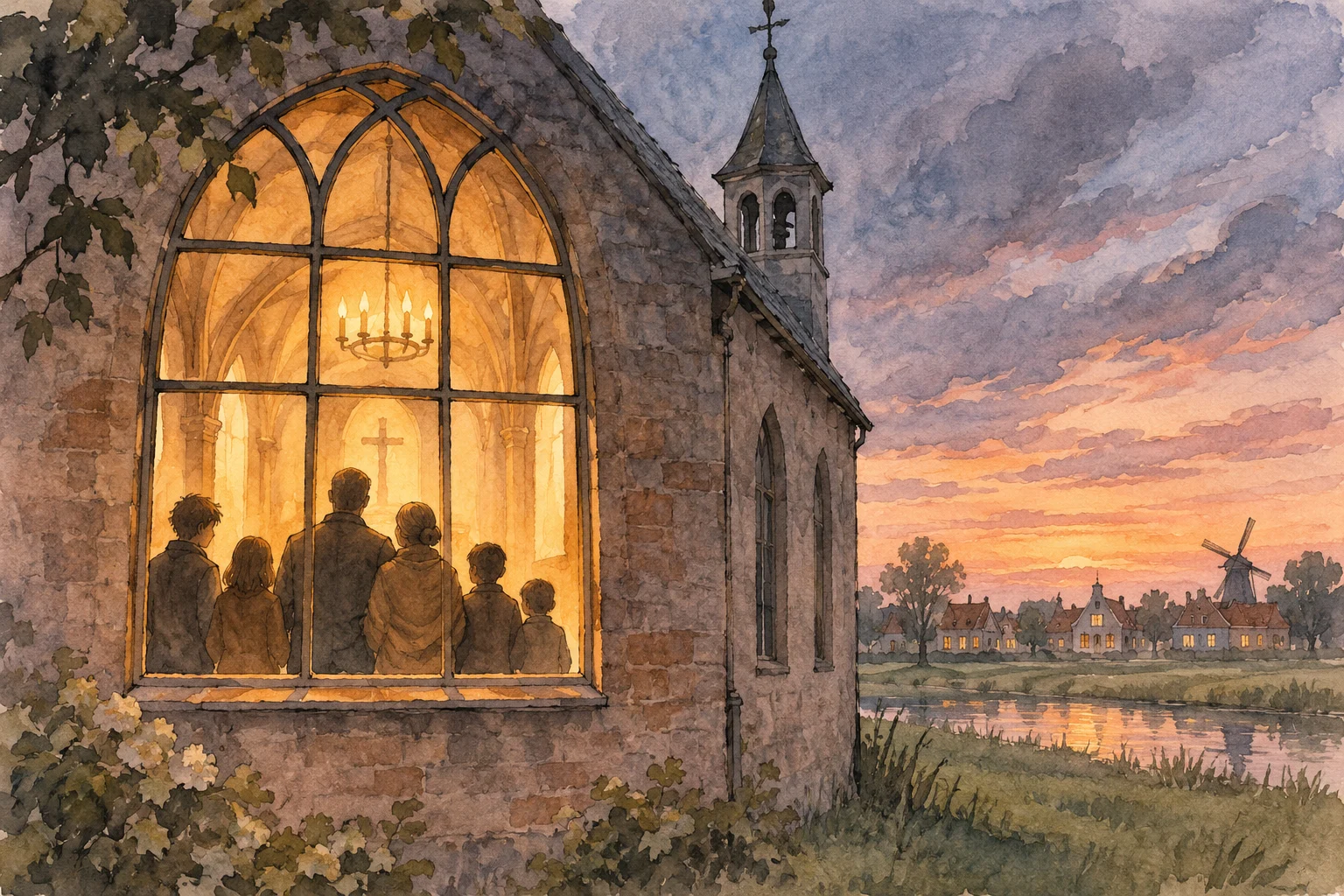
A Protestant church in the Dutch city of Kampen will mark two years on Saturday of a worship service that hasn’t stopped once, day or night, keeping police away from a family the government wants to deport to Uzbekistan.
The Babayants family, the parents Alexandr and Karine and their four children, have not stepped outside the Open Hof church in more than 700 days, Al Jazeera reported on Thursday. Dutch law bars police from entering a church during a religious service, so the congregation has kept one going since Nov. 21, 2024. More than 2,000 volunteers, religious and not, some from abroad, have taken part.
“We have traded our freedom for safety,” said Aram Babayants, 22, the eldest child.
His sisters are Ariana, 16, Amelia, 12, and Aleksa, 5. The two youngest were born in the Netherlands, where the family has lived for 13 years, and Ariana doesn’t remember Uzbekistan. “This is the only country we know to be home,” she said.
The family applied for asylum in 2014 because Alexandr feared persecution in Uzbekistan. Their applications were rejected again and again while they moved between refugee centers. In July 2024 they were held at a detention center in Zeist and came close to being put on a plane before the deportation was called off at the last minute, the Dutch daily Reformatorisch Dagblad reported.
Kasper Jager, the church’s pastor, was asked on Oct. 28, 2024, to take them in. He got approval from the other parishes in Kampen and from the national church council, and the family arrived three weeks later.
Keeping the service alive takes at least three people in every two-hour block, about 50 volunteers a day. Volunteer teachers give the children high school lessons on weekdays, and the family has a room of its own and a courtyard for fresh air, the regional broadcaster Oost reported. Supporters point to a report by education specialists at the University of Groningen that found deportation would do the children “irreparable damage in their development.”
Ariana misses her classroom, her friends and running outdoors. She and Amelia post dance videos on TikTok to stay in touch with people their age. “We are locked up, even though we have done nothing wrong,” she said.
Some churches have called the vigil excessive activism. “Jesus was an activist,” Mr. Jager said. He called the family’s Christian faith a “coincidence” and said the church would have done the same for a Muslim family. “It is about justice and humanity.”
Herman Stompers, who coordinates the service, said the fight was “not about the asylum procedure.” “This is about children’s rights,” he said, calling it “absurd” that children who have put down roots can be deported. Children’s rights are written into Dutch family and criminal law but not into immigration law, which he said suggests “children’s rights only apply to white, Dutch children.” About 420 children have waited more than five years for asylum approval, according to government figures.
In February a minority government led by Prime Minister Rob Jetten replaced the most right-wing government in Dutch history, after a stretch of anti-immigration protests that included racist chants, fireworks thrown at the authorities and attacks on refugee centers. Mr. Jager said the new government had not secured protection for rooted children. “Politically, not much is happening,” he said.

The courts have moved faster. In July, the Council of State, the country’s highest administrative court, granted residence permits to three families, placing children’s rights above limits on migration. Mr. Jager said he was cautiously optimistic the ruling would set a precedent but warned that the Babayants case could still take years.
The last church asylum Mr. Jager was involved in, at Bethel Church in The Hague, lasted 96 days. It ended in January 2019 when the government changed its policy and let the Tamrazyan family from Armenia and other migrant families stay, as NPR reported. Kampen’s service has now run more than seven times as long.
“Of course, we can’t keep doing this forever,” Mr. Stompers said. “As long as they can keep going, we can, too.”
Aram has a smaller goal. “My dream is to get one of those blue letters from the tax office,” he said. “That would mean I am allowed to stay.”