
The parchment had been waiting in Dijon’s municipal archive for more than five centuries: seventy pages, densely inscribed, the record of an investigation into what was done to a woman named Jehanne in the winter of 1472. What the historian Sara McDougall found in those pages, Laurie Clarke recounts for the BBC, became her new book, Justice for Jehanne — a medieval detective story that overturns much of what we think we know about that age. What follows includes distressing details of sexual assault.
The woman in the long hood
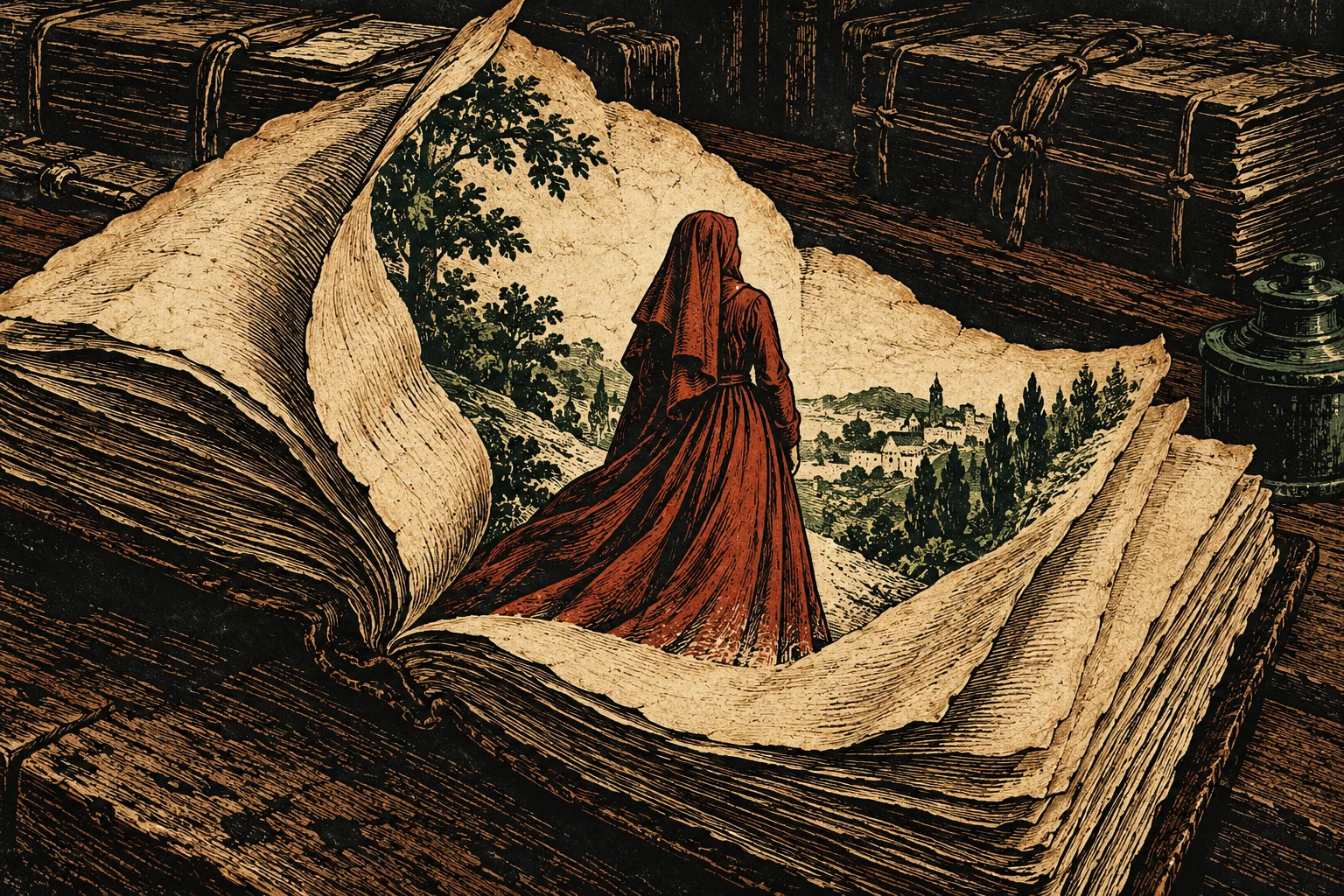
Jehanne was a relative stranger in Dijon. Born in Lorraine, in northeastern France, to a poor family, she had travelled south. Identity was a slippery thing then. Births were not registered; asked her age in 1472, she told the investigator she was “about 32”. She said she was married — the “wife of Jehan of Relanges”. In that era, clothing dictated how a person should be treated, and hers, witnesses said, was elegant: the long hood draped carefully over her golden tresses in public marked her as a respectable married woman.
The city and its wolves
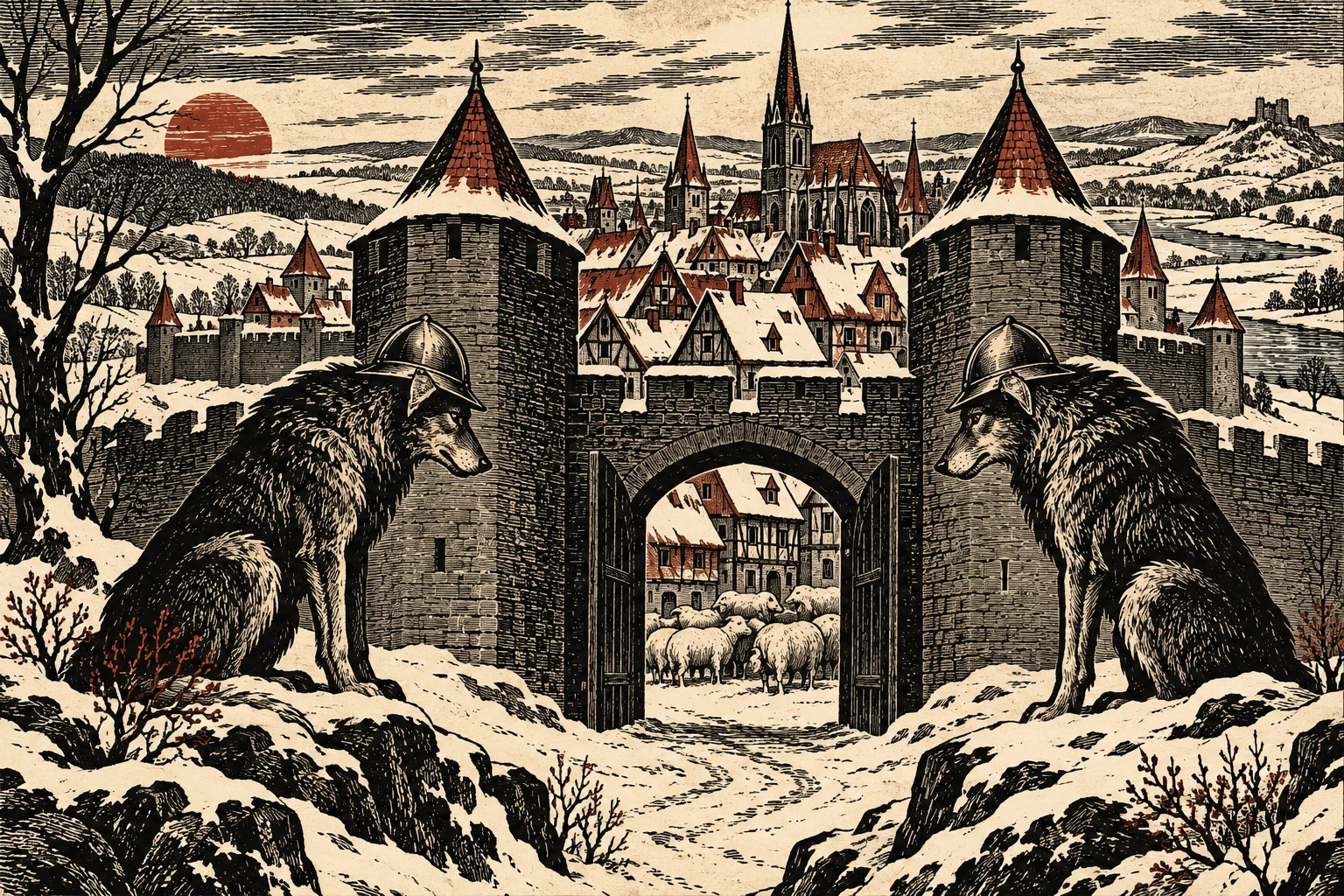
These were violent, war-ravaged times. Fighting raged between Charles the Bold, Duke of Burgundy, and King Louis XI of France, and Dijon stood under imminent threat of invasion as the king advanced into the Burgundian countryside. To protect the city, the duke had stationed mercenaries around its walls. The wolves paid to guard the sheep. “There were recurrent problems of men at night looking for potential victims to extort or abuse or hold for ransom or abduct,” McDougall tells the BBC. “The city authorities were not happy about it. This was a major point of conflict between the city and the duke.”
The third of January
On the evening of 3 January 1472, Jehanne — heavily pregnant — and her female host heard a heavy thump on the front door. Two local men demanded the women come with them. When they refused, one of the men fled to a nearby inn to gather some of the duke’s mercenaries. According to Jehanne’s testimony, the men dragged her to a nearby field and assaulted her. It did not matter that she was pregnant, they shouted; they had heard her unborn child was a priest’s, and therefore illegitimate. She described the men seeking “carnal company” with her while she thrashed in the snow. Her heavy pregnancy and her intense struggle ultimately prevented them. She was beaten and thrown on her stomach, terrified for the health of her unborn child.
The story that was told instead
For decades, the received wisdom held that rape in the Middle Ages was considered so shaming that female survivors were routinely cast out and ultimately forced into sex work. The notion traces to Jacques Rossiaud’s popular book Medieval Prostitution, first published in 1988 and updated in 2010. Rossiaud mentioned, in passing, an unnamed pregnant woman assaulted by mercenaries in Dijon — a woman, he wrote, at first too ashamed to tell the authorities, one of many survivors who purportedly ended in brothels. McDougall, a history professor at John Jay College of Criminal Justice in New York, set out to fact-check that fleeting reference. The woman sounded like Jehanne. What emerged from the archive was a very different story.
The investigator
Hearing reports that mercenaries had abducted and assaulted a pregnant woman, Jaques Borestel, an investigator working for the city authorities, set out immediately. He interviewed Jehanne the day after the attack and found her lying in bed, stricken and fearful for her baby. She gave him everything she could recall. The next day, she gave birth to a baby girl.
Her candour was a small act of defiance. The penalty for abduction and assault was technically death — but most crimes were never prosecuted. Jehanne had little to gain by complaining. With her information, Borestel quickly rounded up most of the attackers. Interrogated, they denied it. Borestel arranged a confrontation: Jehanne faced the men and repeated her account. They still would not confess. The municipal officials then agreed that “extraordinary” measures were acceptable; one man was tortured with a method similar to waterboarding. Eventually, all of them confessed.
The duke’s men
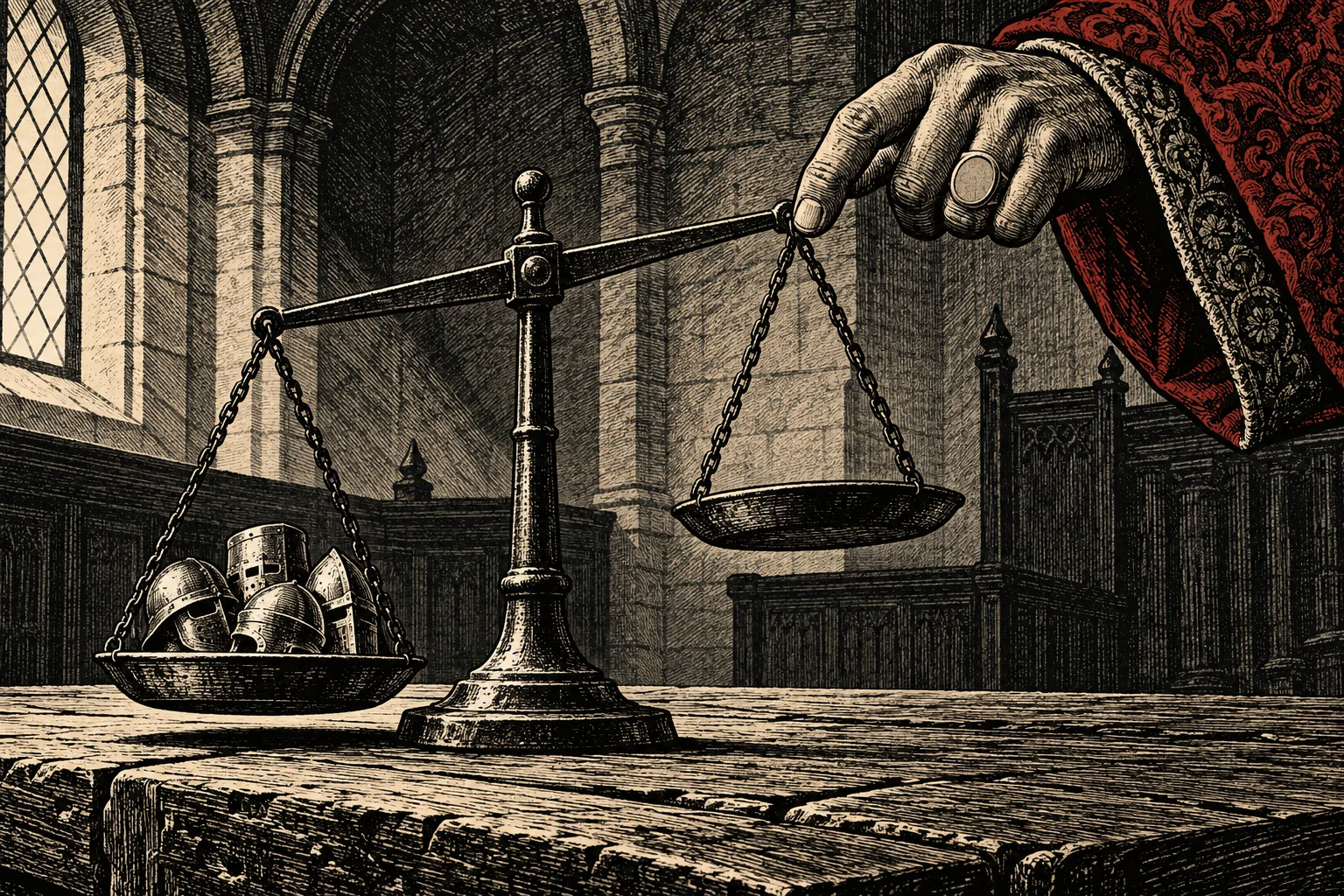
Armed with confessions, the city chose the punishment: death. But the men were mercenaries, technically under the purview of the duke — a duke who had recently condemned their behaviour and declared he wanted Dijon’s residents to feel safe. Would he take the opportunity to punish wrongdoing publicly? Word came back from the ducal authorities: they recommended the men walk free.
The municipality pushed back, playing for time, and in the interim did something curious: it commissioned a new investigation — into Jehanne. Not to put her on trial, Borestel wrote in no uncertain terms, but to determine whether she was a “preudefemme”, a respectably married woman, or a “loose woman”.
Borestel interviewed neighbours. Many said she appeared respectable; no one shamed or blamed her for the assault. But contradictions surfaced. A neighbour said Jehanne had given birth to another child two years earlier, in a nearby monastery; the father was thought to be a priest with whom she had shared a room. She had not seen her husband for years. Meanwhile she was being threatened by defenders of the mercenaries, and — despite the looming reprisals — neighbours and acquaintances helped her find places to hide. She landed at last at a hospital, where she worked.
What she admitted
Confronted by Borestel, Jehanne admitted she had uttered a few untruths. Her husband had left her several years before, to fight in the war. After that she met a priest, became his mistress, and bore two of his children. Did that make her a “loose woman”? Her own summation, as Borestel recorded it, survives on the parchment: “It was better to be loose with her body to make her living than resort to stealing from people.”
It was a morality fitted to its century. Sex before marriage was supposedly forbidden but widely permitted; priests were supposed to be celibate but kept mistresses and sired illegitimate children; prostitution was a grave sin and widely tolerated. Jehanne was not who she had said she was. The remarkable thing is that it did not matter. The prosecutors, having heard Borestel’s evidence, pressed her case regardless. That she had borne a priest’s illegitimate children proved immaterial. The officials wanted those mercenaries dead.
But the mercenaries were no longer in prison. The ducal authorities had declared the men members of the clergy, subject only to clerical law — a claim patently absurd, since clergy were forbidden to bear weapons. The municipality’s hands were tied. After two months in prison, the men walked free. The city had the snow, the bruises, the confessions extracted in its cells. The duke had a word — clergy — and the word was stronger.