
Dennis Hastert, who was speaker of the House from 1999 to 2007, longer than any other Republican, died on Saturday at his home in Illinois. He was 84. Kendall County Coroner Jacquie Purcell said he died of natural causes while receiving hospice care, the Associated Press reported. The coroner’s statement, as quoted by NBC News, ended: “No further information is available for release.”
Hastert admitted in a federal courtroom that he had sexually abused boys he coached in wrestling at Yorkville High School, where he worked from 1965 to 1981. He was never charged with any of it. By the time it came out, the statute of limitations had expired. He went to prison anyway, for 15 months, and the reason he went is worth stating plainly, because it is the whole shape of the case.
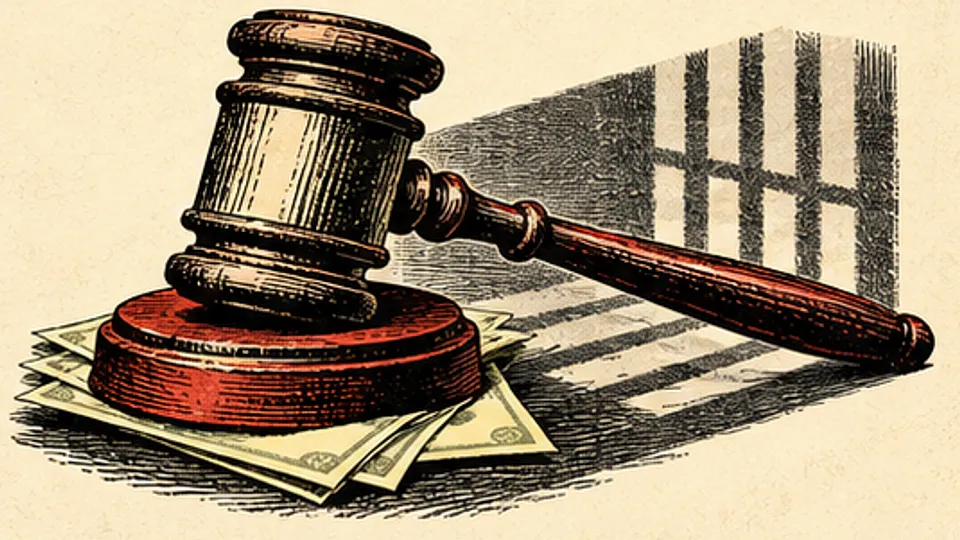
Banks have to report cash transactions above $10,000 to the government. If you deliberately break your withdrawals into smaller pieces to stay under that line, the splitting is itself a federal crime, called structuring, and it doesn’t matter what the money is for. Hastert had agreed to pay $3.5 million to a former student, identified in court papers only as Individual A, and he paid more than $1.7 million of it, sometimes in lump sums of $100,000 cash, according to the AP. In 2016 NPR reported that he had withdrawn almost $1 million in amounts under $10,000. The FBI and the IRS began looking at the withdrawals in 2013, CBS News reported. He was indicted in 2015 for structuring and for lying to the FBI about why he was doing it. (The New York Post dates the indictment to 2014, but other outlets say 2015.) He pleaded guilty to the structuring charge that year.
The U.S. attorney’s office in Chicago said as much when he was sentenced. Its aim, its statement said, was to hold him accountable for “the crimes he committed that could still be prosecuted: illegally structuring cash withdrawals and lying to the government about his motive for engaging in that activity.” The abuse itself was beyond the law’s reach. The money he used to keep it hidden was not, because money moving through a bank leaves a record.
What prosecutors described in their filings was grim. They said he abused at least four team members during his coaching career. Individual A said the abuse happened in a motel room when he was 14, on the way home from wrestling camp. Other wrestlers said Hastert touched them in the locker room after offering massages, and two said he performed sex acts on them. Prosecutors also described a recliner in the locker room where Hastert often sat, with a direct view of the shower stalls. NBC News described the allegations as involving four teenagers aged 14 to 17 in the 1970s; Jezebel reported that the victims named by prosecutors included a former team equipment manager.
At the sentencing on April 27, 2016, U.S. District Judge Thomas Durkin called Hastert a “serial child molester” and said: “Nothing is more stunning than to have the words ‘serial child molester’ and ‘speaker of the House’ in the same sentence.” One former wrestler, Scott Cross, told the court: “I’ve always felt that what Coach Hastert had done to me was my darkest secret.” Hastert said he was “deeply ashamed” and that “I know I am here because I mistreated some of the athletes I coached.” The AP noted that his statement never referred directly to sexual abuse; CNN reported at the time that he admitted the abuse when the judge questioned him. Jezebel reported that 60 letters were submitted to the court on his behalf, of which 41 were made public.
He was also fined $250,000 and ordered into sex-offender treatment and two years of supervised release. Zachary Fardon, then the U.S. attorney, said: “Mr. Hastert’s legend and legacy are gone, and in its place are a broken, humiliated man. That is how it should be.” Hastert served 13 months and was released in 2017; NBC News reported he left a prison hospital several weeks early. His release terms barred him from being alone with children or having pornography.
The accidental speaker
Before all that came out, the career was built largely on other people’s bad luck. Born in Aurora on Jan. 2, 1942, Hastert studied economics at Wheaton College and taught for 16 years in Yorkville. His team won a state title in 1976 and he was named coach of the year; most outlets say Illinois coach of the year, while the AP called it a national award. He finished third in a 1980 primary for the state House but got on the ballot when the incumbent fell ill. He won his congressional seat in 1986 with 52% of the vote.
In 1998, after Republicans lost House seats, Hastert told Newt Gingrich he didn’t have the votes to stay speaker. In his 2004 memoir, Speaker, Hastert says Gingrich asked what he should do, and he answered: “Do what you have to do.” Bob Livingston was in line to succeed Gingrich. According to the Boston Globe, Hastert was discouraged enough that he had an appointment on Dec. 20 with a headhunter about running a financial services trade association. On Dec. 19, Livingston, facing questions about his extramarital affairs, said he would not run. Hastert canceled the headhunter.
As speaker, he presided over the House through the Clinton impeachment trial, the Sept. 11 attacks and the 2001 anthrax letters. He helped pass George W. Bush’s tax cuts and sponsored the 2003 Medicare prescription drug law. He also gave his name to the “Hastert Rule,” the informal practice of bringing a bill to the floor only if “the majority of the majority” supports it. In plain terms, a minority of the House can block a bill if that minority is most of the ruling party. CBS notes that critics say the rule has made Congress more partisan. The AP reported that he became wealthy largely through land deals that coincided with a highway earmark of his raising the value of property he owned in his district.
Republicans lost the House in 2006, partly over the Mark Foley page scandal; Hastert said he had not known about Foley’s conduct. He resigned in November 2007 and went into lobbying. That part of the story is covered in rews’s earlier obituary. After his indictment, Wheaton took his name off its public policy center, the National Wrestling Hall of Fame revoked his honors, and then-Speaker Paul Ryan had his portrait taken down from a hallway outside the House chamber. He is survived by his wife, Jean, and two sons.
The portrait came down in 2015. The rule was always informal, and it is still called the Hastert Rule.