
Under a graffiti-covered bridge in Nørrebro — a multicultural, trendy district of Copenhagen — a woman named Sara touches her hijab as she speaks about the country where she was born and raised. She is 46, Danish by birth, and she asked that her real name not be used.
I am Muslim. The way the government and the media speak, they see me as not Western
That sentence, reported by Nils Adler for Al Jazeera from among the residents fighting the legislation, is the whole case in miniature. Denmark’s housing law — known to its opponents simply as the ghetto law — was written to dismantle so-called parallel societies, but its machinery works by category. It sorts flesh-and-blood Danes into Western and non-Western, and where the state finds too many of the latter, it acts: estates are redesignated, housing is sold off or demolished, and people are moved on. Residents say the law is breaking up communities; some call it, in Al Jazeera’s account, straight up racist. Now the Danish Supreme Court is preparing to rule.
A category with the force of law
The case did not come from nowhere. In December 2025, the Court of Justice of the European Union — in cases brought by residents of Mjølnerparken, an estate in Nørrebro, and another estate — ruled that the non-Western categorisation could amount to ethnic discrimination, as the Guardian reported, and left the final judgment to Danish judges. That ruling took the extraordinary step of telling Denmark that its official taxonomy might itself be unlawful.
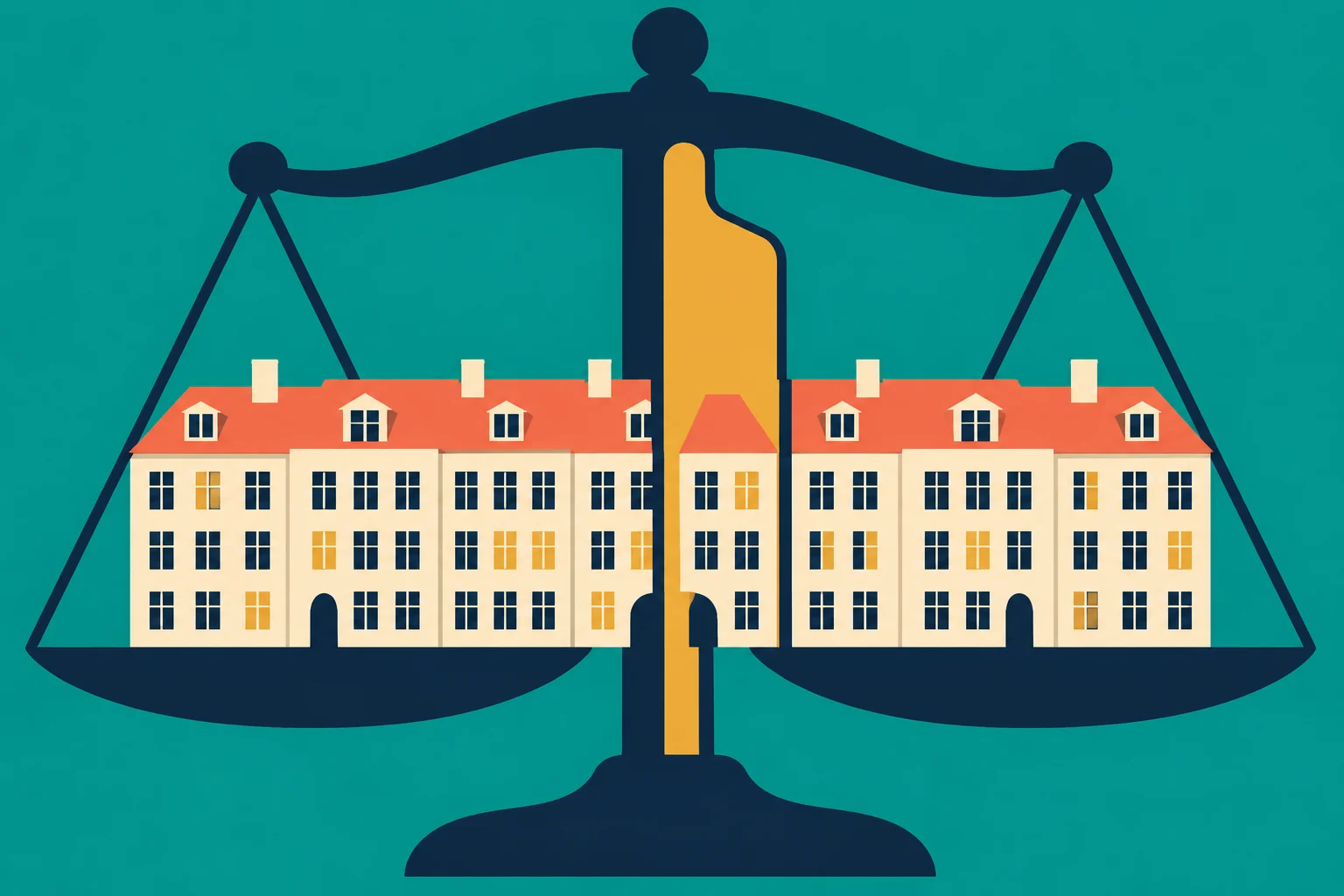
This week the question sharpened. The Supreme Court heard the case of Nøjsomhed-Sydvej — a housing estate whose residents face eviction under the same law — on Friday and Monday, the Guardian reported. Legal experts told the paper the outcome could have implications for the Mjølnerparken case, because it is likely to produce a domestic ruling on whether non-Western background is covered by racial-discrimination law at all.
If the supreme court decides that ‘non-western’ background is linked to ethnic origin and racial discrimination law, that raises huge questions for the Danish state
That was Susheela Math, head of legal at the NGO Systemic Justice, speaking to the Guardian. Should the Danish state lose, every eviction, every forced sale, every demolished home ordered under the law’s categories becomes a claim waiting to be made.
There is an old irony in bureaucracies: they believe the world is dangerous until it has been classified, and then the classification itself becomes the danger. In Copenhagen the state counted who was Western and who was not, and in counting, decided who belonged where. In a district like Nørrebro, that number describes a neighbour, a schoolmate, a woman born within sight of the bridge with the graffiti. The Supreme Court must now say whether a democracy may count its citizens that way.