
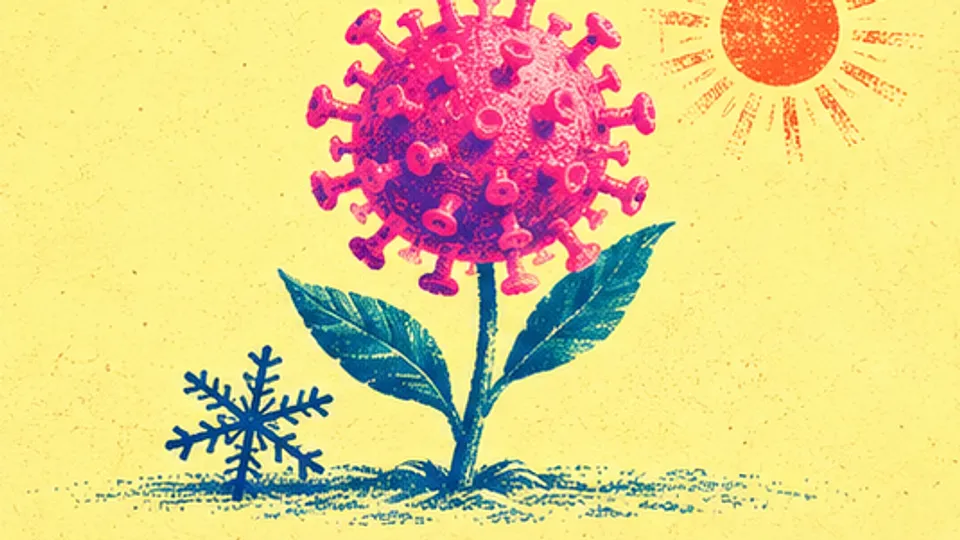
The coronavirus behind the Covid-19 pandemic is no longer a winter virus in Spain’s Catalonia region, according to a study published on Thursday that tracked 18 respiratory pathogens over three years and found clear spring and summer peaks instead. The result, researchers said, is a vaccination calendar out of step with the virus it aims to stop.
The atlas, the first of its kind in Spain, drew on more than 33,000 samples collected between October 2022 and September 2025 by the Information System for Infection Surveillance in Catalonia, a sentinel network that tracks respiratory viruses in real time. It found SARS-CoV-2 settling into what the paper calls a clear summer epidemic pattern, while influenza and R.S.V. kept to winter.
That mismatch has practical consequences, said Jacobo Mendioroz, the Catalan government’s deputy director general for surveillance and public health. “We are immunizing at-risk groups in the autumn, when the virus’ epidemic waves have already passed, and not beforehand, as would be desirable,” he said. “This work raises the possibility that it may be necessary to adjust the planning of vaccination campaigns and guidelines.”
The pattern has held this year. Coronavirus incidence in the region climbed at the end of summer, before communities had begun the fall campaign in which the Covid shot is given alongside the flu vaccine, according to the study, published in Eurosurveillance, the journal of the European Centre for Disease Prevention and Control.
Not everyone is ready to call the coronavirus a summer virus. Juan Carlos Galán, head of virology at Ramón y Cajal Hospital in Madrid, pointed to recent data from other European countries and parts of Spain suggesting a twice-yearly rhythm, in summer and winter. “What was observed in Catalonia over these three seasons indicates a trend in SARS-CoV-2 behavior, but we do not know whether other viral or environmental factors could have impacted that finding and we will have to wait for the next seasons to confirm it,” he said.
Dr. Galán described the broader field as viral ecology, in which viruses appear to compete for room on the calendar. “A good example was the first year of the pandemic, when influenza disappeared completely, overwhelmed by covid,” he said. “Each virus unfolds on the calendar in an orderly way, as if occupying different niches.”
Changing the vaccination calendar would not be simple. Coverage stands at 65 percent for flu and 50 percent for the coronavirus among people 65 and older, and officials worry that spreading doses across the year could erode it. “Who is going to get vaccinated at the start of summer against a virus that has always been associated with cold weather?” Mr. Mendioroz asked.
Gregorio Montes Salas, secretary general of the Spanish Society of Preventive Medicine, Public Health and Healthcare Management, said the study confirmed that the coronavirus has not followed the expected winter pattern, raising what he called the option of “de-seasonalizing” vaccination. Campaigns make mass vaccination easier, he said, but “it may be something worth exploring.” Both he and Mr. Mendioroz said more research was needed before any decisions.
The atlas mapped the whole field. Influenza A showed the clearest seasonality, peaking most often in the second half of January, with R.S.V. cresting roughly a month earlier. Rhinoviruses and enteroviruses came in two waves, in autumn and spring, and rhinovirus circulation fell when SARS-CoV-2 was circulating strongly. Adenoviruses, the seasonal coronavirus NL63 and two parainfluenza types circulated all year without defined peaks. Bocavirus and the coronavirus OC43 began in mid-autumn and crested between February and April.
The authors said that predictability was the point. Knowing that a rhinovirus wave and then a parainfluenza wave precede the flu each year, Mr. Mendioroz said, helps officials plan prevention measures and brace hospitals for surges in demand.