
The decision was signed on 12 October, which Colombia marks as the Day of Ethnic and Cultural Diversity of the Colombian Nation, and made public the next day, a Tuesday. In it, the Special Jurisdiction for Peace, the JEP, the transitional court created by the 2016 agreement between the state and the guerrillas, named ten former members of the Revolutionary Armed Forces of Colombia, once the country’s largest rebel army. It charged them with war crimes and crimes against humanity committed between 1996 and 2016. As Al Jazeera reported, the alleged abuses include torture, murder and driving Indigenous leaders from their land.
There were five victim peoples: the Nükak Baká, the Korebajü or Koreguaje, the Siona or Zio Bain, the Hitnü and the Jiw. Taken together, according to El Heraldo’s account of the decision, they number 10,073 people. That is the population of a small town, spread across five languages and five histories. The tribunal documented 1,134 victimizations against them, 598 attributed to the FARC’s Southern Bloc and 536 to its Eastern Bloc.
Where the guerrilla ruled
The crimes took place in the Amazon and the Orinoquía, the rainforest and savannah of Colombia’s south-east. The Associated Press noted that the FARC often held tight territorial control there. Here is a reflection, not a finding: in such places, far from Bogotá, an armed movement that claimed to fight the state can become the only state the inhabitants know. It decides who stays, who goes, and which paths can be walked safely.
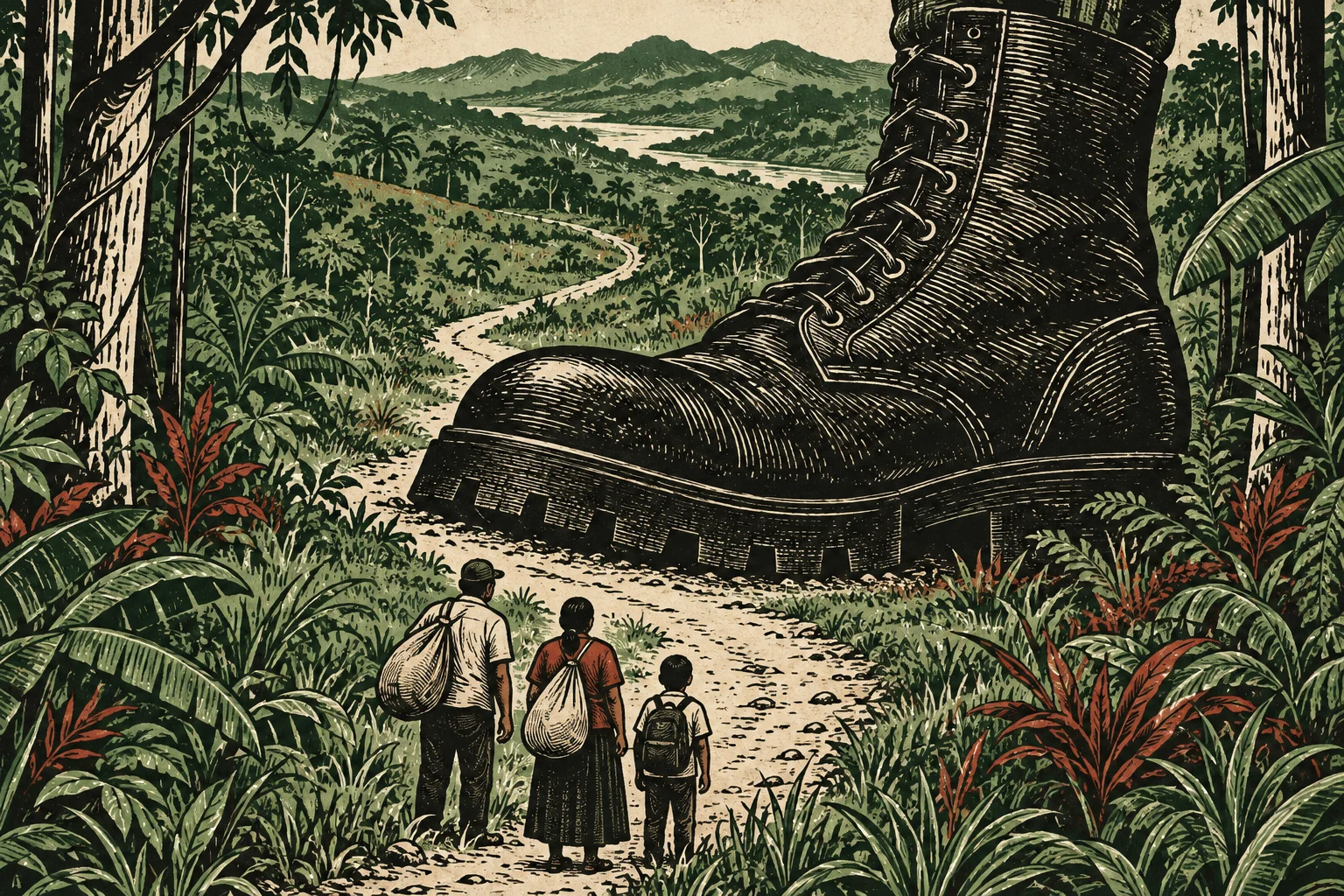
The list of charges reads like the legal language of a catastrophe. As crimes against humanity there are extermination, murder, forced disappearance, forcible transfer, torture and persecution. As war crimes there are homicide, forced displacement, the use of anti-personnel mines and damage to the environment. According to the JEP, the commanders ordered subordinates to plant mines on Indigenous land and to destroy ecosystems that the tribes depend on to survive.
The magistrates describe two patterns. The first covers crimes against the peoples’ self-determination, culture and autonomy. Its example is a 1997 massacre in the San Luis resguardo, where seven members of the community were killed. The second covers crimes committed during hostilities, above all the mining of Indigenous territory.
In its own words, the tribunal said the violence “uprooted the Indigenous peoples from their territory, ‘sickened’ their sacred places, broke their spiritual balance and put their survival at risk.”
Names from the last secretariat
The accused are not foot soldiers. Three sat on the FARC’s final secretariat, as Infobae reported: Milton de Jesús Toncel Arredondo, known as Joaquín Gómez; Jaime Alberto Parra Rodríguez, known as El Médico; and Julián Gallo, known in the war as Carlos Antonio Lozada. Elmer Caviedes is also on the list, with six others. All ten belonged to the Southern and Eastern blocs.
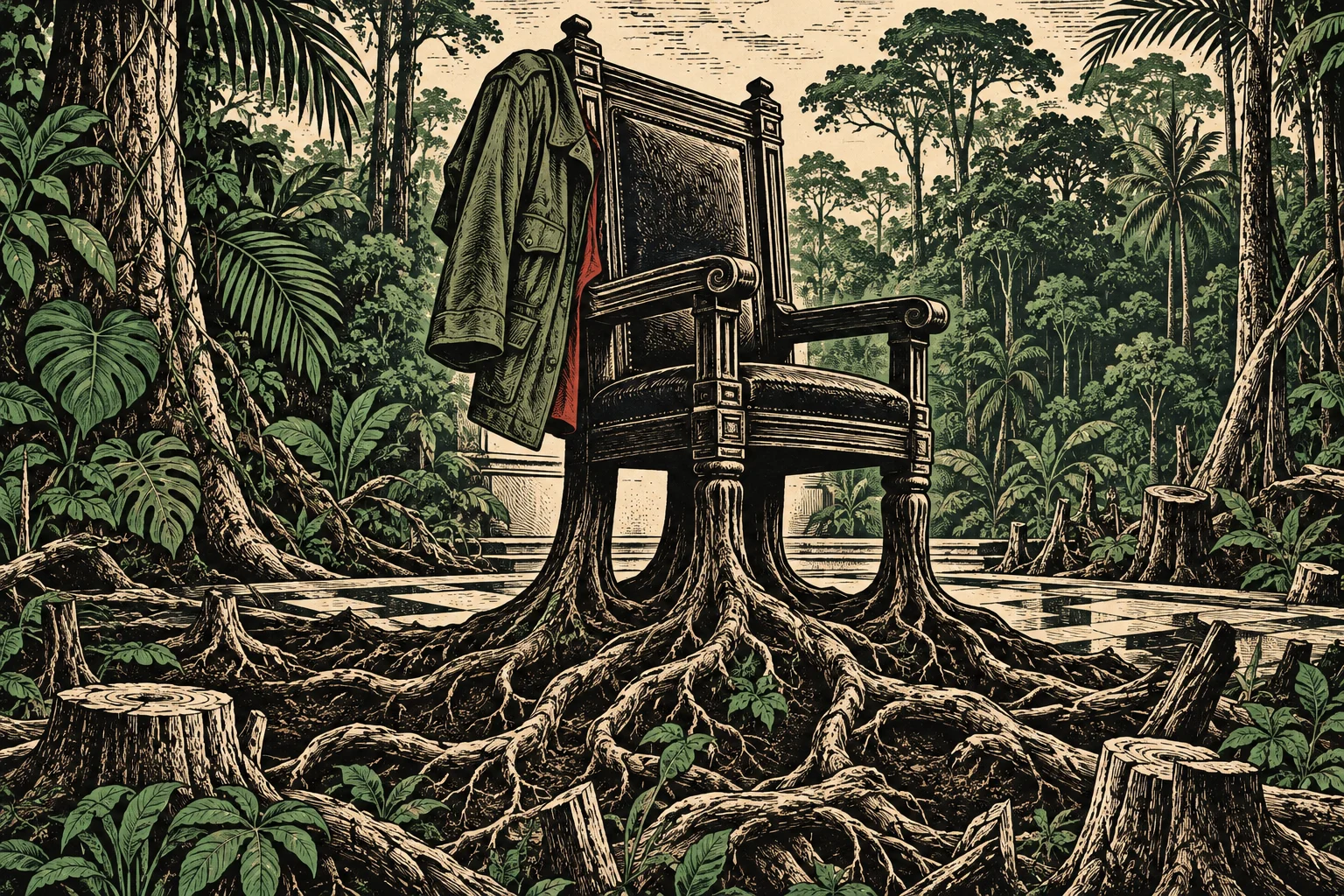
Gallo held a seat in the Senate for eight years. He owed it to the peace accord, which gave the rebel leadership 10 seats in Congress. For eight years the man responsible for laws in Bogotá was the same man who, according to the tribunal, bears responsibility for what was done in the forest. Peace processes rest on this uncomfortable exchange: the commander becomes a legislator first, and is called to account later.
Thirty days
The accused have 30 days to respond. The JEP’s logic is to trade truth for leniency. Those who accept the charges and cooperate avoid prison, and instead pay reparations to victims and take part in truth and reconciliation programmes. Those who reject the charges and are convicted of war crimes face up to 20 years in prison. The tribunal has tried this exchange once before: in September 2025 it convicted seven former FARC leaders over kidnappings, in its first individual sentences.
The case belongs to the Amazon and Orinoquía subcase of Case 09, which investigates crimes that cannot be amnestied, committed against ethnic peoples and territories during the war. That war was large. The truth commission created by the same agreement found that at least 450,000 people were killed and 7 million displaced. Against numbers like these, five small peoples can disappear into a footnote.

The court is under fire too. Semana wrote that the decision comes amid criticism of the JEP’s ineffectiveness, its lack of results and spending that does not reach victims. The opposition Centro Democrático, quoted by El Heraldo, said the FARC had used the JEP to clean up its image and justify the unjustifiable.
“The most forgotten peoples”
JEP magistrate Catalina Díaz used a phrase that also describes the country: “Today we are delivering justice to the most forgotten peoples of a segregated Colombia.” She added: “These people have had their basic right to exist compromised.”
Here is another reflection. For peoples this small, the deaths of seven people in one resguardo, the expulsion of a few leaders, or one mined trail to a hunting ground cannot be absorbed the way a large nation absorbs its losses. Such blows reach the whole community, and what holds it together.
Yhon Jairo Figueroa, a Koreguaje leader, thanked the tribunal and named what had been at stake. “For the first time the Colombian state recognizes that (armed groups) did not just kill individuals,” he said. They had tried, he said, to destroy “the knowledge, the language, the territory.”