
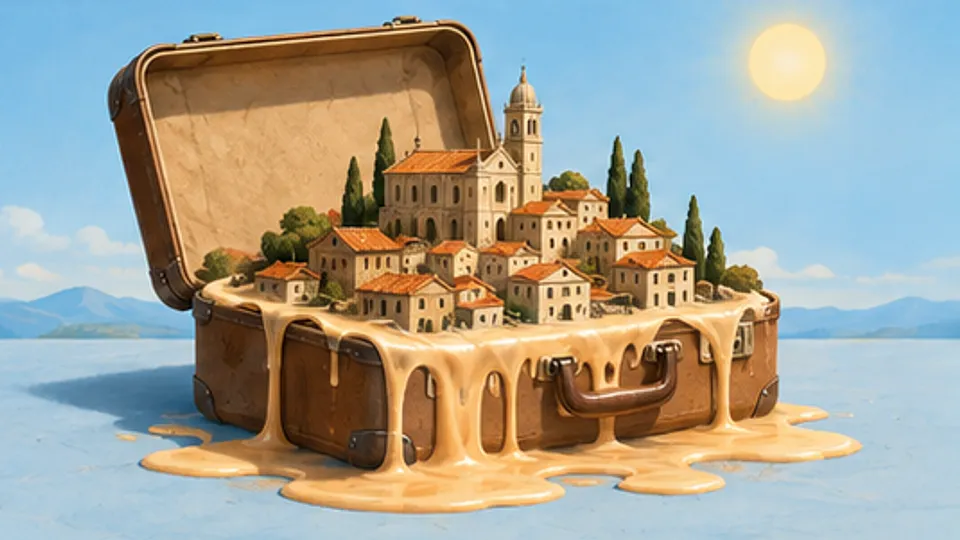
Europe, the most visited continent on Earth, is in danger of becoming a “museum or attraction park” for the world’s travellers—and its tourism chief is rather relaxed about it. “There’s nothing wrong” with that, Eduardo Santander, chief executive and executive director of the European Travel Commission (ETC), told the Euronews Travel & Tourism Summit in Brussels on September 29th. An attraction park or museum can be a “perfect place to be”, he said, provided it is “well organised” and “well managed”. The question haunting the industry is whether Europe still qualifies on either count.
Popularity is not the problem. In the latest Travel & Tourism Development Index from the World Economic Forum, published in September, seven of the world’s ten highest-ranked countries for tourism were European, with Spain placing third. Tourism accounts for 10% of Europe’s economy, Mr Santander said, and is “instrumental” in some markets—10% of GDP in his native Spain, and as much as 15% or even 20% in others. That weight, he argued, justifies heavier investment in hotels, transport and other tourism infrastructure, especially as Europe seeks to lift productivity in industries such as chemicals and cars.
What ails European tourism, in his telling, is less the much-discussed scourge of overtourism than plain congestion: airport services under strain, ground transport clogged, bottlenecks at the famous sights. Pressure on local communities is real, but the sharper emergency is meteorological. “Climate change is the biggest threat to tourism right now, by far,” Mr Santander said.
He offered a litany of recent indignities. “We see that trains cannot run sometimes because the rails are expanded because of the heat. We saw this at the cruise lines on the European rivers—they couldn’t run because it was too dry.” A tourism economy built on temperate Mediterranean summers is discovering that its product has become seasonal in a new and unwelcome way.
Travellers have already adapted, after a fashion: the summer of 2026 brought the rise of “coolcations”, as holidaymakers looked beyond the usual Mediterranean destinations amid scorching heatwaves in search of cooler escapes. Mr Santander takes the trend as a warning that the industry must prepare for such shifts “in a much more coordinated and comprehensive way”.
We see resilience becoming one of the engines of European tourism. We have to become even more resilient to whatever is next.
There is a commercial logic beneath the homily. A continent that cannot guarantee functioning railways, navigable rivers or bearable Julys must sell something else—reliability, perhaps, rebranded as resilience. That costs money, and Mr Santander’s summit-going plea for infrastructure investment is a lobbyist’s way of sending the bill to governments. Europe as the world’s best-run museum is an appealing idea. Museums, however, charge for upkeep, keep their climate controlled and close for repairs. Europe currently does none of these things consistently—and until it does, the attraction park risks looking less curated and more weatherbeaten.