
On Saturday, 10 October, Christa Pike went back to the Debra K. Johnson Rehabilitation Center, the women’s prison in Tennessee that has held her for 30 years. Her lawyers announced the move in a written statement, as the Associated Press reported in a dispatch carried by CNN. She had been in hospital since 30 September. That was the day the state gave her two doses of pentobarbital and she did not die.
The state had set out to kill her. Ten days later it put her back in her cell.
“She is grateful to the first responders and her medical team for their care in these extraordinary circumstances,” the lawyers wrote. “She is continuing to receive medical care at the prison, and we will continue to track her recovery.”
The Death Penalty Information Center says she is the first person to survive after receiving lethal injection drugs during an execution. According to the center’s page on her case, seven prisoners before her had survived failed execution attempts. In every one of those cases the attempt was abandoned because no IV line could be set, so the drugs were never given.
The arm
The AP account of the night is sparse. Asked for a final statement, Pike spoke of being at peace. About five minutes later she raised her head and said her arm hurt. Later she appeared to lose consciousness, but she could still be heard breathing heavily when media witnesses were led out of the witness room, nearly 90 minutes into the execution. An ambulance took her to hospital.
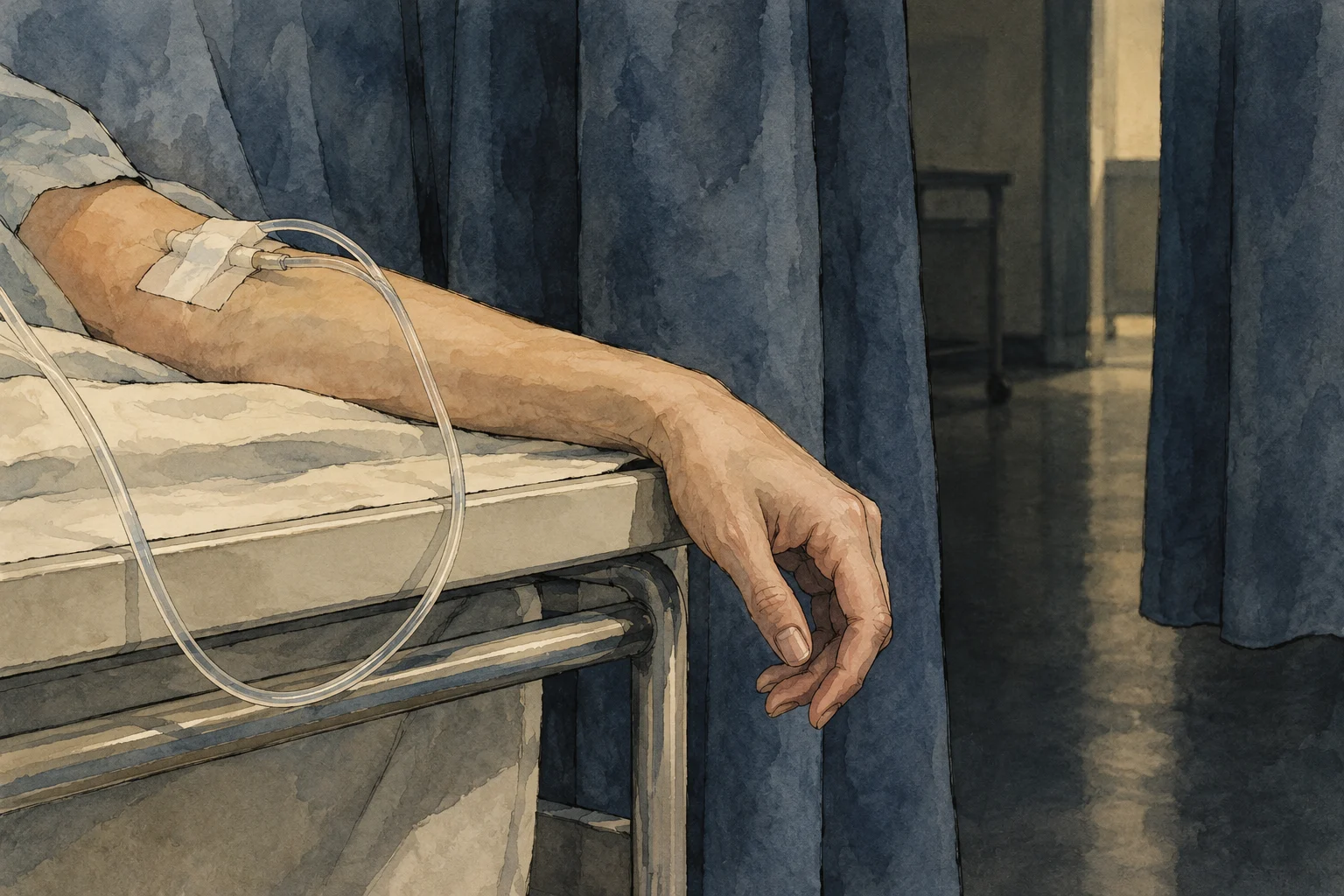
Her lawyers had warned beforehand that the IV protocol would cause needless suffering because of her small veins and a blood condition, Radio New Zealand reported, carrying AFP. Afterwards, in a court filing, they wrote that the execution team had used at least seven needles to get IV access, that one came out “bent in a 90-degree angle,” and that “apparently at no point did any member of the execution team realize that the IV lines were not correctly placed.” Medical and lethal injection experts suspect the drug pooled in her tissue and never reached her bloodstream. Her arms were burned and blistered.
Waking
At one point she was on a ventilator, and her lawyers did not expect her to live. According to Newsweek, plans were being made to take her off life support when she woke and began talking on Tuesday. By Thursday she was walking with assistance and eating a regular diet. Her legal team said on Wednesday that she remembered nothing of the ordeal and was “angry and confused,” The Independent reported. They also described her mental state as “foggy.”
Dr Joel Zivot, an anaesthesiologist at Emory University who has been retained by her lawyers, was careful. “It’s unclear to me whether she possesses a full cognitive recovery. It’s too soon to really say,” he told the paper. “As a simple rule of thumb, I tell patients that one day in bed is one week of recovery.”
Her lawyers put it in plainer terms: “Christa is dealing with the profound psychological trauma of having survived a failed execution, including the terror, pain and uncertainty of believing she was about to die.”
The protocol was followed
On the night itself the Tennessee Department of Correction issued its verdict on itself. It said it had “followed every step of the State’s lawful, established execution protocol approved by the Attorney General’s Office,” that the chemical “has consistently been effective,” and that the protocol “does not allow for additional procedures beyond what was carried out this evening.” It has still not said what went wrong.
Here is a reflection, not a finding. When an institution fails, its first move is often to certify that it obeyed its own rules. The rules were kept, and the woman lived.
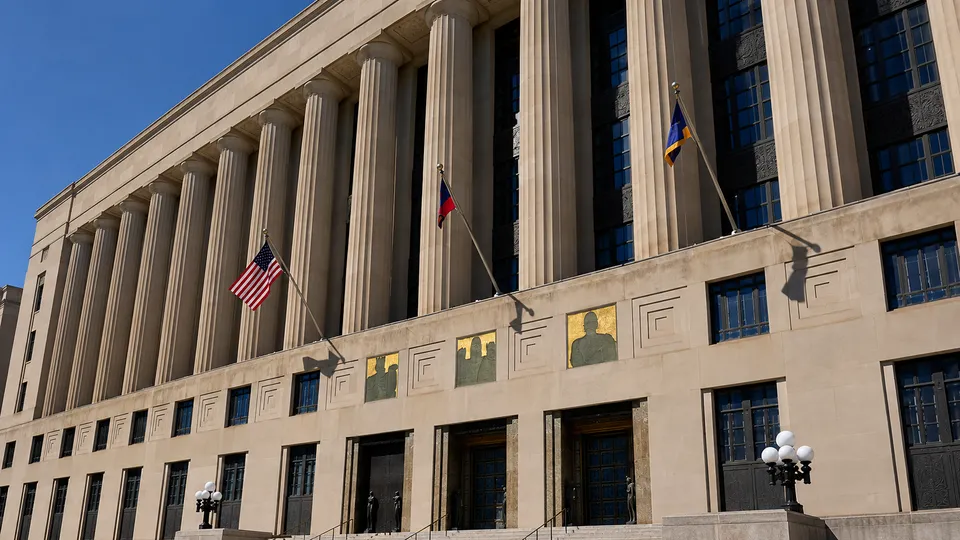
The commissioner, Frank Strada, resigned. He said he believes the department acted “in accordance with the established protocol,” but that “stepping aside is in the best interest of Tennesseans.” Governor Bill Lee, a Republican, called the events “deeply disturbing” and said he was “highly disappointed”. He suspended executions for the rest of the year, which cancels Gary Wayne Sutton’s execution, set for 3 December. The Attorney General’s Office has hired former US Attorney Ed Stanton to conduct an independent review. Lee chose Stanton for a similar review in 2022, and the governor’s office says that review led officials to “substantially rewrite the protocol.” A Nashville judge has ordered prison officials to preserve evidence, including “anything that was in the actual room.”
One bite of the apple
Tennessee has not said whether it will try again. Other states have made second attempts, but only after first attempts that were stopped before any drug flowed. Deborah Denno of Fordham University School of Law has said a second attempt could run into the constitutional bar on double jeopardy. “The state has one bite of the apple,” she said, describing the argument Pike’s lawyers could make. “They can’t come back and say, ‘Well, we didn’t do it right.’”
Her lawyers want Lee to commute the sentence to life without parole. “Christa has endured more than enough,” they said.
None of this changes the crime. In 1995 Colleen Slemmer, 19, was beaten and stabbed to death by Pike and her boyfriend. Slemmer had been Pike’s classmate at a Job Corps training program in Knoxville. Pike was 18. Her supporters point to her age and to years of sexual abuse she had suffered. Had the drugs worked, she would have been the first woman executed in Tennessee in more than 200 years.
The wider argument
Her survival has revived the national argument over capital punishment. The Pentagon has added to it with a plan to livestream the firing-squad execution of Nidal Hasan, set for 3 December at Fort Hood, Texas, where he shot dead 13 people in 2009. Many Republicans who support the death penalty are among those who have objected. On Saturday President Donald Trump said he had not settled the matter: “There are two thoughts: don’t show it and show it. Because you know by showing it, maybe other people won’t be doing what he did. So I’ll make a decision ultimately.”
On the same day Pope Leo, the first American pope, wrote that “the death penalty is inadmissible because it is an attack on the inviolability and dignity of the person.”
Twenty-three of the 50 states have abolished the death penalty, and California, Oregon and Pennsylvania have moratoriums. The federal moratorium imposed under Joe Biden was lifted when Trump returned to office in 2025. Texas, using the same drug, completed an execution days after Tennessee failed.
In the women’s prison, Pike is still receiving medical care. The state has not said what it means to do with the life it failed to end.