
In October, in Beijing, the National Cultural Heritage Administration published a work plan setting out what China’s archaeologists will do until 2030. It is the archaeology chapter of the 15th five-year cycle, and as the South China Morning Post reported, it gives them four new tools: artificial intelligence models that restore excavated objects virtually, remote sensing, ancient DNA analysis and robots built for the seabed. The Post also described a third purpose alongside tracing Chinese history and working out where East Asia’s earliest humans came from. That purpose was to expand the country’s cultural soft power.
States have always dug. The plan says plainly what it hopes to find.
The beast and the worshipper
A large excavation produces thousands of broken objects, and many of the pieces lie far from the pieces they belong to. The new AI systems are supposed to recognise fragments, propose matches and build digital reconstructions without anyone touching the originals. As Arkeonews explains, the approach has already been tried at Sanxingdui in Sichuan. There, Tencent’s Digital Culture Laboratory worked with the Sichuan Institute of Cultural Relics and Archaeology on the site’s bronzes.
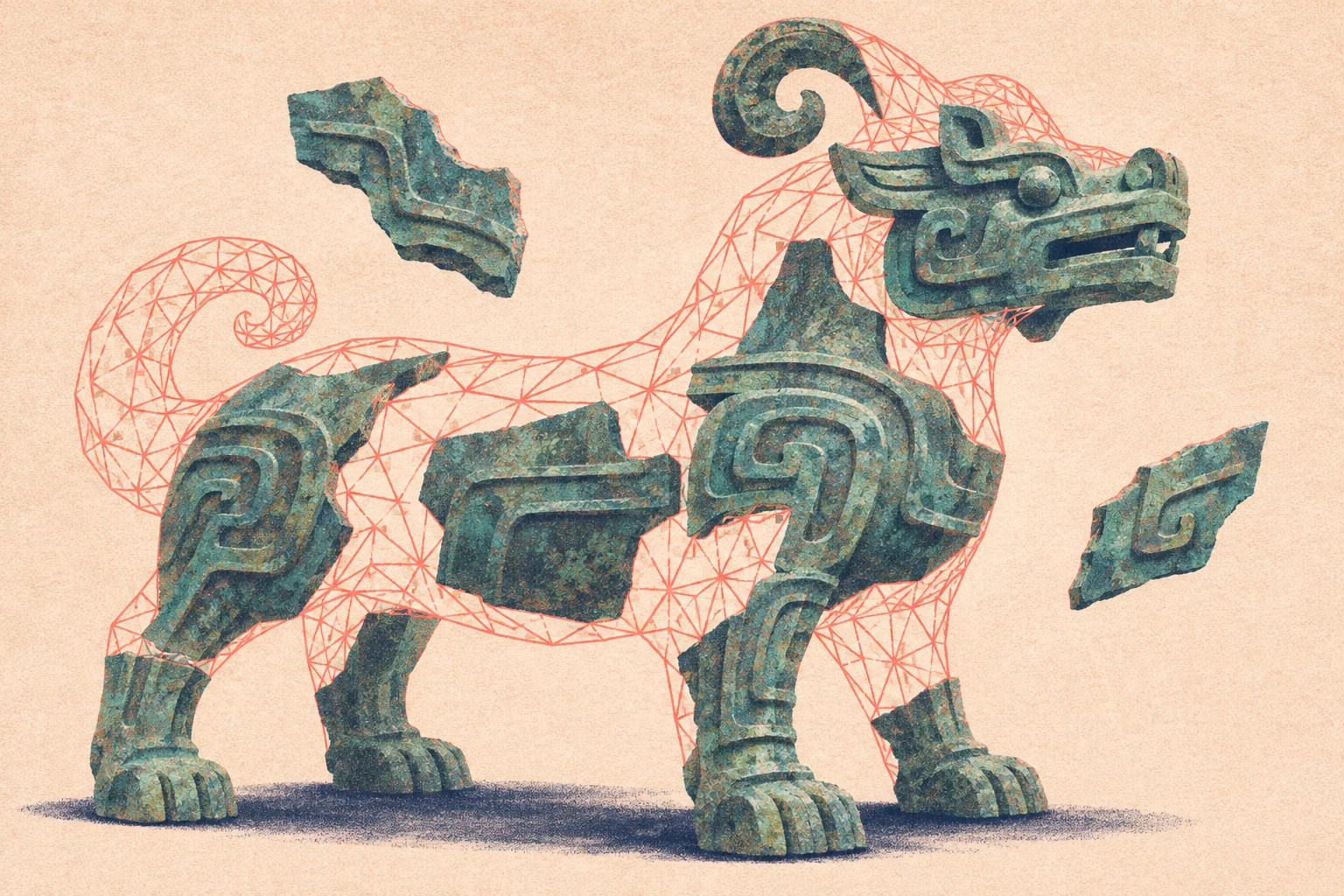
One of those bronzes is a mythical four-legged beast carrying a kneeling worshipper. Its two main parts came out of separate pits in 2021. Researchers noticed markings on the beast’s back and on the worshipper’s knees that suggested the two had once been joined. They used 3D models and AI-assisted calculations to compare dimensions, proportions, weight and balance, and the results supported the match. Computer vision straightened warped features and filled in what was missing, including an ear and an arm. The team also tested a 3D deep-learning algorithm meant to link several fragments even when some are lost, though Tencent evaluated it only on simulated datasets.
The plan aims to make this kind of patient joining-up routine across the country.
A wall seen from above
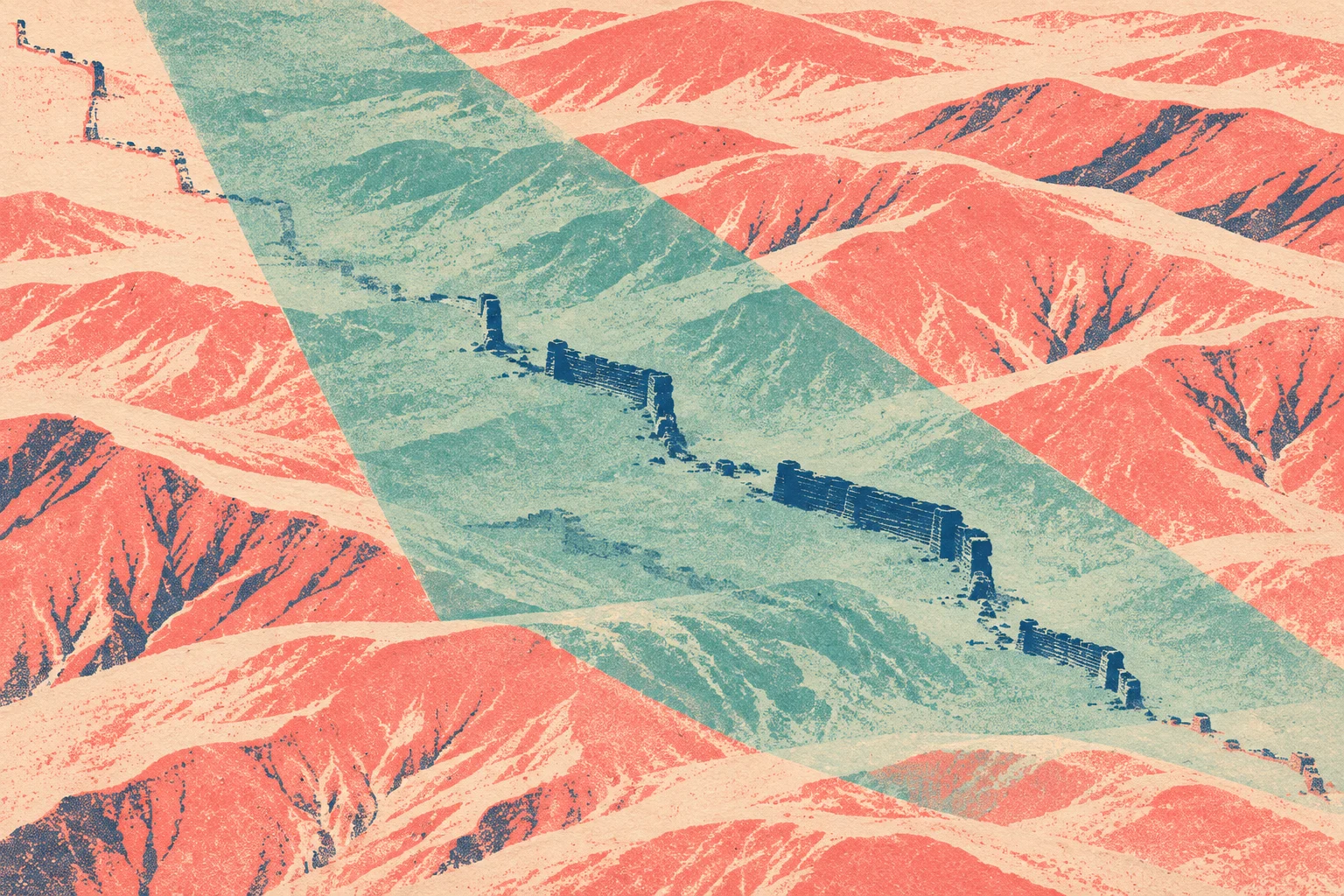
Remote sensing is the second tool: aerial and satellite images scanned by software for straight lines and buried walls. One example is older than the plan and is not part of it. In 2022, researchers writing in the International Journal of Applied Earth Observation and Geoinformation described an improved DeepLabv3+ model, built on a ResNet101 feature extraction network, that picked out remains of the Han dynasty Great Wall in very-high-resolution aerial imagery of northwest China. In testing it reached 98.37% accuracy, 98.92% recall and an F1 score of 98.64%. In an area it had not been trained on, it correctly found 70.82% of the wall’s remains. That gap of nearly 28 points is a fair measure of what such models can and cannot yet do.
Under the plateau, under the sea
Ancient DNA is meant to trace who moved where across East Asia and Eurasia. Baishiya Karst Cave on the Tibetan Plateau shows what is at stake. In 2019 a mandible at least 160,000 years old was assigned to a Denisovan-related population through analysis of ancient proteins, and a 2020 study recovered Denisovan mitochondrial DNA from the cave’s sediments.
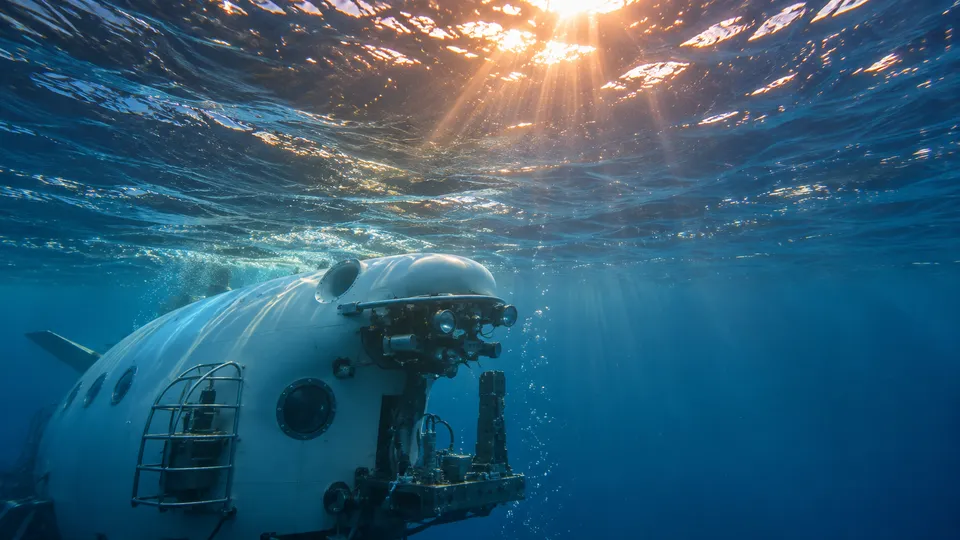
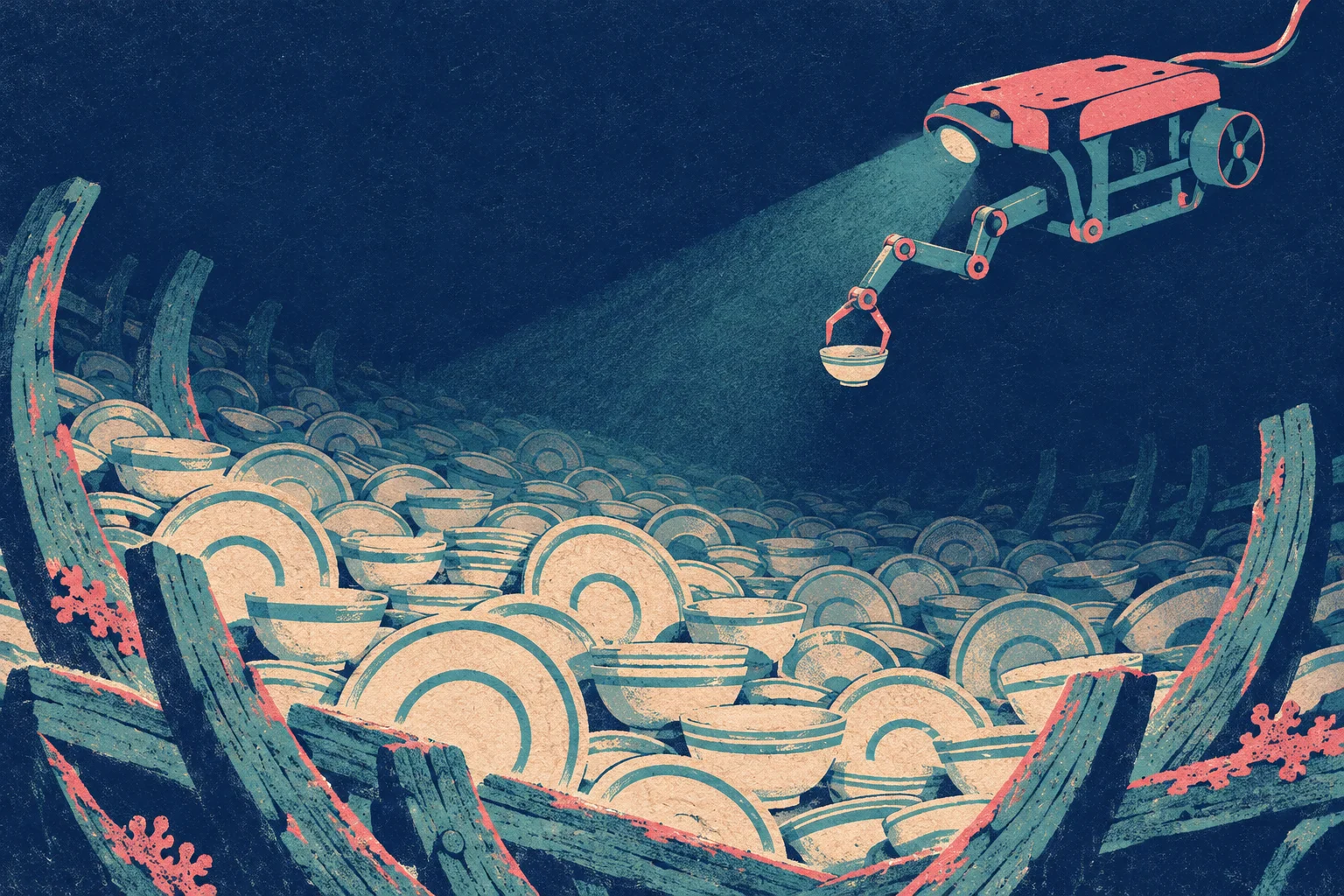
The deep sea gets the most ambitious language. In October 2022 the crewed submersible Shenhai Yongshi, the Deep Sea Warrior, found two Ming dynasty merchant wrecks about 1,500 metres down in the South China Sea. On 13 June 2024 the NCHA announced that more than 900 relics had been brought up, and its deputy head, Guan Qiang, called the ships witnesses to trade along the Maritime Silk Road. Earlier assessments put the first wreck’s contents at more than 100,000 objects, mostly porcelain and ceramics. People’s Daily later stressed the same point: roughly 900 recovered, against a hundred thousand still on the seabed. Almost all of the cargo is still down there. The new plan calls for better underwater robots, deep-diving equipment and fine excavation tools to reach it.
GadgetReview points to an older and slower success, the Nanhai No. 1. It is a Southern Song merchant ship found in 1987, raised intact in 2007 and still being excavated inside a purpose-built tank at the Guangdong Maritime Silk Road Museum. UNESCO values it for the cargo and food remains it preserved. A government-linked report counts more than 180,000 relics salvaged from it. Twenty years after it came up, the work is still going on.
The map of ambition
At home, the plan names the shift from hunting and gathering to farming along the Yellow River, the Yangtze and southern Lingnan. It names the Bronze Age centres of Sanxingdui, Erlitou and Yinxu, the last capital of the late Shang. It names the Qin dynasty’s Direct Road, the Great Wall and the Grand Canal. Abroad, it lists fieldwork in Austronesian-speaking regions, the Himalayas and along the overland and maritime Silk Roads. In the Mediterranean and Middle East it plans joint projects with institutions in Egypt, Greece, Saudi Arabia and Tunisia. The buildings are listed too: a national-level archaeological laboratory, the National Museum of Maritime Archaeology now under construction in Qingdao, and the National Base of Underwater Archaeology for the South China Sea, which the Post said opened in 2023. A wider heritage plan released in July adds five national archaeological site parks by 2030, which would bring the total to 70.
What machines cannot settle
The technology has limits. AI cannot rebuild what the surviving fragments do not support, and a virtual restoration is only as good as the pieces behind it. Robots on the seabed still face pressure, darkness, currents and fragile cargo. Ancient DNA depends on how well bodies were preserved and on strict controls against contamination.
The harder questions are political. GadgetReview notes that the plan openly aims to increase China’s international influence over how its history and civilisation are interpreted. That raises the questions of who holds the data, who interprets it, and on what terms the scholars in Cairo, Athens, Riyadh and Tunis will take part. The document does not answer them. A reasonable reflection, offered as nothing more: a government whose chatbots have been found steering away from Tiananmen also cares how the much older past is presented.
At Sanxingdui, the beast and its worshipper were found in two different pits, then joined back together by measurement and calculation. For the next five years the same state will fund both the measuring and the account of what the results mean.