
On Saturday, authorities in the Mexican state of Chihuahua arrested César Jáuregui, who until April was the state’s attorney general. He is accused of letting CIA officers take part in a raid on a drug lab without permission from the Mexican government, as CNN’s Mauricio Torres reported. Gilberto Loya Chávez, the acting head of the Chihuahua Attorney General’s Office, said in a video message that Jáuregui is under investigation for unlawful exercise of public service and for conspiracy by public officials. (The Spanish term for the second charge is coalición, which covers officials agreeing among themselves to act against the law or to block its enforcement.) Jáuregui is due to appear before a judge. Loya Chávez did not say when.
According to El Financiero, citing Mexico’s national arrest registry, a judge issued the warrant on Friday, and state police picked Jáuregui up at 10:20 a.m. on Saturday on an avenue in the city of Chihuahua, then handed him to the state prosecutor’s office. So he was arrested by the office he used to run. El Financiero, citing unofficial sources, also reported a third charge, making false statements to authorities. Most other outlets list only the first two.
The raid
The operation took place in April in the municipality of Morelos, in southern Chihuahua, and it worked: state forces dismantled a clandestine drug-manufacturing lab. Early on April 19, a vehicle carrying people back from the raid went into a ravine. Four people died. The state named the two Mexicans as Pedro Román Oseguera Cervantes, director of the State Investigation Agency, and officer Manuel Genaro Méndez Montes. Jáuregui, still attorney general at the time, said the other two were Americans and called them instructors from the US Embassy in Mexico City.

A few days later the Washington Post, CNN and other outlets reported that the two Americans were CIA officers, not embassy trainers. During President Donald Trump’s second term the agency has greatly expanded its covert operations against cartels in Mexico, which reportedly include killing alleged cartel members and flying drones over Mexican territory. That background explains why a car crash on a Chihuahua highway became a constitutional matter.
Federal, not state
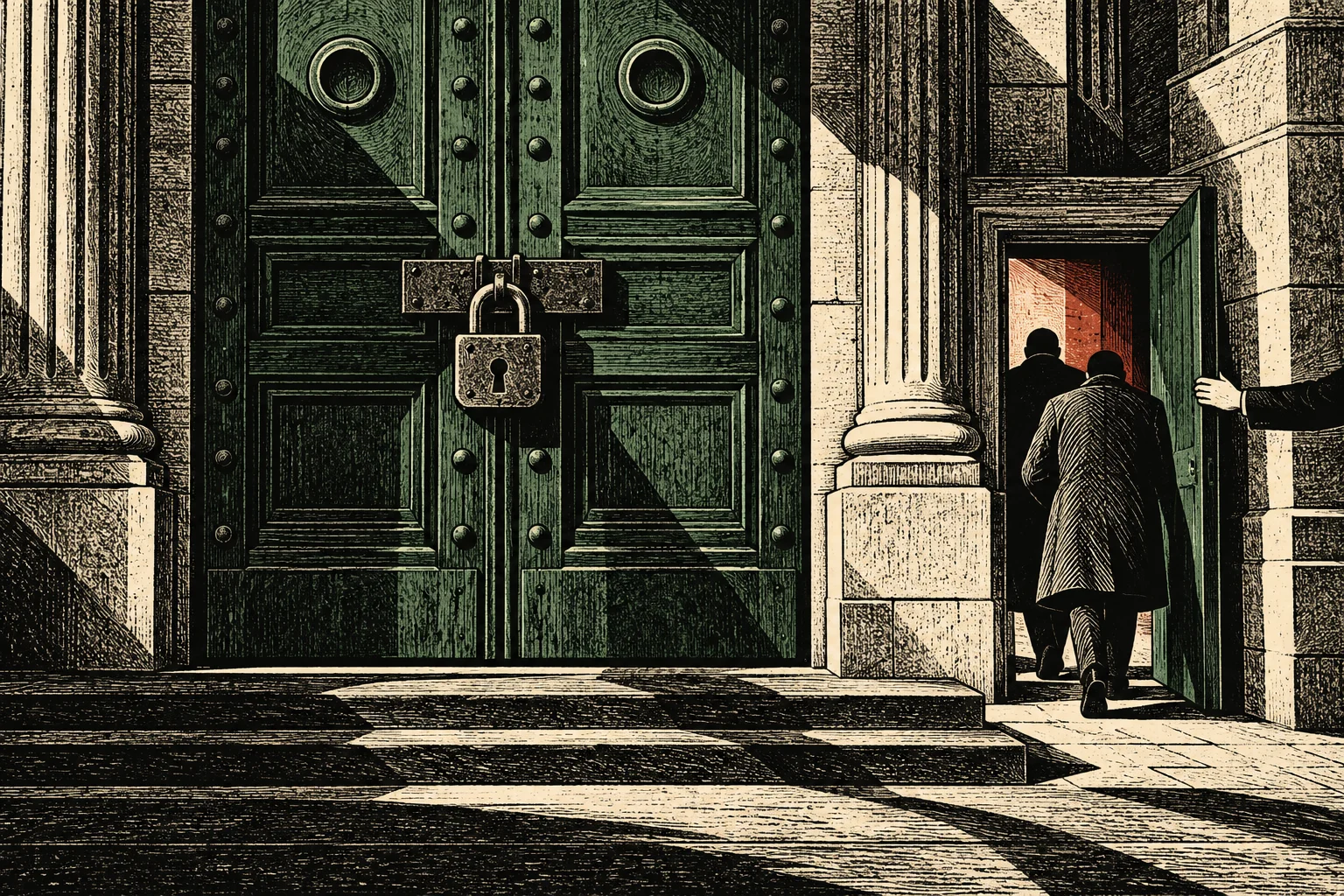
Here is how it works. Under Mexican law, security cooperation with a foreign government goes through the federal government. A state can work with American agencies, but only with federal authorization, and the state has to notify and coordinate with federal officials. In practice cooperation often happens on the ground in a state, but the permission comes from Mexico City. President Claudia Sheinbaum said her government did not know that Chihuahua and the US government had been working together on their own, and she was blunt about the rule:
“The relationship is federal, not state. They must have authorization from the federal government for this collaboration, which necessarily takes place at the state level, as established by the Constitution.”
Mexico’s federal government later said that one of the officers had entered the country on a tourist visa, without clearance to do paid work, and the other on a diplomatic passport. Sheinbaum said the only person on the operation who knew the Americans were there was Oseguera, who died in the crash. Governor María Eugenia Campos set up a unit to investigate. On April 27 its special prosecutor, Wendy Chávez, gave a first report: there were signs that Oseguera had engaged in “possible unofficial collaboration” with the US agents and had not told his superiors they would be on the raid.
Jáuregui resigned that day. He said he was taking “political responsibility” for the tensions the affair had caused, and that “there were omissions both in the information provided and in the institutional handling of the points of contact with these individuals.”
The April version of events, then, put the knowledge with one man who had died and could not be questioned. As of Saturday, Chihuahua’s prosecutors have concluded that the misconduct went further, to the attorney general himself. Loya Chávez was careful to separate the arrest from the drug bust:
“This action does not disregard the work of the State Investigation Agency, the State Attorney General’s Office, or the Armed Forces in dismantling the clandestine laboratory, because it is of course a very significant result in the fight against organized crime. What is being investigated is the way this operation was conducted, the failure to observe the chain of command and the applicable protocols.”
He added: “A good result does not justify breaking the law.” In plainer terms: the lab bust was fine, and the problem is the paperwork. Here, though, the paperwork is the Constitution and the question is who is allowed to invite foreign intelligence officers onto a raid.
The politics
Campos belongs to the conservative National Action Party, the opposition to Sheinbaum’s ruling party. In May she was questioned by federal prosecutors in Mexico City about the April 19 operation, and she said she was “being persecuted” by the ruling party over the case. Until Saturday, Jáuregui had been seeking the same party’s nomination for mayor of the city of Chihuahua, the state capital. So a prosecutor’s office in a state governed by the National Action Party has arrested a National Action Party mayoral hopeful, over a breach the federal government had insisted be investigated. No official has explained why the arrest came now, nearly six months after he resigned. The practical effect, though, is that the federal government’s question of whether a crime was committed now has an answer from Chihuahua itself, in the form of a named defendant.
The American side of the case is less tidy. Sheinbaum said in April that if investigators confirmed a joint operation between Chihuahua and the CIA, Mexico would send Washington a protest note. She also ruled out a conflict with the United States over the incident. Since then the two countries have kept clashing over sovereignty, most recently over a border shooting and a troop deployment. Neither the CIA nor the officers who sent its people on the raid are the kind of defendant a Chihuahua judge can summon. CNN said it had asked Jáuregui’s office whether he has a lawyer and whether he has entered a plea.
The way Mexico has handled the case, a foreign spy on a raid is a matter for diplomatic notes, and a local official who didn’t get the permission is a matter for a judge.