
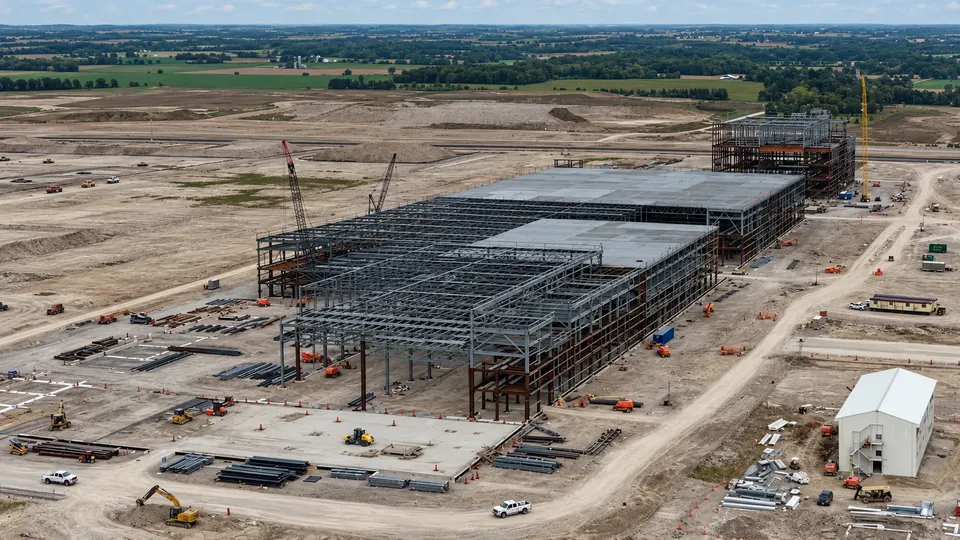
Here is a fun feature of production subsidies: you only pay them if production happens. This week Volkswagen’s PowerCo subsidiary announced that its battery plant in St. Thomas, Ontario — one of the largest industrial bets any Canadian government has ever made — will start producing batteries in 2029 rather than 2027, citing “evolving market demand,” which is corporatese for “fewer people are buying electric cars than the spreadsheet said.” It is the latest entry in a growing list of major EV and battery projects in Ontario, Quebec and British Columbia that have been delayed, cancelled, suspended, substantially reworked or, in one case, bankrupted, as automakers adjust to demand that keeps refusing to arrive on schedule, according to a CBC News tally.
The numbers attached to St. Thomas remain staggering. When the project was announced in 2023, PowerCo said the plant would eventually produce enough battery cells for roughly one million EVs a year, and governments agreed to provide up to $13.2 billion in production subsidies, with Ontario responsible for one third. Innovation, Science and Economic Development Canada told CBC Ottawa has so far put in $700 million toward construction. Volkswagen says the plant remains a cornerstone of its North American battery strategy, that construction continues, and that the delay lets it incorporate newer battery technology and scale output as demand develops. PowerCo and VW didn’t respond to CBC’s request for further comment, and Ontario’s economic development ministry didn’t reply by deadline.
But a million battery packs a year is a lot of battery packs, and someone has to buy them. Grieg Mordue — a former Toyota executive and retired McMaster University professor who studied the auto industry — points out two problems with the original plan: scale and location. Volkswagen’s big assembly operations are in the southern United States and Mexico, so St. Thomas batteries would travel long distances to reach the cars they’re meant to power. Europe isn’t the obvious outlet either, since VW already has battery production capacity there — something it has been actively rearranging. Even combined, Mordue says, VW’s North American plants don’t build enough vehicles to absorb that output. “They got a million batteries,” he told CBC. “What are they going to do with them?”
Now for the subsidy mechanism, which is the part that makes this story interesting rather than merely large. Much of the promised support isn’t a cheque; it’s a per-battery payment tied to how many cells the plant actually produces, and those incentives are scheduled to start declining in 2030 and end entirely in 2032. If production begins in 2029, Volkswagen gets at most three years inside a payment window designed to run much longer. Mordue’s dry conclusion: governments will likely pay “a whole lot less” than the $13.2 billion maximum. Ottawa has, almost by accident, structured a bet that pays out only on success and gets cheaper with every delay. The federal government, for its part, is putting on a calm face: “The government remains engaged with PowerCo on their updated timelines,” ISED said.
Early, or wrong?
The defence of the bet is essentially that everyone is judging a 50-year asset by this quarter’s sales. “These investments are meant to last 50 to 70 years or more,” Joanna Kyriazis, director of policy and strategy at Clean Energy Canada, told CBC News, arguing the slowdown is growing pains rather than evidence of overbuilding. And there is some statistical support for patience: battery-only EV registrations rose 37.4 per cent in the second quarter of 2026 versus a year earlier, according to Statistics Canada, and including hybrids Canadians registered 58,811 new zero-emission vehicles in the quarter, up 26.7 per cent. Kyriazis frames the stakes as existential: “is Canada going to have an auto industry that survives in the 21st century at all?” She also notes the plants were eyeing grid-scale storage — batteries that balance electricity supply and demand — as a bridge market while North American EV uptake evens out, and that a U.S. retreat from EVs could reverse under a future administration. The strategic case hasn’t gone away either: China produced more than 80 per cent of the world’s battery cells last year, according to the International Energy Agency, and nobody in Ottawa or Washington is comfortable with that.
Ross McKitrick, an economics professor at the University of Guelph, is unpersuaded that time fixes this. His argument is that governments didn’t invest alongside a market, they tried to summon one — subsidizing factories on one side and offering consumers purchase incentives on the other. “What the government’s been trying to do is force that market into existence,” he told CBC. “The numbers just don’t add up.” In a 2024 paper in the Canadian Journal of Economics, he warned that sales requirements rising faster than buyers’ willingness to pay could damage automakers and the wider economy. The demand numbers give him some ammunition: EVs were 11.7 per cent of new light-duty vehicle sales in the first quarter of 2026, according to Transport Canada, down from a 15.4 per cent peak in 2024. “At this point, it’s a niche market,” McKitrick said. “Some households like the product and are willing to pay for it.”
Ottawa, notably, has been behaving more like McKitrick than like Kyriazis: it scrapped EV sales requirements in 2026 and is moving to repeal the broader federal mandate, having announced replacement emissions standards in February with consultations running until October 29. Which produces the odd spectacle of a government unwinding the demand-side policies while still paying, at least in theory, for the supply-side factories those policies were meant to feed.
The cheerful way to put it is that the subsidy design anticipated this: Canada’s billions were always contingent on batteries that, so far, nobody has had to buy. The cheapest giveaway is the one that never ships.