
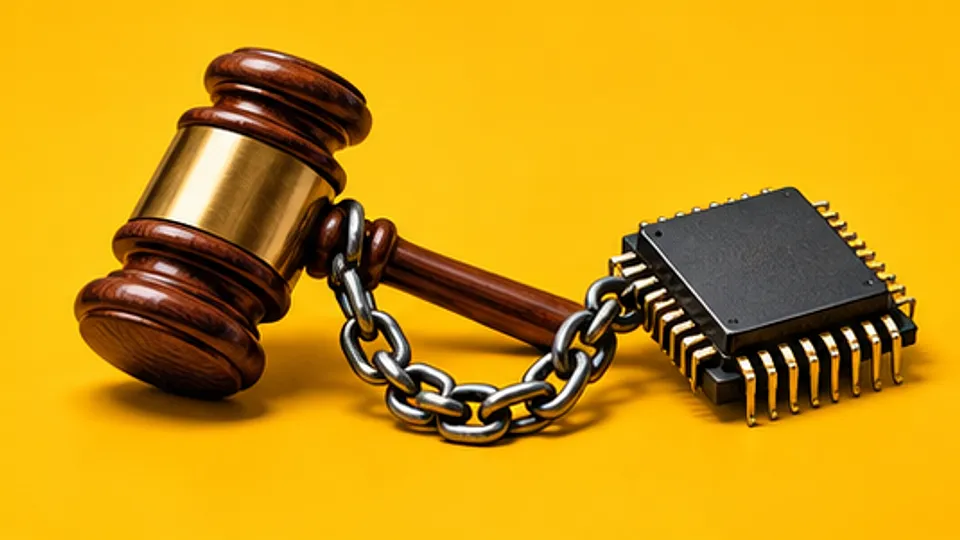
A California law signed last October bars defendants in civil suits from blaming a plaintiff’s harm on artificial intelligence acting on its own, a rule that could face an early test in a lawsuit filed against OpenAI this week.
The provision, Section 1714.46(b) of the California Civil Code, was added by Assembly Bill 316, which was introduced by Assemblywoman Maggy Krell and signed by Gov. Gavin Newsom on Oct. 13, 2025, two weeks after he signed SB 53, a separate state A.I. measure. The statute’s text reads in part:
In an action against a defendant who developed, modified, or used artificial intelligence that is alleged to have caused a harm to the plaintiff, it shall not be a defense, and the defendant may not assert, that the artificial intelligence autonomously caused the harm to the plaintiff.
The law drew little notice when it passed. It was framed as a consumer-safety and child-protection bill, sponsored by the Children’s Advocacy Institute and the Organization for Social Media Safety, and Ms. Krell’s statement on its signing mentioned only child self-harm. “how the heck did I miss this?” wrote the A.I.-safety writer LawrenceC in a post on LessWrong, who found no discussion of the bill in the usual A.I. policy forums. The remedy, the post said, was to have a Claude assistant read and summarize every A.I.-related bill the state passes.
The rule’s first test may be the lawsuit that brought it back to light. Legal Advocates for Safe Science and Technology, a nonprofit known as LASST, sued OpenAI in California Superior Court in San Francisco on Tuesday, arguing that the company is responsible for a breach at Hugging Face, a platform for sharing A.I. models, according to Axios. LASST, which is litigating alongside the law firm Gerstein Harrow, alleges that OpenAI violated California’s anti-hacking law. “OpenAI is responsible for the conduct of its agents,” the group argued in the suit.
AB 316 creates no new liability and touches only civil cases. It forecloses exactly one defense. But as the LASST case shows, the rule could shape how courts handle harm caused by autonomous A.I. agents, and its reach is broad, covering anyone who developed, modified or used the system in question.