
California has confirmed 60 measles cases this year, more than in the previous two years combined, and state health officials said this month that high vaccination rates had kept the virus from spreading as widely as it has in other states.
The count is up from 25 cases in 2025 and 15 in 2024. It comes a week after the United States lost its measles elimination status. The state’s largest cluster this year, in Sacramento and Placer counties, sickened 21 people, and every one of them was unvaccinated or had an unknown vaccination status, CalMatters reported on Monday.
That outbreak started when a relative of a Placer County resident traveled to South Carolina. More than 98 percent of prekindergarten children in the county are vaccinated, said Dr. Rob Oldham, the county health officer. But health officials estimate that fewer than half of the people in the communities where the virus spread had been vaccinated. Dr. Oldham said the outbreak could easily have grown much larger.
In Sacramento County alone, 450 people were exposed, said Dr. Phuong Luu, the county’s health officer. Her department temporarily pulled staff members from seven divisions to reach those people and monitor them. She called the national status loss “a sad day for public health.”

“People in California don’t stay in California, and people from other states come to visit,” Dr. Luu said. “And so the best way to protect yourself is to be fully vaccinated and ensure that your loved ones are fully vaccinated.”
Earlier outbreaks in Shasta and Riverside counties also spread through unvaccinated pockets.
On Nov. 17, the Pan American Health Organization said that the United States, Mexico and Bolivia had lost their elimination status after a single lineage of the virus circulated without a break for at least 12 months. The United States had held the designation since 2000, 26 years in all.
Uncontrolled outbreaks in Pennsylvania, Texas, South Carolina, Arizona and Utah have sickened more than 8,000 people and killed more than a dozen since 2025, according to CalMatters, though federal and state tallies of the dead have not matched. The publication tied the resurgence to anti-vaccine sentiment that built for years and gained national prominence when Robert F. Kennedy Jr. became health and human services secretary.
Dr. Sanchi Malhotra, a pediatric infectious disease specialist at UCLA Health, called the loss “embarrassing.” “Children are getting sick and dying from something we have a very good vaccine against,” she said.
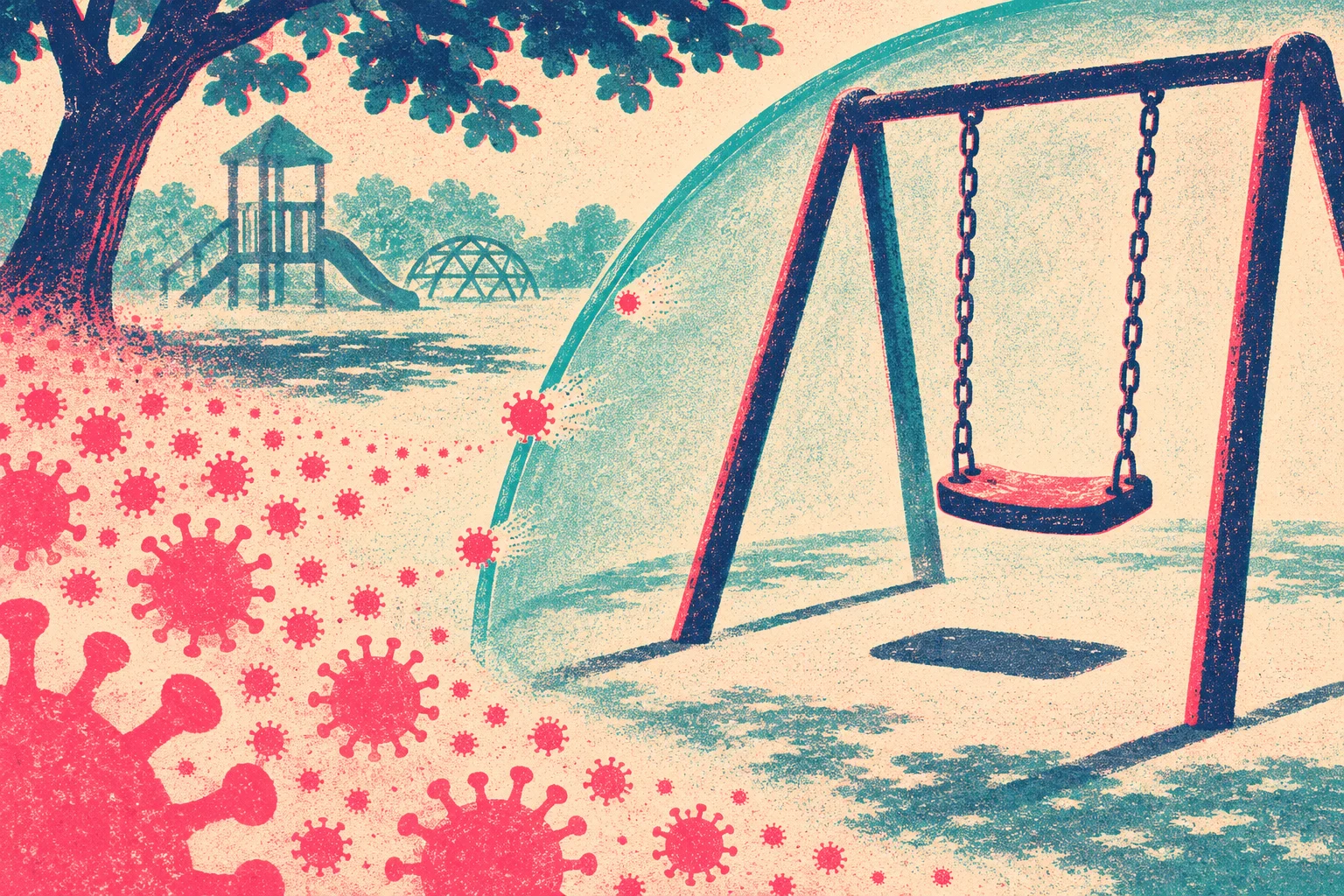
California’s numbers look different. Nearly 96 percent of incoming kindergartners had received the measles, mumps and rubella vaccine at the start of the 2025-26 school year, according to data the state health department sent to the Centers for Disease Control and Prevention. That’s above the 95 percent level that keeps measles from spreading unchecked. Rates have held steady since 2015, when the state tightened its vaccine requirements for school enrollment. In the states on California’s borders, rates have fallen well below that threshold.
Dr. Erica Pan, the state public health officer, pointed to a September case in which a person with measles rode trains and buses from Los Angeles to the Bay Area. Nobody else got sick. “Because of California’s high rate of vaccine uptake, diseases like measles have not spread to large outbreaks,” Dr. Pan said in a joint statement with health officials from Hawaii, Oregon and Washington. The four states said elimination status could be won back, but only with high vaccination coverage, strong surveillance and quick responses to outbreaks.

“We have to be more vigilant,” Dr. Oldham said. “We’ve had these pockets that have always existed, but if they reach a critical mass it will make things more difficult.”
Dr. Peter Chin-Hong, an infectious disease specialist at UCSF, said: “What we have in California is a big force field, but that force field could be weakened.” He said people unsure of their status should ask their doctor whether they need an immunity test or another shot.
Two doses of the MMR vaccine are 97 percent effective against measles. Dr. Malhotra said no vaccine protects 100 percent of people, but vaccinated people who do catch measles are protected against severe complications and hospitalization. The disease can cause pneumonia, brain inflammation, pregnancy complications and death.
“Measles is the most infectious disease we have. It’s a canary in the coal mine,” Dr. Malhotra said. “If we’re seeing measles outbreaks, it makes us worry what other vaccine-preventable diseases are on the horizon.”