
A thunderstorm took the power. The house went dark. On the floor of his family’s home in southern India, an eight-year-old named Tamizh Amudhan sat with his laptop propped on a pillow, its battery running down, and a candle burning beside him. His opponent was Vincent Keymer, a German grandmaster who was then ranked seventh in the world. The boy beat him. That is how Rhea Mogul tells it for CNN, and the details are so modest they could be a list of household goods: a candle, a pillow, a dying battery.
It was an online blitz game, according to Gulf News, and the storm brought heavy rain and strong winds. Because of the outage the boy got through only four rounds. He won two of them, and the game against Keymer was the one people remembered.
The candle has its own history, though. It was lit in a house that was itself a wager.
The fireworks town
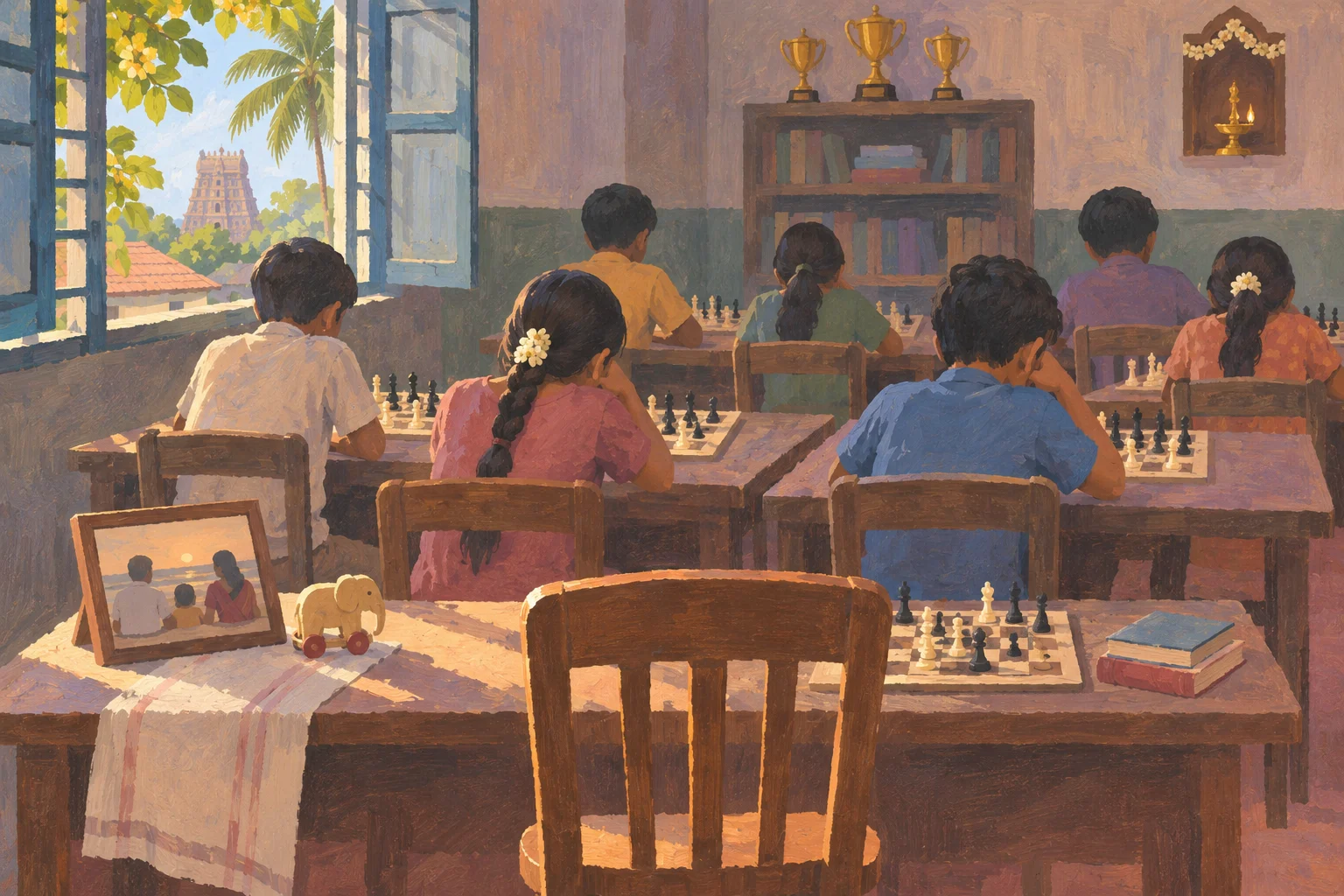
Sivakasi, in Tamil Nadu, makes around 90 percent of India’s firecrackers and other pyrotechnics. Its trade is noise and light thrown into the night sky. In recent years it has also become the centre of the country’s chess boom. Chess schools have opened in the town and across the state. One of them, the Hatsun Chess Academy, is India’s first residential training centre for the game.

The children turn up in the early morning, climbing down from buses and auto-rickshaws that have jolted over bad roads, and run into class. Chess is the only subject taught. About 50 students are enrolled. From Monday to Friday they drill calculation, solving position after position and plotting lines, and they play simulated tournaments. A child must rank among the top 30 in the country for their age group just to apply. Those selected then spend a month on probation while the coaches decide whether they can stay. The academy says up to 40 applications arrive each month. Most are turned away.
The head coach, Vishnu Prasanna, worked with Gukesh Dommaraju during his formative years. Of Tamizh he says: “He has unique tendencies to see long lines of geometry. Not easy to teach a kid his age.” He also states the price plainly: “You’re supposed to become much stronger at a very young age. Top players in chess have put academics in the background.” Tamizh studies his other subjects at home, taught by his mother.
Vishnu admits that specialising this early has its drawbacks. “We believe that we are building personalities,” he said. “You can consider this as an investment rather than a huge risk.” Marium Fatima, 19, came more than 1,000 miles from Bihar, where, in her words, “chess is not a sport which is developed yet.” In Sivakasi she can play against “many strong players.” Then she adds: “There’s a bit of family time that I miss. I have to endure that if I want to improve my chess.”
Four against thirty-two
Tamizh learned the game by watching his older cousins play. At four he begged to be entered in a district tournament. His father, Sathish A., a government worker who calls himself a weak chess player but is good with numbers (he placed ninth in his civil service exams), refused. The other children would be older, and he did not want his son humiliated. “He repeatedly asked for permission and I repeatedly refused,” Sathish said. So father and son played a game. The four-year-old beat the 32-year-old. “After that, we decided to let him play.”
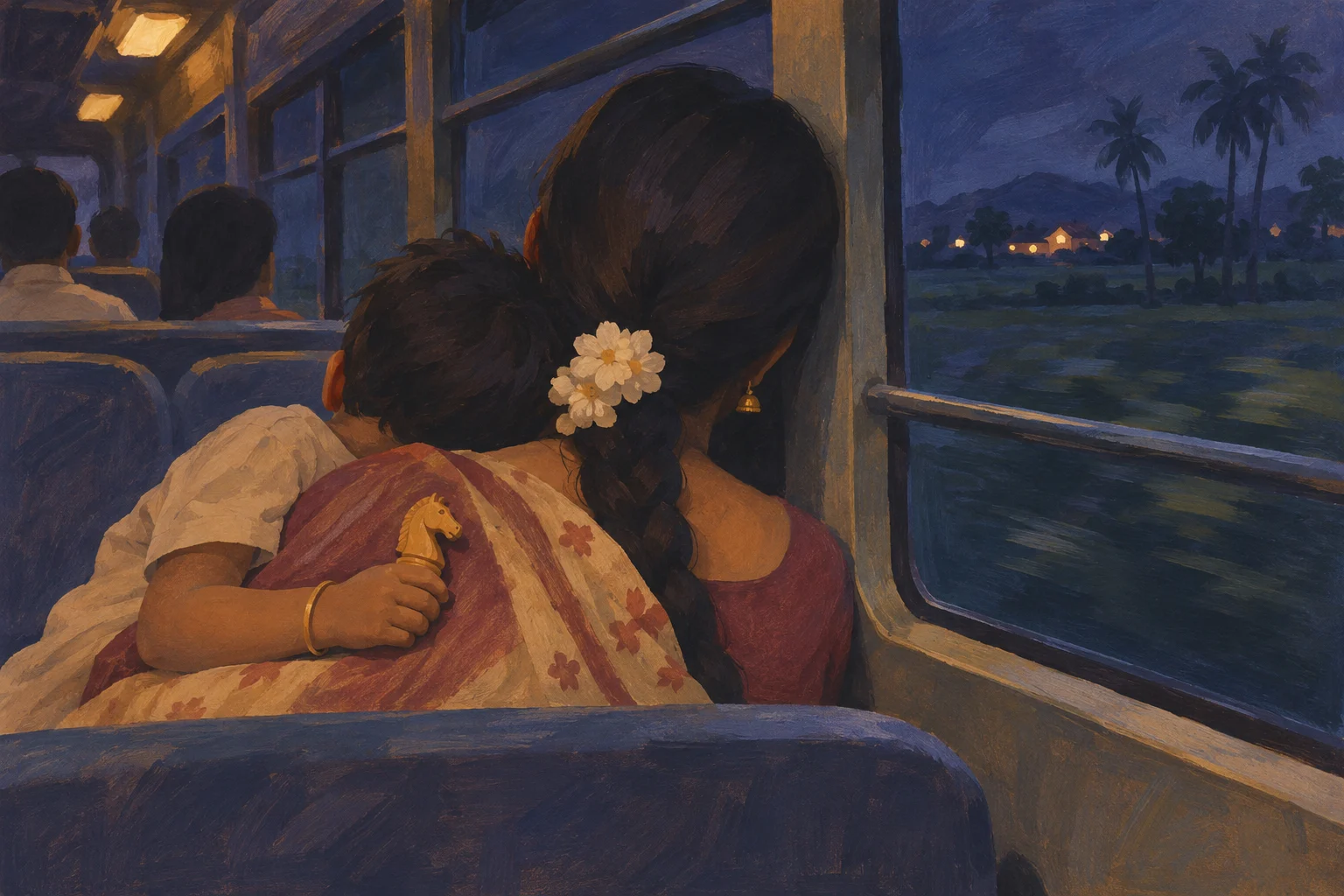
A bus conductor in the audience at that district tournament also coached chess, and he offered to train the boy for nothing. The family accepted. Travel to tournaments was hard to pay for. Then in 2024 a scholarship to Hatsun brought relief, and it split the household for more than a year. Tamizh and his mother, Uma K., moved to Sivakasi. His father and sister stayed in Kallakurichi, about 220 miles away. Twice a month mother and son went off to tournaments, sometimes travelling through the night, in a country where a woman travelling alone can face real risks.
“It’s lonely and difficult, but (Tamizh) has managed everything,” Uma said. “He never says he is too tired or that he doesn’t want training, these are words that never come out of his mouth.”
Viswanathan Anand, now 56, knows this road. They called him the “Lightning Kid” for his speed and later the “Tiger of Madras” for the violence of his attacks. He became India’s first grandmaster in 1988 and its first world champion 12 years after that, while his mother followed him from tournament to tournament. “I always say that behind every one of India’s great players is one exhausted parent,” he told CNN.
Return to the battlefield
Chess is widely believed to have begun in sixth-century India as Chaturanga, a model of an army with infantry, cavalry, elephants and chariots. Those pieces later became the pawn, the knight, the bishop and the rook. For decades the great champions came from Russia and the United States. Now the game’s birthplace is producing grandmasters and title contenders quickly. In June young fans queued at a major tournament in Hong Kong for a glimpse of India’s stars. Magnus Carlsen, five times world champion and still world No. 1, calls India the “best chess country in the world.” “India has both the biggest numbers in terms of youth players and chess fans,” he said. “I think it’s only going to get better from here.”
On Tuesday, November 24, Gukesh, who in 2024 beat China’s Ding Liren to become the youngest world champion in history at 18, starts defending his title in Geneva. His challenger is Uzbekistan’s Javokhir Sindarov, who won the 2026 Candidates Tournament. ESPN’s guide to the match lists up to 14 classical games, running until December 12.
A nation’s ambitions are easy to announce. In Sivakasi they are paid for in bus fares and night journeys and in a household split in two. In October Sathish left his job and took a new one so he could be nearer his son. “Within six months at the academy, Tamizh achieved what would usually take four years,” he said. “Risks and sacrifices are something every parent makes for their kid.”