
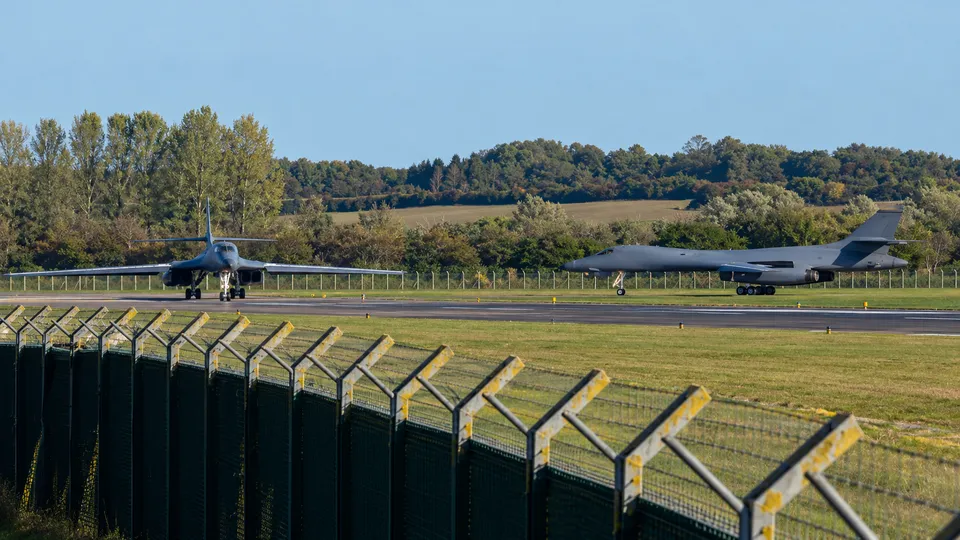
The story of RAF Fairford begins in the early hours of 27 September. It is a Gloucestershire airfield that until recently held the only American heavy bombers stationed in Europe. Police arrested five British men in their twenties near the base on suspicion of terrorism and explosives offences. Eighty-five homes were evacuated in Whelford, a village about a mile from the perimeter, and army bomb disposal specialists went over the vehicles. Two controlled detonations followed. Then the case went quiet. None of the five was charged. All were released on police bail. Two other men were arrested and let go as well.
Two weeks later, on Monday 12 October, the case returned in the House of Commons. Speaking in the chamber, Prime Minister Andy Burnham said the suspected plot was “highly likely to have been coordinated in Iran” and “almost certainly directed by Iran’s Islamic Revolutionary Guard”. On the same day, as Al Jazeera reported, Britain sanctioned two Iranians over what it called “hostile activity”. Tehran said it “categorically denies” the allegation and offered to help with the investigation.
The language of probability
Burnham’s wording deserves a close look. “Highly likely.” “Almost certainly.” This is how intelligence assessments are written, in grades of confidence, and governments use it when they want to accuse without having to show their evidence. Home Secretary Shabana Mahmood told MPs that investigators believe the coordinator is a known individual based in Iran. She did not name that person, and she did not publish the intelligence behind the claim.
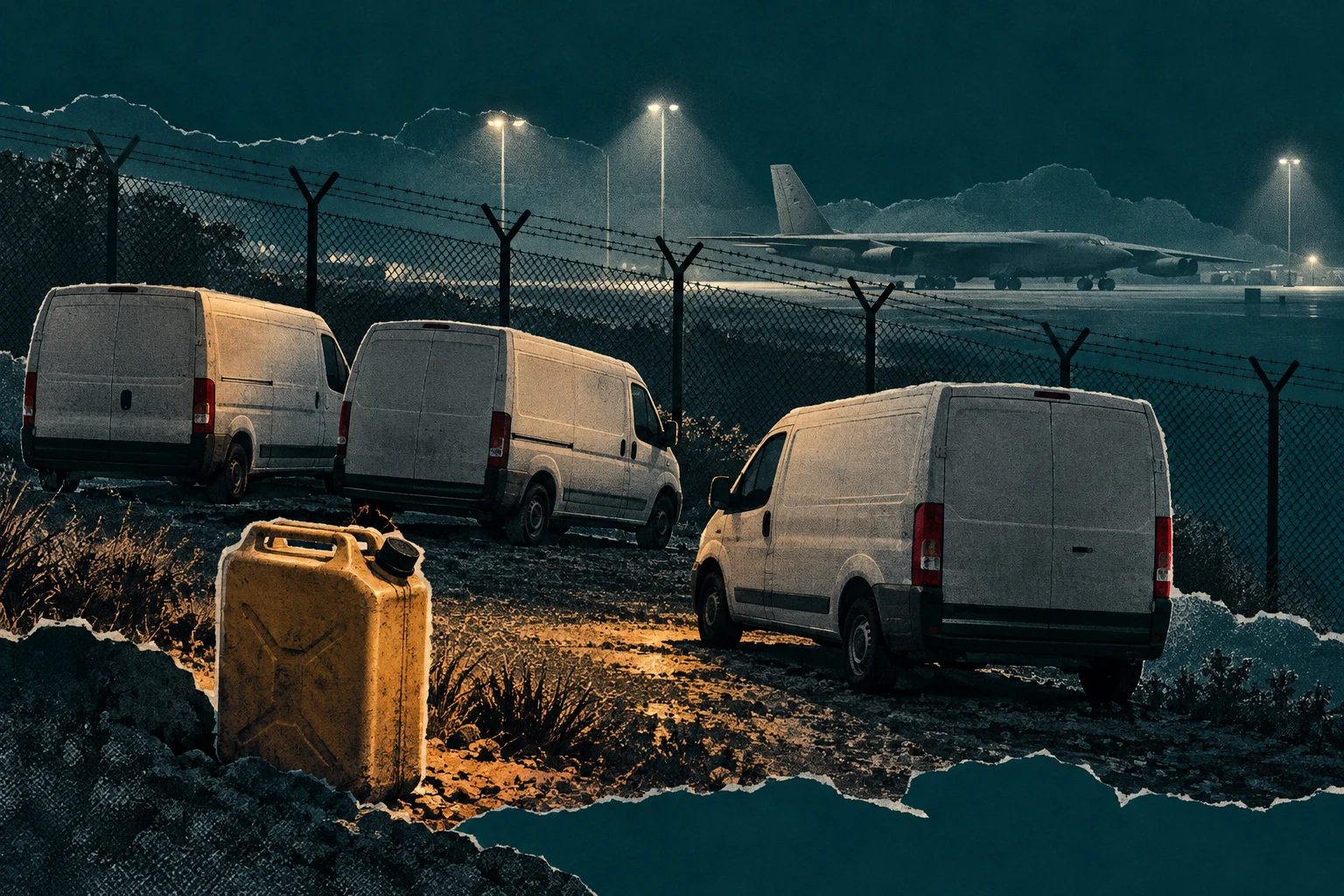
The two men sanctioned were not explicitly named as organisers of the Fairford plot either. One was described as a counterespionage chief in the Revolutionary Guard, the other as a facilitator for a criminal network. The measures are asset freezes and travel bans. Foreign Secretary Ed Miliband summoned Iran’s ambassador. Burnham promised to go after the Iran-linked “criminal networks” and the people who fund them.
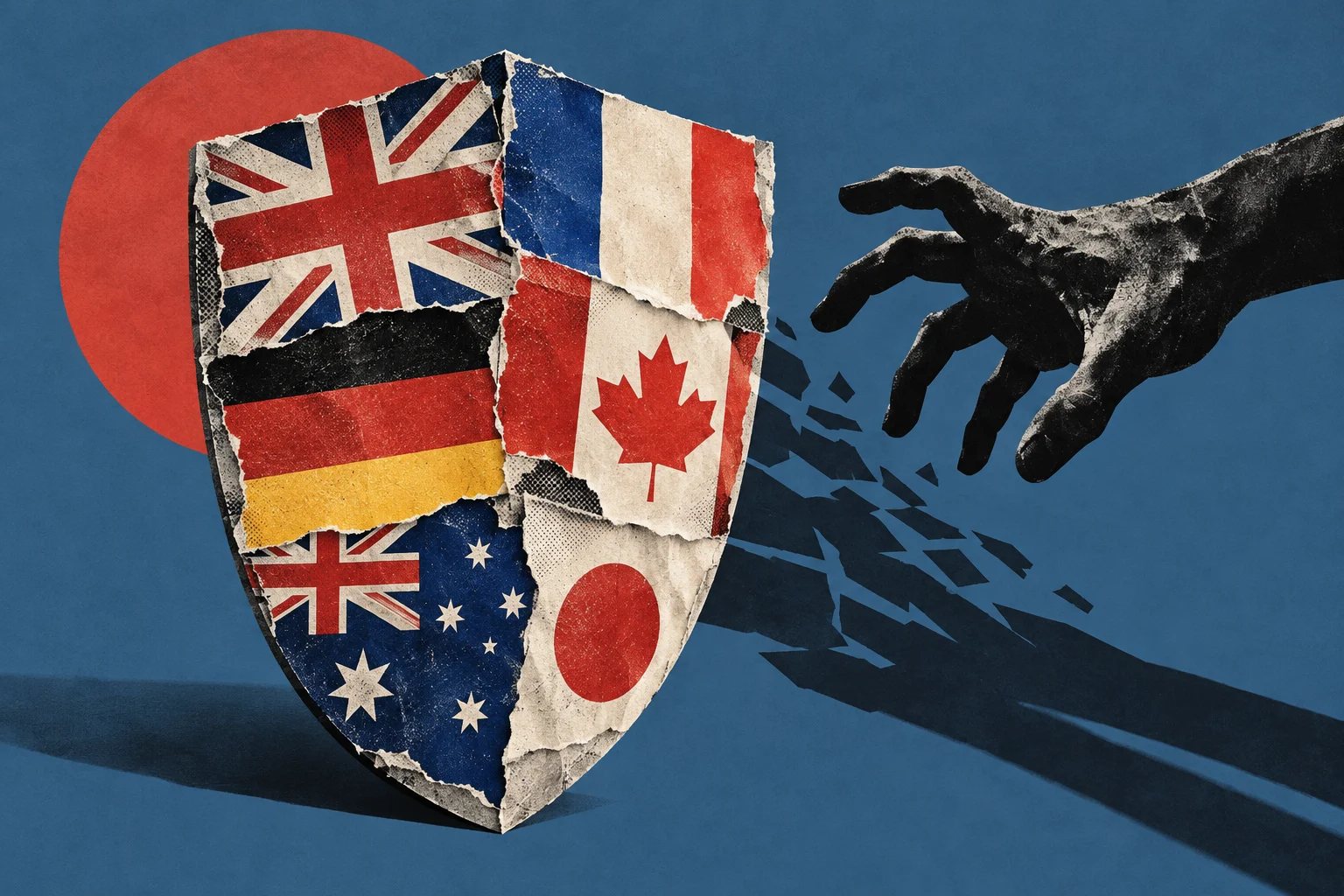
Allies lined up quickly. According to Al Jazeera, 32 countries, the United States among them, signed a joint statement saying they “recognise the United Kingdom’s attribution” of Iranian involvement. Other outlets, among them Türkiye Today, put the number of signatories at close to 30. Israel’s prime minister, Benjamin Netanyahu, claimed Israel had warned London in advance. That claim adds to an earlier dispute over who saw the danger coming.
The bombers had already left by then. The United States withdrew roughly a dozen B-1s from the base. Unnamed sources quoted in American media pointed to the risk of attack by small drones, and all twelve aircraft are gone. Whatever happened near Whelford that night, it changed where American military power sits in Europe before anyone had been charged.
The view from Tehran
In Tehran the Foreign Ministry replied late on Monday. As Maziar Motamedi reported from the Iranian capital, the ministry called the British attribution “an ugly plot” intended to “evade accountability for Britain’s participation” in the war on Iran. It said London had not offered enough evidence and dismissed the whole affair as a “clumsy false flag operation”. It referred to “Britain’s track record of fabricating security claims against other countries” but gave no examples.
Esmaeil Baghaei, the ministry’s spokesman, tied Fairford to the alleged Flydubai cockpit plot, another recent incident Tehran rejects. Of that one he said: “I think even a schoolchild recognised how amateurishly it was designed.” In his account, such episodes are invented to assign blame and to justify a war the public does not want. The state news agency IRNA called the recent incidents “a coordinated wave to smear Iran”.
So two capitals tell two stories, and neither has produced proof. London relies on probability and keeps its evidence secret. Tehran relies on denial and points to a British record it does not describe. Both have plain reasons for the version they give, and so far no court has heard either. The five men are out on bail, uncharged.
The wider war
None of this happens in isolation. In February the United States and Israel went to war with Iran, and the Fairford affair belongs to that war, along with what Britain calls Iranian plotting on its soil, including the charges brought in Manchester earlier this month. Energy prices have risen with the conflict, and so has public frustration in America.
On Tuesday, as Al Jazeera also reported, President Donald Trump accused Yemen’s Houthis of stepping up attacks on Saudi infrastructure to raise oil prices before the November midterms. He wrote on Truth Social:
“They’ve been silent for a long time, but now they’ve emerged again, probably at the behest of Iran, which is a Failing Nation, with No Navy, No Airforce, the World’s Worst Economy, and 301 percent Inflation, in a very nasty way, hitting Saudi Arabia, and purposefully trying to drive up Oil Prices, probably prior to the US Elections. NOT NICE.”
He repeated his threat that American strikes across the Middle East could intensify once the vote was over. “Somebody should explain to them that I’m not running in the Elections, I’ve already won, IN A MASSIVE LANDSLIDE, but I’ll be there after the Elections, and I will never forget!” he wrote.
The midterms will decide whether his Republican Party keeps the House and the Senate. Democrats hope to take one or both by drawing on the president’s unpopularity and on anger over the war and the cost of living. A recent AP-NORC poll found that nearly 70 percent of voters say the war was not worth fighting. Trump calls such polls “fake” and points to the crowds at his rallies.