
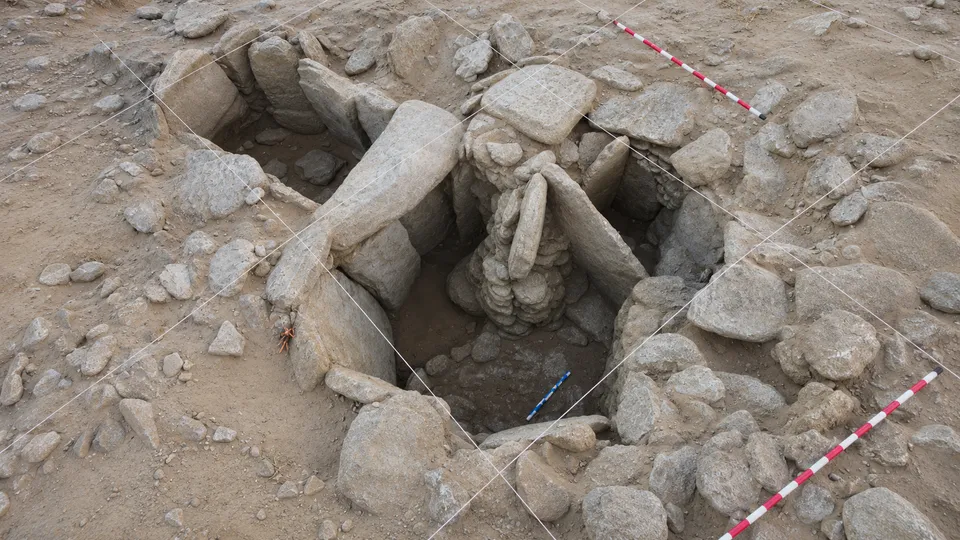
Two stone tombs near Cape Trafalgar on Spain’s Atlantic coast held the dead about 3,800 years ago, two centuries or more after megalith building had faded in southern Iberia, researchers said in a study published Wednesday.
The team, led by the University of Cádiz, ran 16 radiocarbon dates on human bone from the graves, which were excavated in 2021 and 2022 in Barbate, in Cádiz province. Most of the burials fall between about 1875 and 1600 BC, according to the paper in PLOS One. The researchers think the tombs may have been built new in the Bronze Age, not just reused, which would make them some of the latest megaliths on the Iberian Peninsula, as Arkeonews reported.
That runs against the usual timeline. In the south of the peninsula, the number and scale of megalithic tombs started dropping around 2200 to 2100 BC, as people moved toward burying the dead one by one in separate graves. Trafalgar didn’t make that switch.
The two tombs were used at the same time, according to the study’s Bayesian models. The first tomb’s span of use came out at 15 to 255 years, the second’s at eight to 254. Early burials went into the chambers and later ones into the corridors. In the first tomb, the chamber dates to roughly 1875 to 1700 BC and the corridor to about 1740 to 1630 BC. The researchers said the pattern points to heavy use over several generations rather than scattered episodes spread over a long period.
One skull from the first tomb’s corridor is an outlier, dated to 1610 to 1440 BC. It may mark a later burial or a phase of reuse.
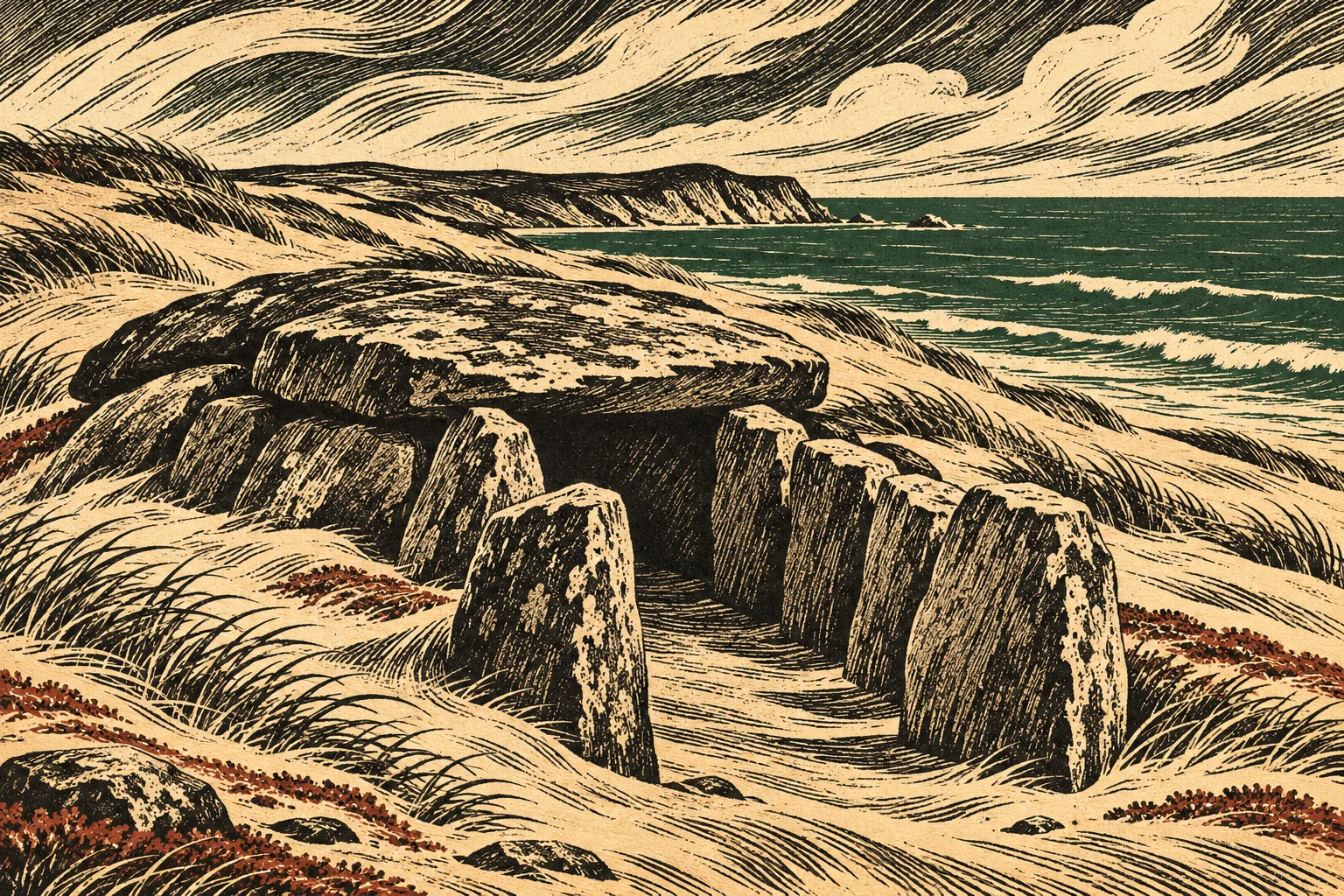
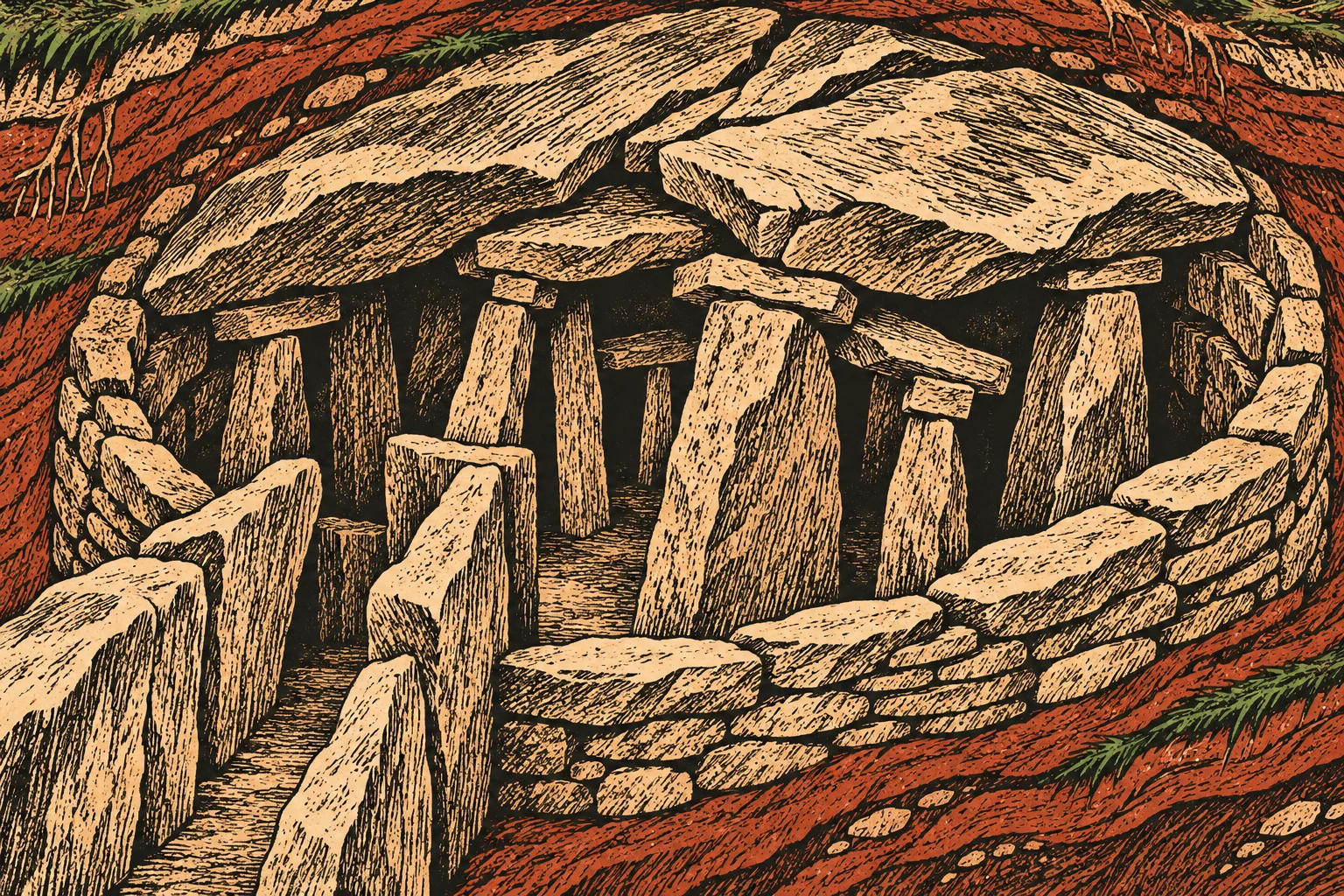
The first tomb has a corridor of upright stone slabs leading to an underground chamber cut into bedrock. The second, about 180 meters to the southeast, sat under a dune roughly three meters thick. Its corridor ends in a round chamber about 2.9 meters across. When the original roof was damaged, people in antiquity propped it up with supports that cut into the usable space. The authors said this circular-chambered tomb may be among the latest of its kind in the region.
The first tomb held at least 13 people, identified from 869 bones and teeth, and the second at least seven, from 212. Many of the bones were no longer in anatomical order, a sign that remains were moved around as new burials came in. The team also recovered 687 pottery sherds of Early Bronze Age type, possibly broken on purpose as part of a ritual.
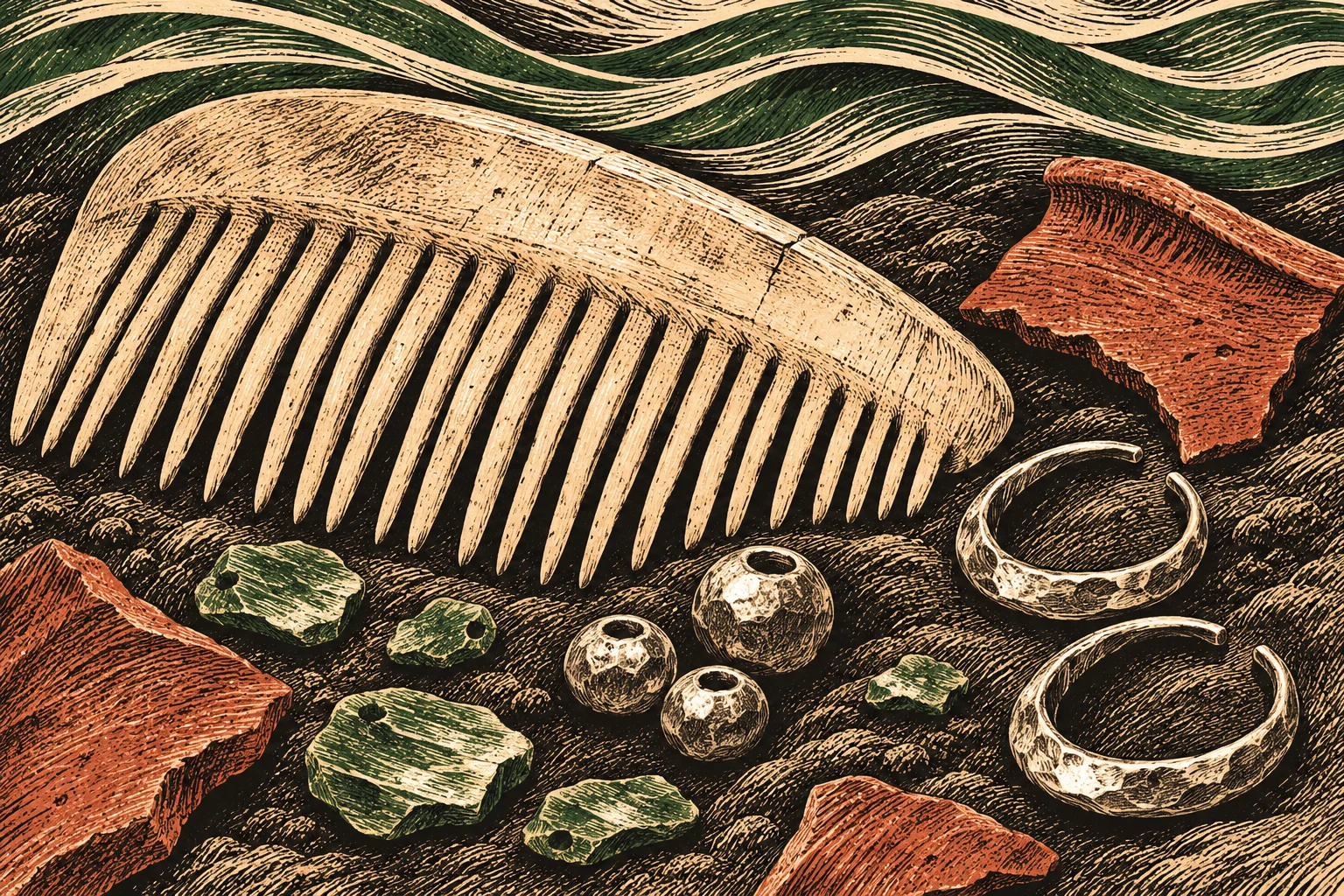
The last burial in the first tomb’s chamber was a young adult woman, still lying in position. With her were two gold earrings, about 87.7 percent gold and 12.3 percent silver, along with three silver beads, green mica beads and an ivory comb. The second tomb yielded an arsenical copper ring or earring and an arsenical copper arrowhead, about 11 percent arsenic.
Analyses at University of Cádiz laboratories found that much of that material can’t be explained by local geology. The ivory is probably African, the paper says, though an Asian source can’t be ruled out. The goods suggest the people at Trafalgar could reach exchange networks well beyond their own coast. They don’t prove direct trade by sea.
The setting may have mattered too. The cape juts into the Atlantic near the Strait of Gibraltar, a spot with sea routes on one side and a view over land and water. The authors wrote that the sea carried economic and ideological weight for these communities.
They go further. The study reads the persistence of collective burial in Cádiz as possible local resistance to the more centralized and socially stratified systems taking shape in the Bronze Age. That is an inference drawn from regional differences in burial customs, not evidence of organized political opposition.
The bone dates also leave the central question open. Radiocarbon shows when people were buried, not when the slabs were raised, and the authors don’t exclude that older tombs were emptied and reused. Their idea that the tombs were built in the Bronze Age, they wrote, “can only be confirmed through OSL dating,” a luminescence method not yet applied at the site.