
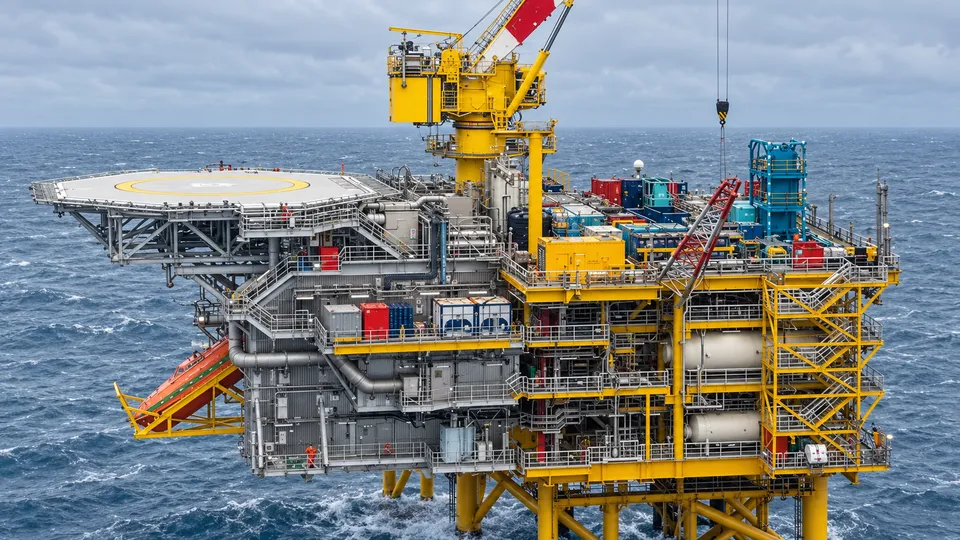
There are seas that yield fish and seas that yield fuel, and it is the second kind that makes and unmakes governments. The North Sea is of the second kind. For half a century its oil and gas have filled the British treasury and warmed British homes, and every new field approved beneath its waters is a wager on the future, staked by people who answer at ballot boxes rather than on drilling platforms. On Wednesday, 21 October, the Labour government in London placed that wager once more, approving the Jackdaw gasfield off the coast of Scotland. As Al Jazeera reported, the announcement came from the energy minister, Miatta Fahnbulleh, who framed it as a matter of energy security: Jackdaw’s gas, she said, will begin reaching UK homes before October is out.
The reaction split along a seam that now runs through the whole country. The move was widely expected, the Guardian reported, yet it dismayed environmental campaigners and unsettled a number of Labour MPs. And no wonder. Labour won power in 2024 on a manifesto that promised to ban new drilling licences in the North Sea. Jackdaw proceeds on an existing licence — a distinction that is legally solid and politically thin.
A file with a history
The paperwork tells the era’s story. Jackdaw is owned and operated by Adura, an independent joint venture held in equal halves by Norway’s Equinor and by Shell. The companies held their drilling licences, but a judge revoked the environmental consent, ruling that the account must include not only the carbon released in extracting the gas but the carbon released when the oil and gas are burned — the emissions of everyone who will ultimately consume what the field produces. The companies resubmitted their applications earlier this year and, the Guardian notes, lobbied hard for the green light.
A decision was expected last month. It came this week instead — after the Holborn and St Pancras byelection of 8 October, in which Labour defended a London seat against a Green challenge and won. The delay, the Guardian reports, seemingly served to carry the announcement beyond polling day. Others had pressed their own demands on the government: in north-east Scotland, where the industry is anchored, unions campaigned heavily for the permits to be granted, while environmental campaigners called for Jackdaw and its sister project, the Rosebank oilfield, to be abandoned. From across the Atlantic, Donald Trump urged the prime minister to open them both.
Twenty-seven jobs
Announcing the consent, Fahnbulleh said: “Following careful consideration of all relevant factors, I have agreed that the regulator can grant consent for gas to be produced at Jackdaw, which will begin to supply the UK with gas from this winter thanks to the highly skilled and vital North Sea workers.” Asked how many jobs the field would create, she answered with unusual precision: “It will create 27 jobs. It will secure 273 jobs. But, look, that was not the primary consideration.” The primary consideration, by her account, was supply: the decision, she said, would support energy security “with homegrown gas this winter and help minimise the UK’s use of imported higher emission fuels as we continue our transition to renewables and nuclear.” It was “compatible with our legally binding climate commitments,” she insisted, and the government remained “resolute in ending new licences for oil and gas and achieving net zero by 2050.”

The prime minister, Andy Burnham, said drilling Jackdaw would “protect hundreds of jobs and help keep millions of homes warm this winter.” “At a time when people are really struggling,” he argued, “it’s right that we look in a responsible way at maximising the existing energy reserves we have in Britain that could help. We’re committed to moving towards renewable energy and reaching net zero by 2050. But even on our ambitious climate path, we’ll still require oil and gas as part of our energy needs for decades to come. That’s why we’re taking a pragmatic approach to the North Sea.”
To prove the wager is not a surrender, Fahnbulleh said the government will open a new energy wealth fund, seeded with a £2bn downpayment, to reinvest oil and gas revenues into the climate transition — a gesture meant to show that approving new gasfields is not at odds with Britain’s climate commitments.
The other ledger
Against that arithmetic the critics set their own. “Jackdaw will provide around just 2% of our gas demand for roughly 10 years,” said Tessa Khan, executive director of the campaign group Uplift. “It has been oversold and won’t stop the overall decline in North Sea jobs as it will be largely unmanned and operated remotely.” The industry answers that Jackdaw and Rosebank — still awaiting its own, separate decision — would provide 10% of the UK’s output at their peak, and Adura commissioned a report this week arguing that rejecting both projects would cost the economy nearly £10.8bn over the next decade. Campaigners reply that the environmental damage would obliterate any economic benefit. The UN Environment Programme, for its part, has said global carbon emissions must be cut by nearly a fifth within four years, and by close to half within a decade, to avoid overshooting climate targets by a disastrous margin.

The voters, it seems, have been doing sums of their own. A Savanta poll for the climate group E3G, seen by the Guardian, found nearly a third of voters would be less likely to support Labour if more North Sea drilling goes ahead — including almost exactly a third of those who backed the party at the last election, and about half of voters aged 18 to 24. “After a summer of deadly heatwaves, the public has made up its mind: more drilling is the wrong answer,” said E3G’s UK energy programme lead, Ellie Mae O’Hagan. “If the prime minister wants a decade in power to change the country, he should invest in heat pumps and solar, not tax breaks for the oil and gas companies driving up our bills and polluting the planet.”
“Climate vandalism,” called it Zack Polanski, the Green party leader — “a betrayal of all of our futures,” in which “Labour has abandoned all credibility in the fight against climate change… This is a victory for Shell over the people.” For Ami McCarthy, head of politics at Greenpeace UK, the approval “shows the toxic grip fossil fuel lobbyists still hold over our energy policy. Andy Burnham promised pragmatism, but there is nothing pragmatic about rubber-stamping a project that won’t lower energy bills, won’t boost energy security and will create just 27 full-time jobs.” Rosebank, she warned, would be worse: approving it “would detonate an even bigger carbon bomb, releasing as much carbon as 56 coal plants operating for a year.”
So the wager is placed. In Aberdeen the unions wanted the permits; in the cities, the young tell pollsters they will remember. Between those two electorates a government now walks, having decided that a promise made in opposition can be honoured in the letter and bent in the spirit. The gas flows at the end of the month. The next file on the minister’s desk is called Rosebank.