
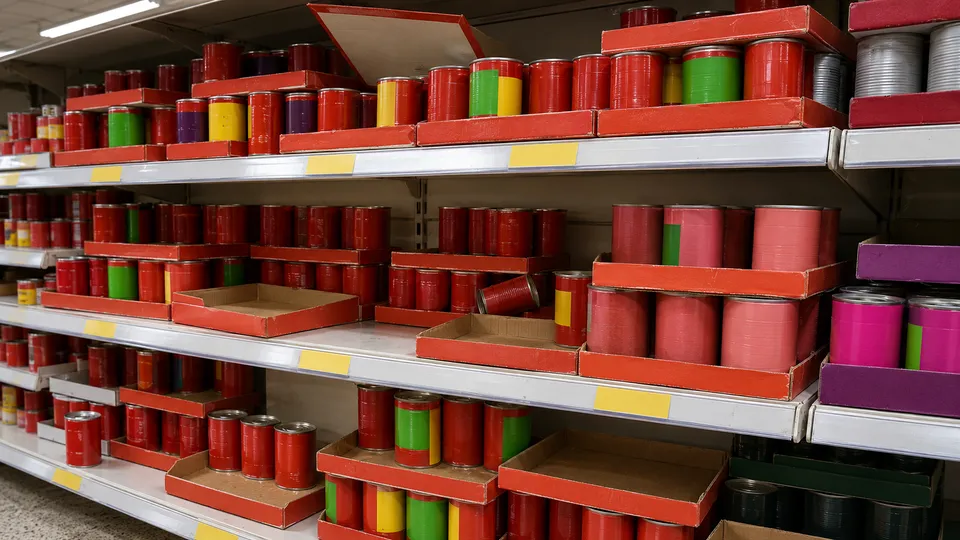
The British government asked people in England and Wales to make sure they could get by on their own for 72 hours if the electricity, water, phones and internet all went down at once. People have mostly answered by going shopping. As Heba Habib reports for Al Jazeera, in the 10 days after the “Be Ready” campaign launched on October 22, sales of bottled water rose 67 percent, tinned and jarred food 37 percent and hand sanitiser 83 percent, according to the retail research firm Worldpanel by Numerator. Wind-up radios, torches and power banks sold out at several retailers.
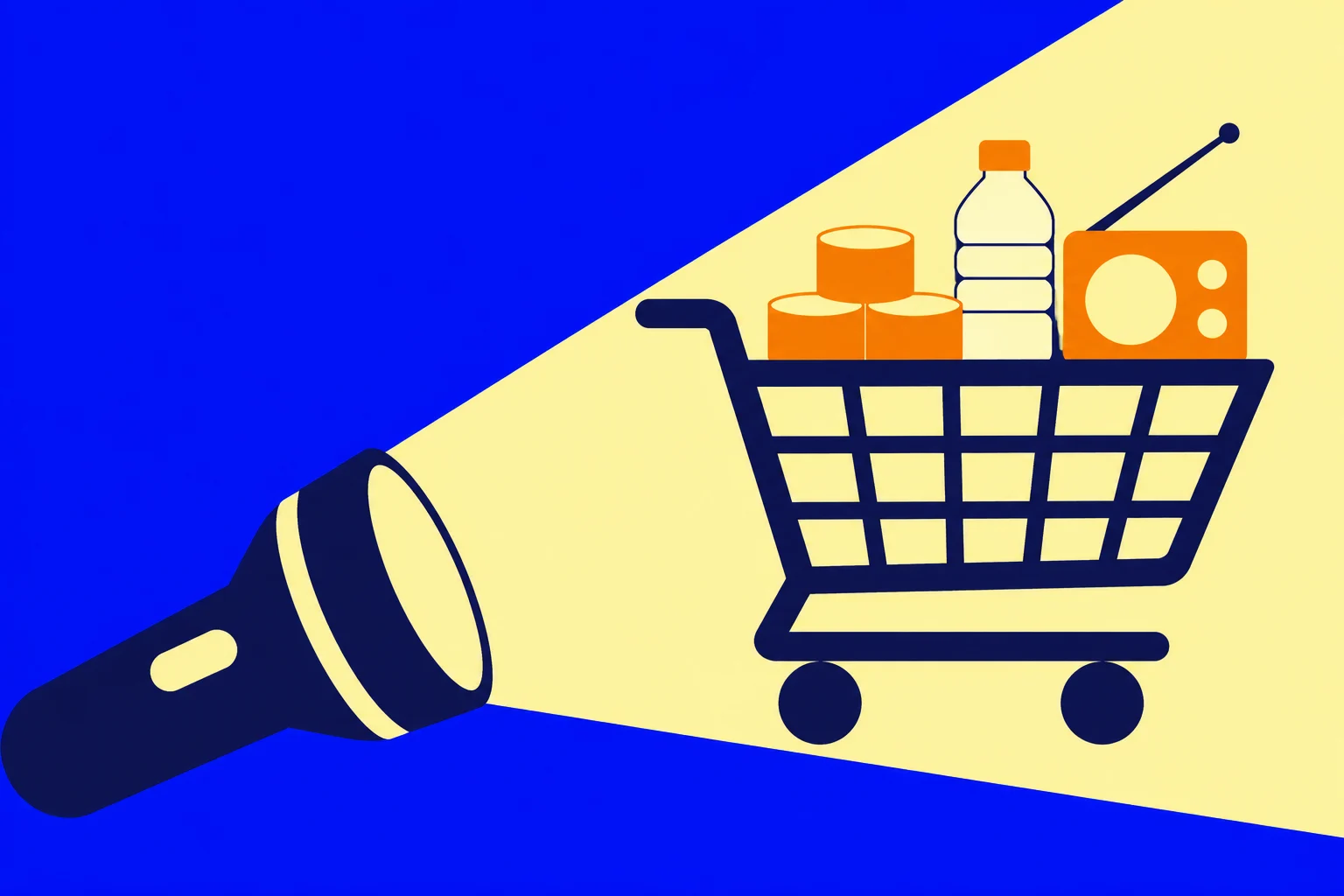
Be Ready is a three-year Cabinet Office public information campaign, and October 22 was only its first stage. The checklist is about what you would expect: bottled water, long-life food that doesn’t need a fridge (tins, dried fruit, nuts), a torch, spare batteries, a charged power bank, a wind-up or battery radio, cash for when card payments fail, a first aid kit, medication, warm clothes and blankets. The water guidance is 3 litres per person per day, so nine litres a head for the full three days. Scotland and Northern Ireland get their own versions. More than 500 charities, businesses and faith and community groups have signed up to spread the word. Defence Secretary Wes Streeting, the campaign’s most prominent face, says the government wants people to be “alert but not alarmed.”
The logic is a capacity problem. Emergency services have roughly fixed capacity, and in a crisis demand for them shoots up. Every household that can sit in the dark with a torch, a radio and nine litres of water for three days is one that isn’t calling for help, so the services can spend their time on people who need it urgently. That is the stated idea. It is also a cheap way for the state to buy surge capacity, because you pay for the tins.
Official household preparedness guidance has been around since May 2024. The new part is the effort to get people to actually follow it, and the government’s own numbers show how far there is to go. In a Cabinet Office survey this year, only 13 percent said their household was largely or totally prepared for an emergency, while 84 percent said they wanted more advice. So most people were asking for advice that already existed and almost nobody had acted on it. A 2025 survey of 931 people by Bournemouth University’s Disaster Management Centre found that 52 percent felt they understood the hazards they faced, 21 percent said they weren’t aware of the risks at all, and 81 percent were willing to do more. In September the National Audit Office warned about threats to Britain’s food supply chain.
Officially the campaign is about “everyday emergencies”: storms, floods, wildfires, burst pipes, after a summer of heatwaves, drought and fires. Unofficially, ministers have also tied it to cyberattacks and hostile state activity against critical infrastructure, which has been in the news lately (see the Iran-linked scare at a U.S.-used air base). On Remembrance Day, Defence Minister Lord Coaker said the 13 percent figure was exactly why the campaign had been launched. Britain is also catching up with its neighbours. The European Commission’s Preparedness Union Strategy, adopted in March 2025, recommends that people be able to cope alone for at least 72 hours, and Sweden mailed 5.2 million copies of its crisis brochure to households in November 2024.
The shelves
Iceland, the supermarket chain, said tinned product sales rose 40 percent over the first weekend. Princes, which makes tinned food, reported especially strong demand for tuna, meat and vegetables. Worldpanel found that the equivalent of 400,000 extra people a day bought tinned meat right after the launch. Maplin said torch sales jumped 284 percent within days, which means nearly four times the usual number of torches. Radios were up 92 percent and power banks 106 percent. Robert Dyas reported a 160 percent rise in radio sales, and at least seven wind-up radio models sold out at several outlets.
Canned Food UK, which is part of the Metal Packaging Manufacturers Association, has launched a consumer campaign in which the TV chef Theo Michaels shows how to cook tasty things with tins. I think that’s the industry being smart. The government’s ask is a one-off: you fill the cupboard once, and if the tins just sit there until 2029 the canmakers have had one good autumn. What they want is for you to eat the stockpile and buy it again.
Worldpanel said households were stockpiling essentials but not panic buying. The difference matters. Supermarkets run lean, just-in-time inventories, and the campaign is effectively asking the country to move a few days of that inventory out of the shops and into people’s homes, where it can act as a buffer. Doing that in a calm month is the point.
Who pays for the buffer
Most of the criticism has been about tone. On the BBC’s Question Time, an audience member accused Streeting of “scaremongering” and warned the advice would set off panic buying, and he replied that the campaign was about everyday threats such as wildfires, flooding and frozen pipes. Conservative Shadow Foreign Secretary Tom Tugendhat called the advice “a perfectly reasonable thing.” The British Red Cross, a campaign partner, backs it, saying simple preparation helps people support friends, family and neighbours.
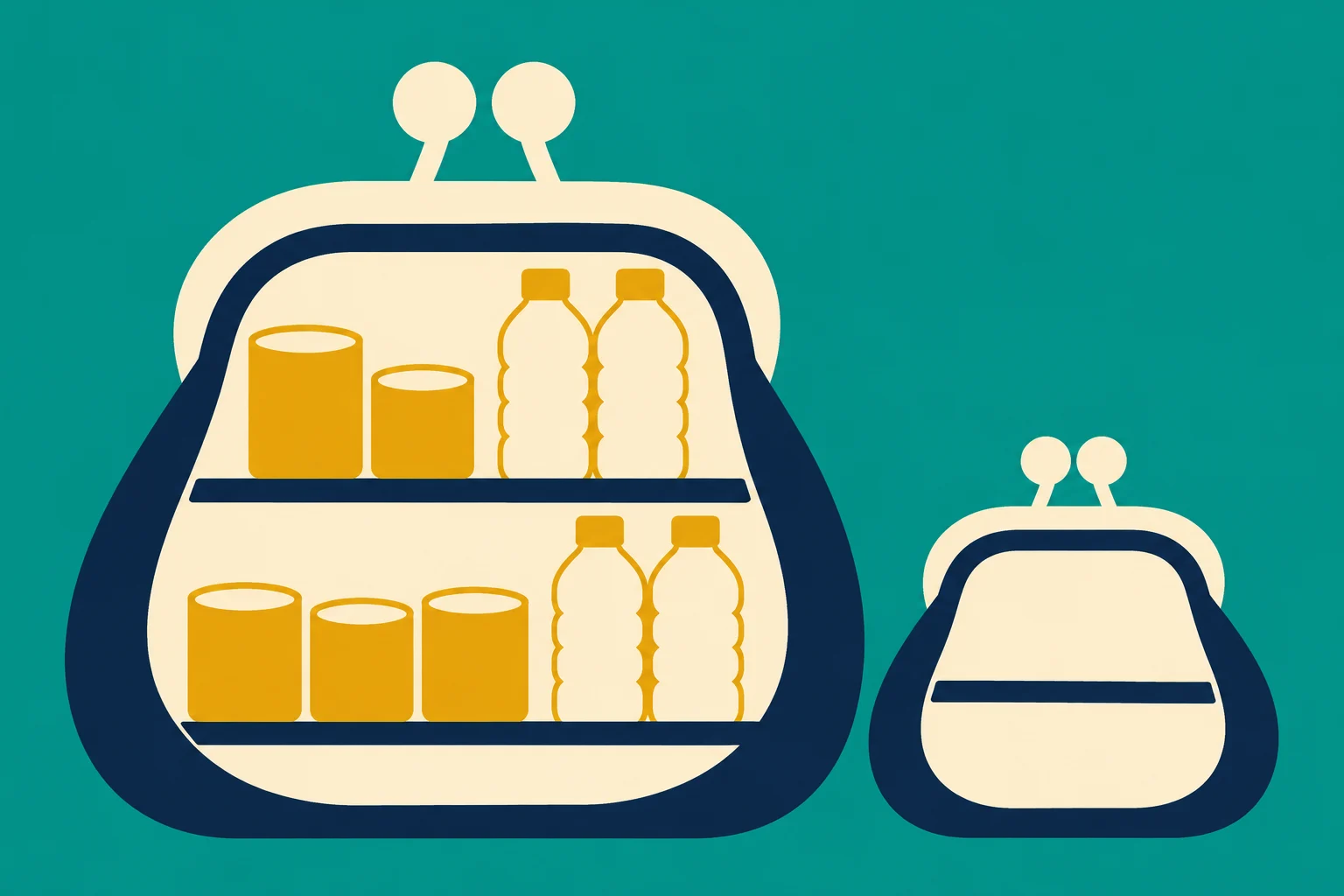
The more substantive objection is about money. More than 180 experts, academics, farmers and community food leaders signed an open letter warning that 29 percent of Britons cannot afford a three-day food reserve, a figure that comes from a government survey, according to London Loves Business. The letter asks ministers to “Place responsibility for food storage on national, regional, local and community storage schemes, not only on the public.” Their point is a basic one about insurance. A household stockpile is self-insurance, and self-insurance works best for people who already have spare cash and spare cupboard space. A shared store pools the risk, and it doesn’t depend on whether you could afford an extra week of tuna in October.
Being ready
On November 2, Parliament’s Joint Committee on the National Security Strategy heard evidence on public preparedness from Lee Miles, a professor of crisis and disaster management at Bournemouth who led the university’s EM-PREPARE study. His research found that 75 percent of households had no major measures in place to cope with climate change, and about 69 percent were willing to spend no more than one day improving their preparedness. “The important thing about the ‘Be Ready’ campaign is turning it into a ‘Being Ready’ campaign,” he told the committee. He also warned that local resilience bodies would need proper funding if they were handed more responsibility: “Otherwise, you set them up to fail in various aspects; they will not be able to deliver what they are supposed to.”
Supporters say the advice is modest and overdue, and they point to the 2025 Iberian blackout. Spain, Portugal and parts of southwestern France lost power, public transport stopped, flights were delayed and people couldn’t get cash from ATMs while operators worked to restore the grid. If only one in eight Britons feels prepared, a calm campaign now looks better than a panicked one during a crisis.
Miles wants better-targeted messaging about risk, and his own data shows why. Asked which hazard was most likely to affect them, 35 percent of the Bournemouth respondents named accidents at home. Only 5 percent named war and conflict, and 4 percent terrorism. So the campaign is officially about frozen pipes, ministers talk about hostile states, and the public is mostly worried about falling off a ladder. A torch is useful for all three.