
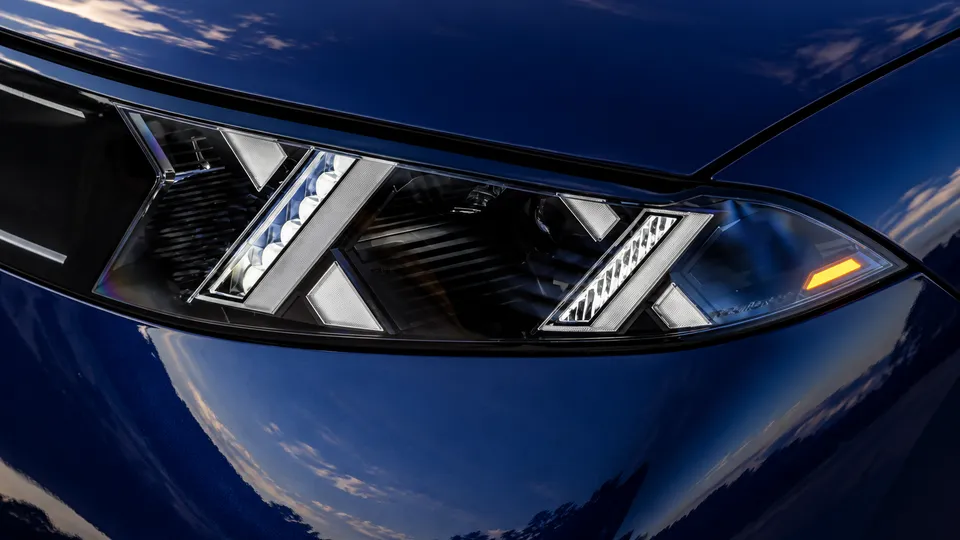
$7,700 separates BMW’s new gasoline X5 40 xDrive from the battery-electric iX5 60 xDrive before options. The electric version buys 570 hp instead of 394 hp, an 800 V battery system and charging advertised at 460 kW. It also introduces a specification problem: the road test reports 450 miles of projected range, while BMW’s US launch announcement gives 435 miles. Neither figure is presented as a final EPA-certified result.
In his Ars Technica road test, Jonathan M. Gitlin preferred the electric version’s ride and controls. BMW has kept the fifth-generation X5 on its powertrain-flexible CLAR platform rather than adopting the electric-only Neue Klasse architecture used by the iX3. It is transferring the smaller EV’s batteries, electronics and dashboard concepts without making every X5 buyer take a battery.
One platform, different energy systems
The gasoline X5 uses a turbocharged 3.0 L inline-six producing 394 hp (294 kW) and 428 lb-ft (580 Nm). Its 48 V mild-hybrid system can add 148 lb-ft (200 Nm) of assistance. Miller-cycle operation and variable valve timing support efficiency; Ars reports an expected 26 mpg (9 L/100 km) and 569 miles (915 km) from full to empty.
The forthcoming X5 50e xDrive plug-in hybrid uses a 400 V system and a 26.5 kWh battery for an estimated 44 electric miles (71 km). BMW’s US launch announcement specifies 483 hp and 516 lb-ft combined, with a $77,500 starting price before delivery. Production is at Spartanburg, South Carolina. A hydrogen fuel-cell version is planned, without a launch date in that announcement.
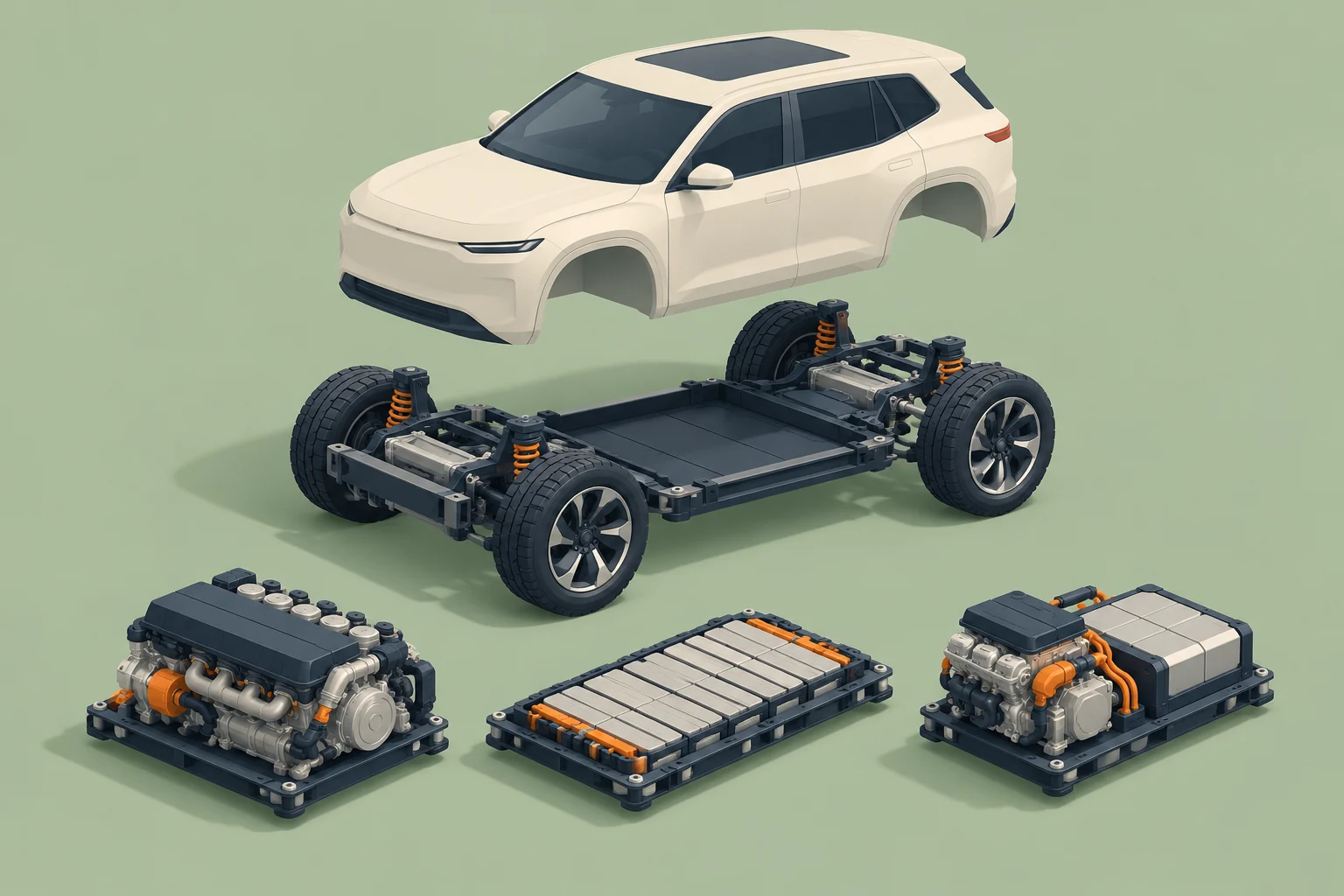
The iX5 combines a front asynchronous motor rated at 245 hp (183 kW) and 225 lb-ft (305 Nm) with a rear electrically excited synchronous motor rated at 325 hp (242 kW) and 369 lb-ft (500 Nm). BMW rates the system at 570 hp (425 kW) and 593 lb-ft (804 Nm). These designs avoid permanent-magnet rotors; BMW attributes the choice to lower losses.
Its usable battery capacity is 144 kWh. The cylindrical cells are 120 mm tall, versus 95 mm in the iX3. Ars reports a claimed 30% increase in pack energy density over the smaller SUV. That comparison should not be confused with BMW’s separate claim of 20% higher cell energy density against its preceding Gen5 prismatic cells: the baseline and the thing being measured differ.
Peak power is not charging time
Ars observed an iX5 begin charging at 10% and reach 50% in a little over nine minutes. The station reported 61.5 kWh delivered, a 465 kW peak and a 375 kW average. Those are observations from one partial charging session, not a full 10–80% test. The IONNA charger had been upgraded beyond its usual 400 kW capability.
BMW’s October 20 US demonstration release describes the 460 kW setup as technology that is not yet commercially offered in the United States. It estimates 23 minutes for 10–80%; the launch announcement and road test say 22 minutes. The release provides no session trace that resolves the difference.
| Specification | Ars road test | BMW US launch | BMW US demonstration |
|---|---|---|---|
| Usable battery | 144 kWh | 144 kWh | 144 kWh |
| Projected range | 450 miles | 435 miles | Not stated |
| 10–80% charging | 22 minutes | 22 minutes | 23 minutes |
Source: Ars Technica; BMW US launch announcement and October 20 demonstration release. Ars attributes 450 miles to BMW. The US launch estimate follows EPA procedures but is not stated as EPA-certified.
On a 144 kWh usable pack, 10–80% represents approximately 100.8 kWh. Adding that in 22 minutes implies about 275 kW averaged into the battery, before charging losses. A 460 kW maximum therefore describes only part of the charging curve. Route planning considers expected charger output, reliability and location; it also opens the charging flap on arrival. Software cannot supply the missing charger capacity.
The NACS inlet also accepts AC charging up to 15.4 kW with BMW’s home equipment. Ars additionally describes an 11 kW onboard AC charger; the US launch announcement specifies the 15.4 kW maximum without resolving that distinction. Adapters enable vehicle-to-home and vehicle-to-load operation: exporting battery electricity to a house or external equipment.
The other upgrade is control
The iX5’s “Heart of Joy” controller consolidates vehicle-dynamics functions previously spread across separate electronic control units. Gitlin found its braking smooth through a complete one-pedal stop. Five lift-off regeneration settings range from coasting to a reported 0.6 g of deceleration. Sport mode’s initial accelerator response could be too abrupt for passengers; comfort and eco avoided that problem.
At 6,200 lb (2,813 kg), the electric SUV is heavy. Gitlin nevertheless preferred its ride: the added mass damped short shocks that passed through the optional adaptive air suspension. Both versions controlled longer bumps and kept engine or wind noise low, though neither reproduced the softer ride of BMW’s iX.
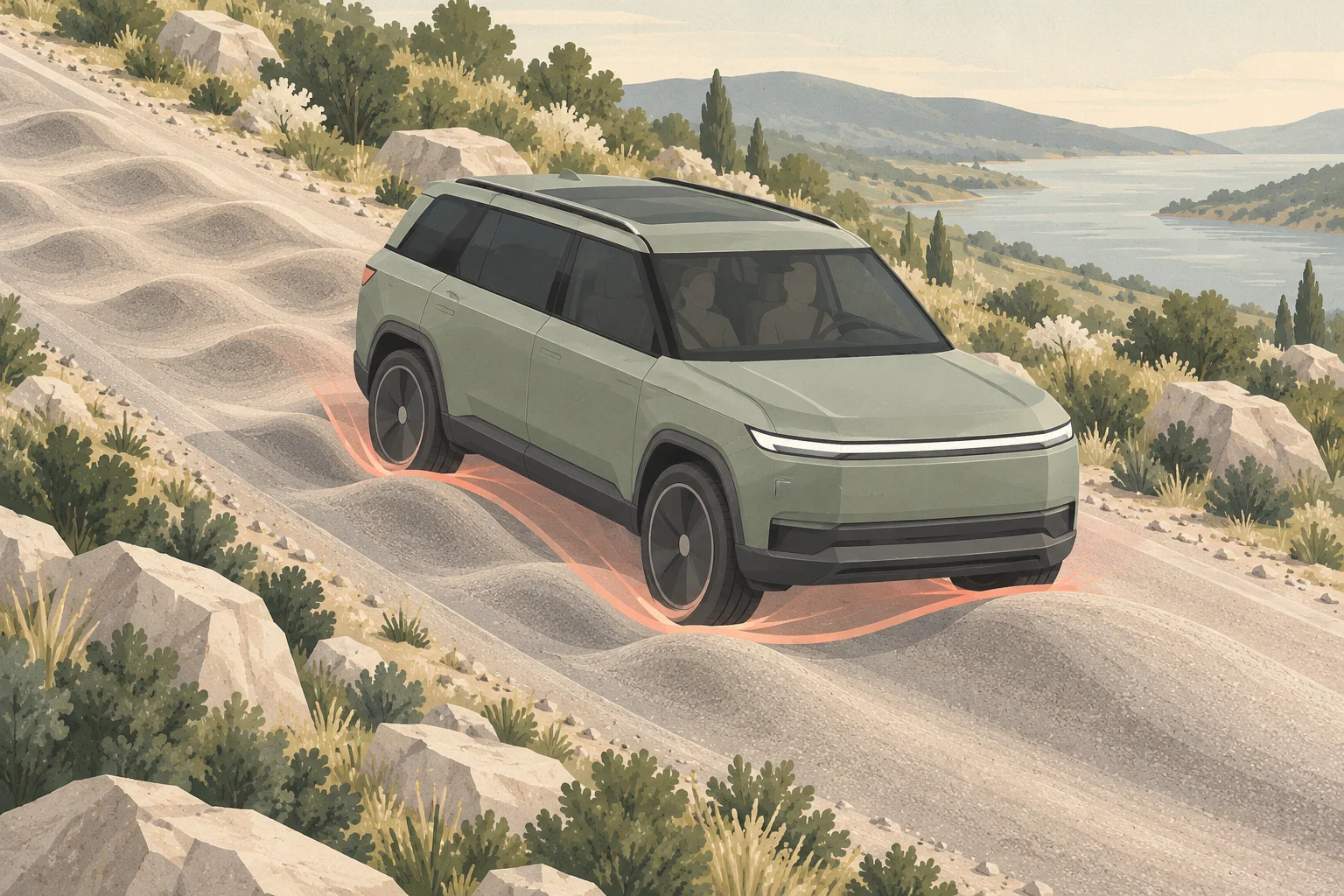
The assistance system can detect red lights and stop signs, warn the driver and brake when necessary, including when active driving assistance is disengaged, according to the road test. That is an assistance feature, not a guarantee against missed signals. BMW’s Symbiotic Drive also permits light brake inputs without cancelling active driving mode; a hard application disengages cruise control.
Inside, Panoramic Vision projects information along the windshield’s black lower border, complemented by a full-colour head-up display. Gitlin found the voice assistant improved over the early iX3’s Alexa-based system, useful when adjusting features such as seat massage requires several touchscreen steps. The optional passenger screen handles streaming, games and browsing, but cannot control native navigation or climate functions.
The X5 40 xDrive costs $72,100 plus $1,450 delivery, or $73,550. Ars reports it already in showrooms; BMW’s announcement scheduled its US introduction for October. The iX5 costs $79,800 plus delivery, or $81,250, and arrives in the first quarter of 2027. Before then, the useful numbers to watch are the final EPA range and the sustained charging curve on hardware customers can actually use.
Sources:
Ars Technica road test · BMW US launch specifications · BMW US charging demonstration