
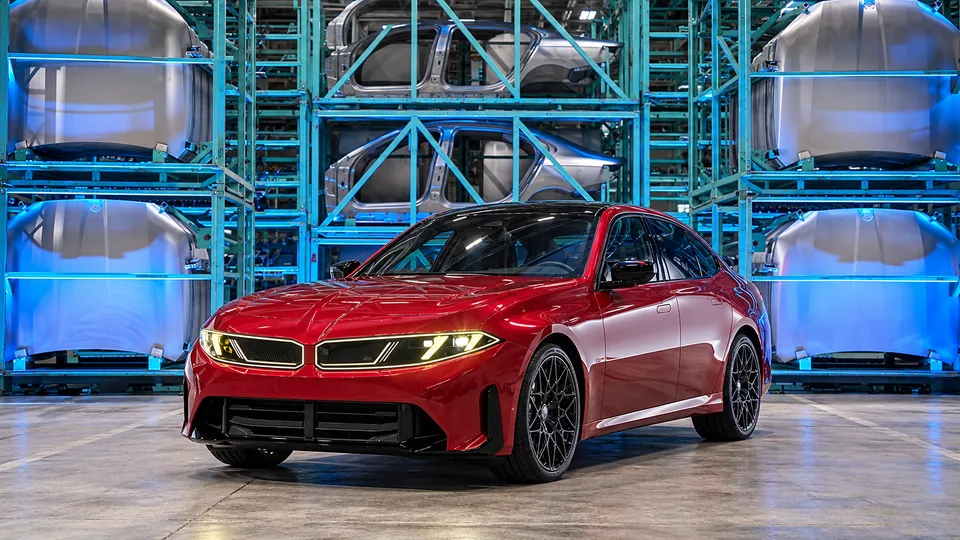
BMW said on Wednesday that it would invest about €2 billion in its German factories, including €1 billion for a new battery plant, as part of a wider plan to cut management layers and rebuild profits in the shift to electric cars.
Investors welcomed the announcements, made at a two-day Capital Market Day event that ended Wednesday. BMW shares rose more than 3 percent in early afternoon trading in Europe. German carmakers are trying to restore profitability while absorbing the costs of the electric transition, supply disruptions, high energy prices and competition from Chinese rivals.
BMW plans to cut the number of divisions and associated management roles by 20 percent by mid-2027, simplify its model range, shorten development times and work more closely with suppliers. It will make greater use of A.I., including in crash simulations and driver assistance. The company aims to lift its automotive operating margin to between 3 and 5 percent by 2028 and get back to its long-term target of 8 to 10 percent only at the start of the next decade, a slow road back.
The Munich plant, more than 100 years old, will be converted to build only electric vehicles from 2027, including the new BMW i3. Combustion-engine and plug-in hybrid versions of the 3 Series will move to Dingolfing. A battery plant in Irlbach-Strasskirchen, in Bavaria, will start supplying high-voltage batteries for the i3 this month.
“We are investing in value creation, competitive production and job security in Germany,” Raymond Wittmann, BMW’s head of production, said in a statement. The battery plant, he said, showed the company bringing essential electric-vehicle technology back home, adding that Germany’s industrial success depended on conditions that support investment, innovation and competitiveness. The company said the plant would “boost regional value creation, secure skilled jobs and add a future location to the industrial ecosystem of Lower Bavaria.”
BMW said about 760 supplier locations feed the Munich and Dingolfing plants, more than 70 percent of them in Europe and more than 30 percent in Germany. Its Steyr plant in Austria will produce electric drive components and combustion engines for the new 3 Series. BMW’s German plants turn out more than one million vehicles a year, a quarter of all cars made in the country.
The company is also deepening a “local for local” approach. Its Shenyang plant will build a modified 3 Series tailored to Chinese buyers, and in China BMW is shrinking its dealer network and using more standardized, locally sourced components, which could cut the cost of those parts 20 to 30 percent, according to the brokerage Bernstein.
The costs are landing on a company already under strain. BMW issued a profit warning in June and agreed in July to a voluntary redundancy program expected to remove about 8,000 jobs worldwide, according to the German news agency dpa, citing company sources. Operating profit fell 37 percent to €3.64 billion in the first half of 2026 while revenue declined 8 percent, the steepest fall among 19 carmakers in an EY analysis. Vehicle sales in China dropped 19 percent, more than wiping out growth of 6 percent in Europe and 4 percent in the United States.