
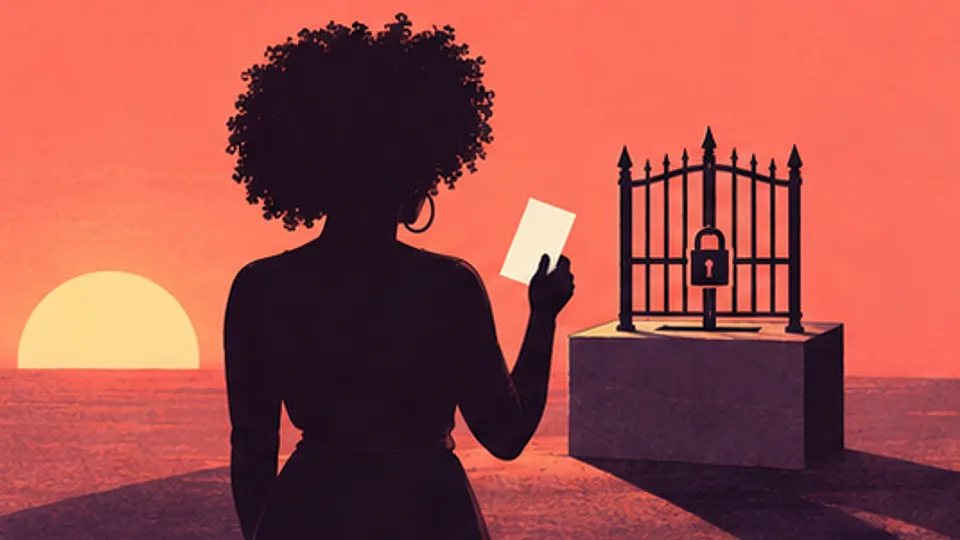
Black women voters have little confidence that the country’s institutions and lawmakers are delivering what they need, and most doubt much will change over the next decade, according to a national poll released this week.
The survey, the sixth annual poll of Black women by the Highland Project and Brilliant Corners Research and Strategies, asked 700 participants whether the nation’s broader systems were fulfilling what matters most to them, a question the researchers call “the fulfillment gap.” The answer, the groups said, was “overwhelmingly no.”
At least 92 percent of respondents said they were dissatisfied with the country’s direction, and 51 percent said they were pessimistic about its future. Nearly all, about 95 percent, said they were concerned about the effect of the Supreme Court’s rollback of the Voting Rights Act earlier this year.
“It’s all pointing to this notion that America has moved quite far away from the vision that Black women continue to name and build, and they’re translating that movement into urgency,” Gabrielle Wyatt, the founder of the Highland Project, said in an interview with Capital B, which first reported the poll’s findings. “They are truly feeling the pressures of changes in policy and government actions, and they feel that their voices, their sense of belonging, their dignity, urgently need to be protected.”
Cornell Belcher, the founder of Brilliant Corners, said the pessimism in the data ran deeper than the cost of living. It isn’t simply about “the price of eggs or gas,” he said.
“That’s not to say there’s no economic angst, because there is, but if you are simply focused on that part of it, you miss 90% of a broader conversation about where these women are, what they need, and what they’re demanding for a more joyful and purposeful life,” Mr. Belcher said, according to Capital B.
Mr. Belcher, who worked on both of former President Barack Obama’s presidential campaigns, said hope and optimism had driven Black turnout in those elections. What is motivating Black women now, he said, is different: the need to protect and defend their communities.
The court ruling that worries respondents came in April, when the justices, dividing 6 to 3, struck down a Louisiana congressional map that included a second majority-Black district and, in the process, sharply weakened Section 2 of the Voting Rights Act, the law’s main remaining tool against discriminatory election maps. Voting-rights groups called the decision, in Louisiana v. Callais, a gutting of the 1965 law.
The national poll follows one the two organizations released this spring that surveyed 700 Black women voters in Mississippi about how they defined success and joy and what it would take to repair systems they see as broken. Ms. Wyatt said the new findings mirror the earlier ones: that mental health, financial security and family matter as much to a joyful life as solving the affordability crisis.
“They’re quite pessimistic about the future of the country now, about the economy, and in fact, are sitting in the direct aftermath of its deterioration,” she said. “Given all of this, [Black women are] showing up at the polls and holding leaders accountable because here is what matters most to us. It reveals what must be protected in this moment in order to actually build the futures we’re all seeking.”
The Highland Project and Brilliant Corners say the annual survey is meant to build a deeper picture of Black women’s aspirations around wealth and democracy and of the barriers that limit both.