
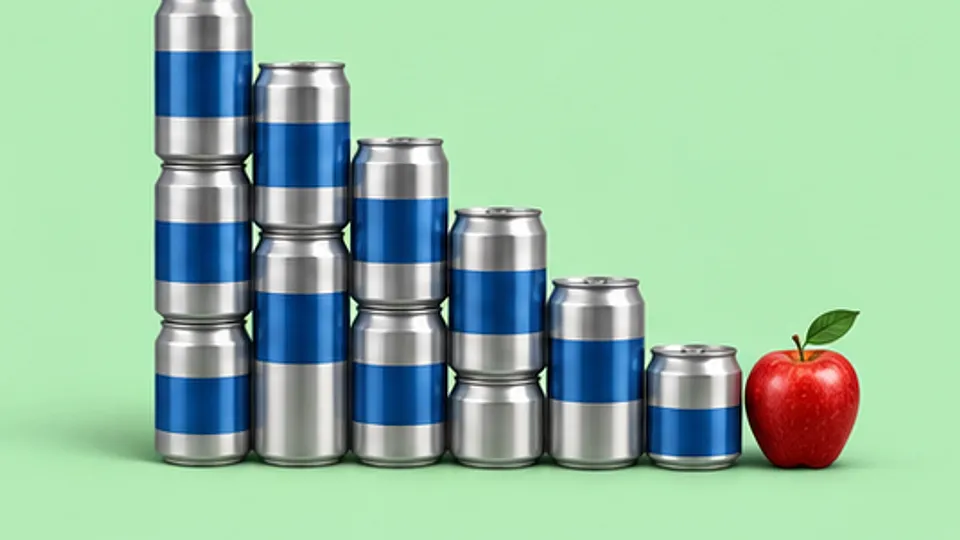
Grocery shoppers in Berkeley, California, bought significantly less soda and small-package candy after a 2021 citywide ordinance banned unhealthy food displays at checkout counters, researchers from Boston University and the University of California, Davis, said in a study.
Soda sales fell nearly 40% compared with trends in other cities after Berkeley’s Healthy Checkout ordinance took effect, the researchers found after analysing 71 chain store locations in the city.
The ordinance, the first of its kind anywhere in the world, bars sugary drinks and high-sugar foods from checkout areas in major retailers, though stores may still sell the items elsewhere on the premises. It aims to reduce sugar and sodium consumption, which is “a major driver of obesity,” Susana Matias, a public health nutrition researcher at UC Berkeley, said.
“Checkout is ... uniquely influential over impulse purchases. Big ultra-processed food and beverage companies pay large marketing fees to stores to place their products at checkout to boost sales,” Jennifer Falbe, a professor of nutrition and human development at UC Davis who co-authored the study, said in an email. “This law only regulates the checkout lane.”
The decline was not uniform. Although the law targets small packages of soda sold at checkout, sales of large packages accounted for much of the reported decline, while small packages showed limited change, the study found. Overall candy sales rose after the law took effect, but small-package candy sales fell 43% after enforcement began.
“The policy appears to have changed some purchasing patterns, but not uniformly across products or store types,” Justin White, an associate professor at Boston University School of Public Health and the study’s lead author, said in an email. “That gives policymakers a more realistic picture of both the potential and limits of checkout policies.”
Sophie Hahn, the former Berkeley City Council member who co-authored the ordinance, welcomed the results. “I’m incredibly proud to have authored Berkeley’s Healthy Checkout legislation,” she said. “This is exactly the outcome advocates and I predicted when the legislation was put forward.”
The findings echo earlier Berkeley measures, including a 2014 penny-per-ounce tax on sweetened beverages, which was also followed by a drop in soda consumption.
White said cities should make such rules easy for stores to understand and implement, and noted that other parts of stores, including endcaps, entrances and seasonal displays, may also shape buying choices.
Wilhelmenia Wilson, executive director of Healthy Black Families, a Berkeley-based health nonprofit, said the effects reach chronic disease, “diabetes in the Black community being one of the most paramount.” She called the ordinance “an excellent preventative mechanism that can be implemented in a very practical way.”