
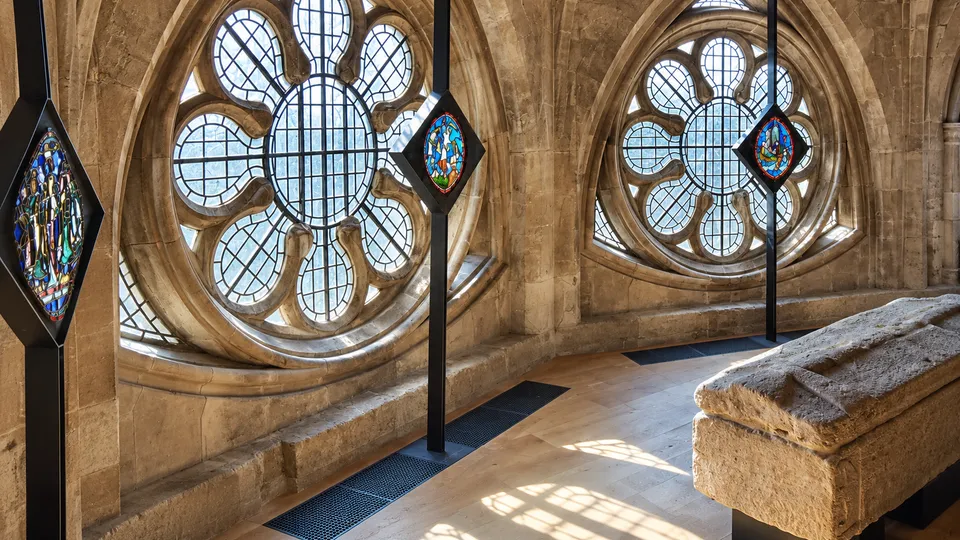
A limestone box stands in the Queen’s Diamond Jubilee Galleries of Westminster Abbey, and the name carved into it belongs to a man who is not inside. Valerius Amandinus was a wealthy resident of Roman London in the fourth century AD, and somebody honoured him with a sarcophagus and an inscription. Centuries later somebody else cut a large Christian cross into the lid and laid a different man in the stone.
The abbey has wondered for generations who that second man was. Now, as Arkeonews reports, Professor Warwick Rodwell, the abbey’s consultant archaeologist, has put together the evidence of the bones, the coffin and the monastery’s own past in a paper titled Westminster Abbey’s Roman Sarcophagus and its Afterlife, published in the Journal of the British Archaeological Association. He offers two names. Both belong to abbots of the 11th century: Ælfwig and Wulnoth.
Six pieces, then forgetting
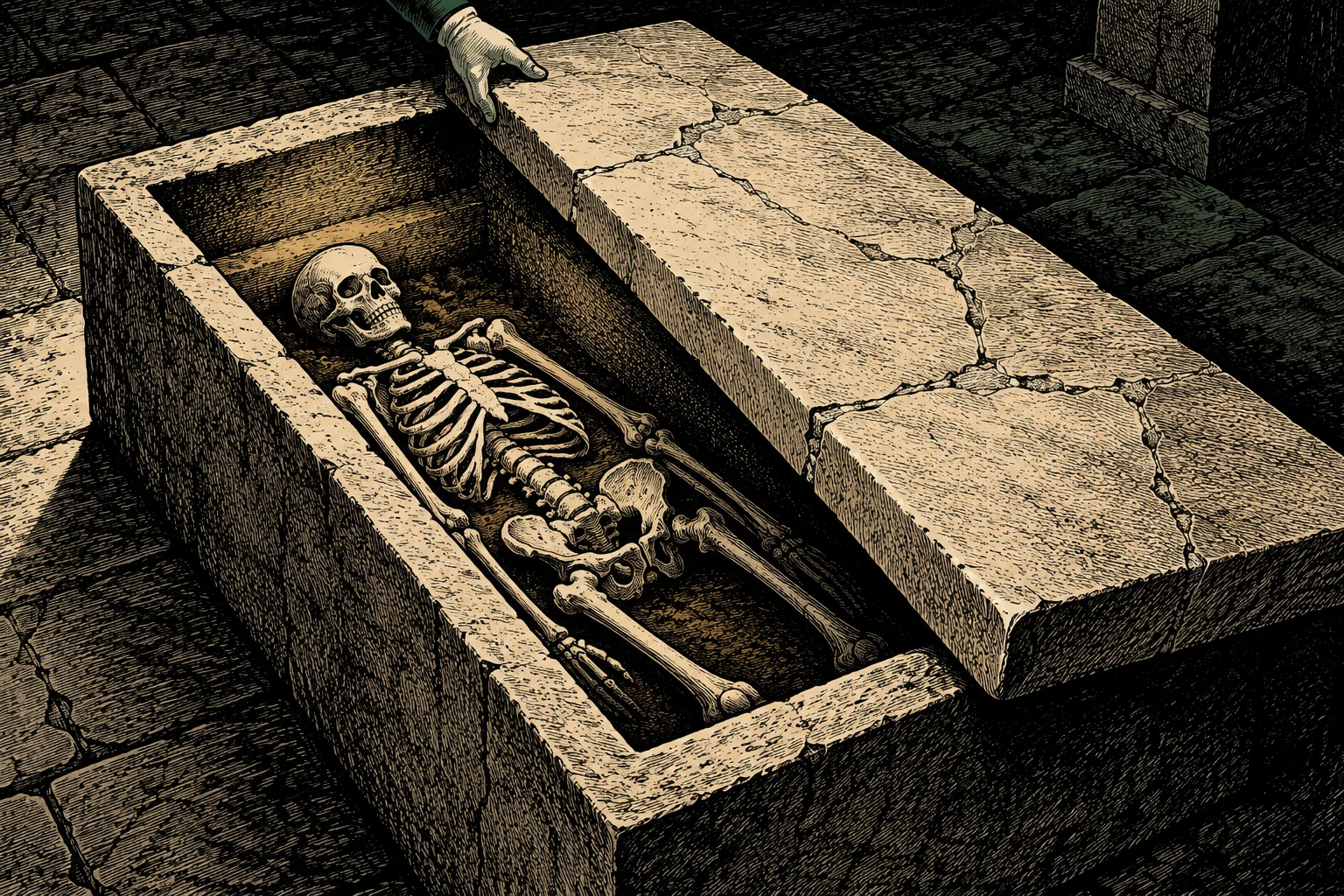
For most of its modern life the coffin was treated carelessly and then forgotten. In 1820 workmen on a construction job in the abbey grounds struck it and broke the lid into six pieces, which were later repaired. In 1869 it was formally excavated from the ground the abbey now calls the North Green. After that, nobody kept track of what was inside. For more than a century people believed the skeleton had been lost.
It had not been lost. In 2016 conservators opened the sarcophagus for a detailed examination and found an almost complete skeleton lying there. It had been there the whole time.
Institutions forget their dead easily, one might reflect. The dead, having nowhere else to go, simply stay where they were put.
The Victorians had described him, according to the abbey’s announcement, as a “robust young man” about 5ft 7in tall and no older than 30. James Young Langthorne, a human bone specialist with Pre-Construct Archaeology, reached a different verdict. The man had died between the ages of 35 and 49 and stood about 1.75 metres tall, which made him older and taller than the nineteenth century had thought.
The radiocarbon date settled more than his age. A bone sample analysed at the Scottish Universities Environmental Research Centre gave a range of AD 987–1052, putting him in Anglo-Saxon England about seven hundred years after the stone was cut. The cross on the lid, which the abbey dates to the 10th or 11th century, had been right all along.
A rectangle of lime
The wooden coffin he was buried in has rotted away completely, but it left a mark. A rectangular outline of white residue shows on the inside of the stone, left by lime that had been spread over the body at burial. Rodwell reads its shape plainly: the man was first laid in a timber coffin, and the timber coffin was then lowered into the Roman one. The wood decayed and the lime kept its outline.
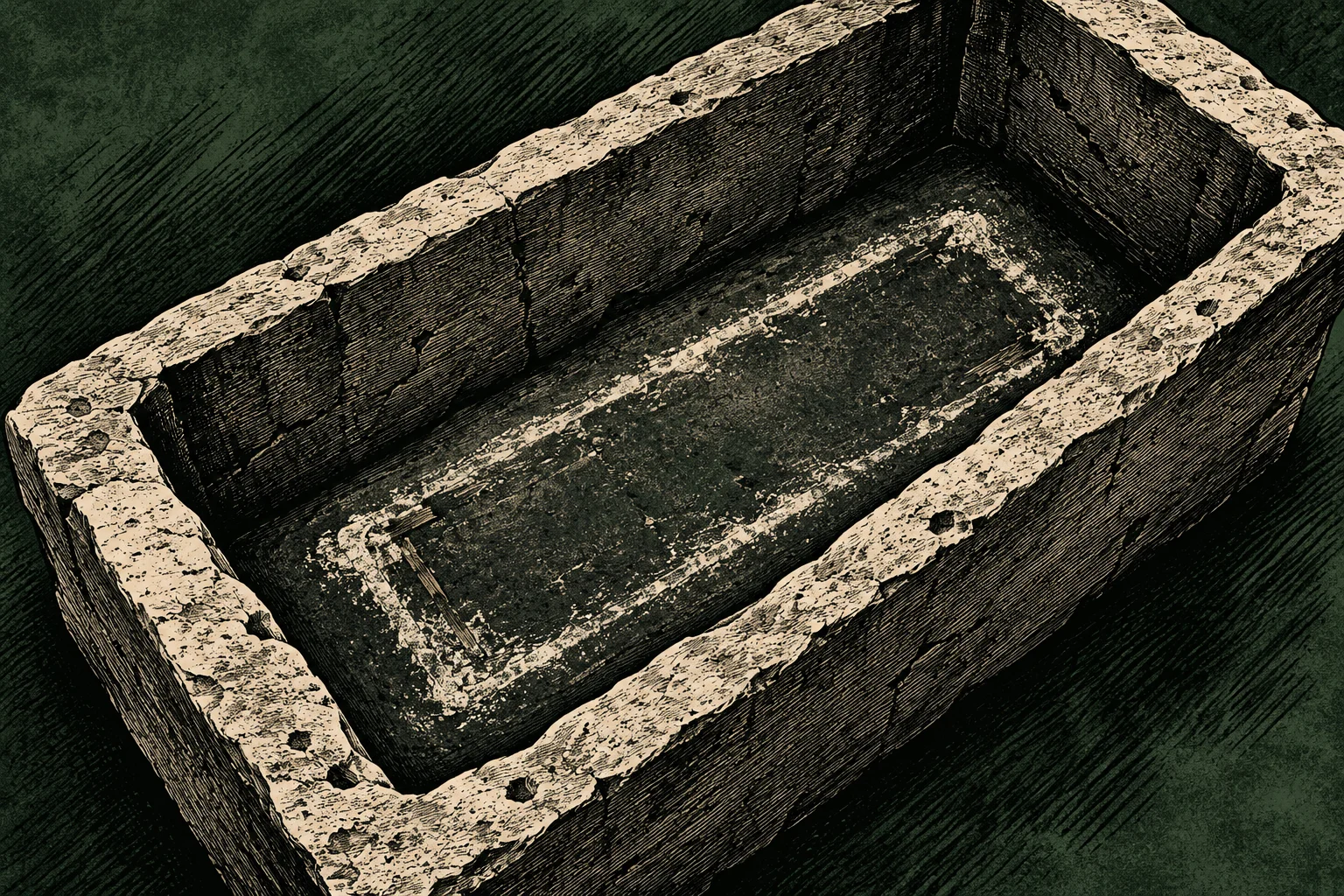
A body in wood, the wood inside a carved Roman sarcophagus, a cross on the lid. Nobody went to that much trouble for an ordinary death. Notice too what the mourners left alone. They did not chisel off the Roman’s name. They added their own sign above it, and the old commemoration and the new one have shared the same stone ever since.
Two abbots
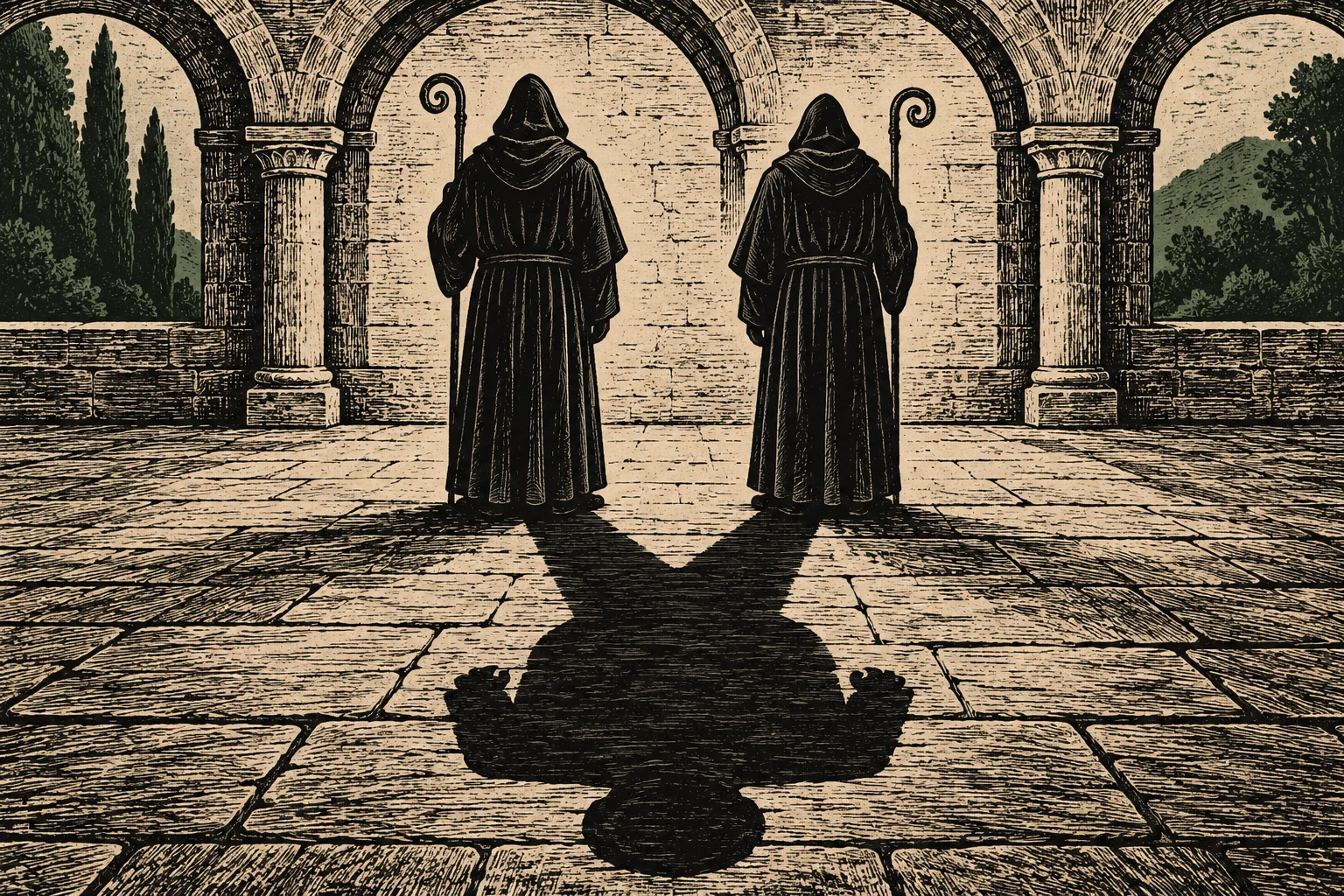
Westminster at that time was a Benedictine monastery. The Gothic church that tourists queue for today did not yet exist. Ælfwig became its abbot in 993 and died around 1020, and before that he had already belonged to its community. Wulnoth, his successor, died in 1049. Both men are believed to have been buried at Westminster, and both fall within the radiocarbon window.
We have two viable contenders for the occupant of the sarcophagus.
“We do not know the date of birth of either,” Rodwell said. Either man fits the skeleton if he became abbot in his early twenties and died at about fifty. Rodwell leans one way. “The fact Aelfwig was already a monk of Westminster might favour him,” he said. No surviving name or other direct evidence ties either man to the grave.
The abbey headlined its announcement “Mystery of Abbey’s Roman sarcophagus solved”. The study itself offers two candidates and a preference. That makes it an informed historical interpretation, which is a good deal less than a confirmed identity.
The king’s builders
Rodwell also traces where the coffin travelled. He believes it was first placed in the eastern part of the Anglo-Saxon abbey church, sunk beneath the floor, with the cross-carved lid left showing as a grave marker. It might have stayed there if King Henry III had not started rebuilding the abbey in the 1240s. The new work changed the church and forced the removal of earlier burials, and Rodwell argues the sarcophagus was among them. Around 1258 it was buried again, this time in the courtyard of the newly built sacristy on the abbey’s north side. It stayed there until the workmen’s tools found it in 1820.
So a monk was moved to make room for a king’s ambitions, just as a Roman had earlier lost his coffin to a monk’s funeral. Power on this site has always been built over somebody else’s grave.
The digging goes on. Channel 4’s Time Team examined the old sacristy in 2009. In 2025 Pre-Construct Archaeology finished further excavations on the site, clearing the way for a new building to be called the King Charles III Sacristy.