
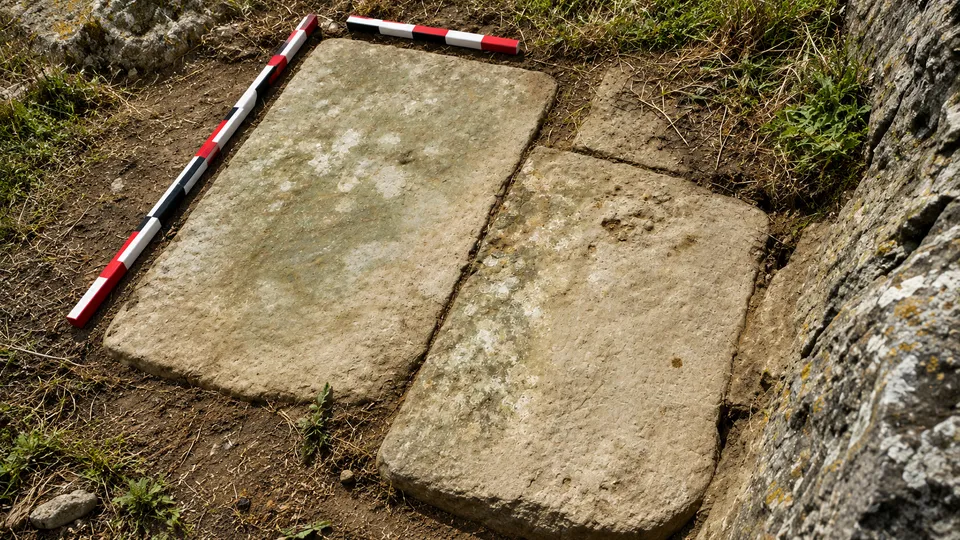
The stones were found doing humble work. In the sixth century, Byzantine builders at Musti, in what is now northern Tunisia, raised a fortress of about 2,800 square metres. Like the builders of most empires, they used what the previous one had left lying around. Some blocks of a monumental Roman inscription were laid as paving slabs, so for centuries the names of Jupiter, Juno and Minerva lay underfoot.
As Arkeonews reported, four of those limestone blocks have now settled an old argument. A study in Libyan Studies by the Polish and Tunisian researchers Karol Kłodziński, Mohammed Abid, Tomasz Waliszewski and Jamel Hajji shows that the town had a temple to the Capitoline Triad. The study dates its dedication to AD 210–211, about 1,815 years ago. The blocks also preserve, in a gap in the fourth line, one of the most famous murders in the Roman imperial family.
A question left open since 1961
In Roman times [Musti](https://en.wikipedia.org/wiki/Musti_(Tunisia)) was called Municipium Iulium Aurelium Mustitanum, a prosperous town in the province of Africa Proconsularis. During Tunisian-French excavations in 1961, the archaeologist Claude Poinssot recorded an inscribed block and linked it to a Capitolium. The surviving text was too thin to prove him right, and the question stayed open for more than sixty years.
On May 18, 2022, Abid and Kłodziński identified three more inscribed blocks during fieldwork for the AFRIPAL project. They lay several metres apart in the southwestern part of the Byzantine fortress, near Poinssot’s fragment. Kłodziński presented the new fragments of the Capitolium dedication in a lecture for BILNAS on 15 October.
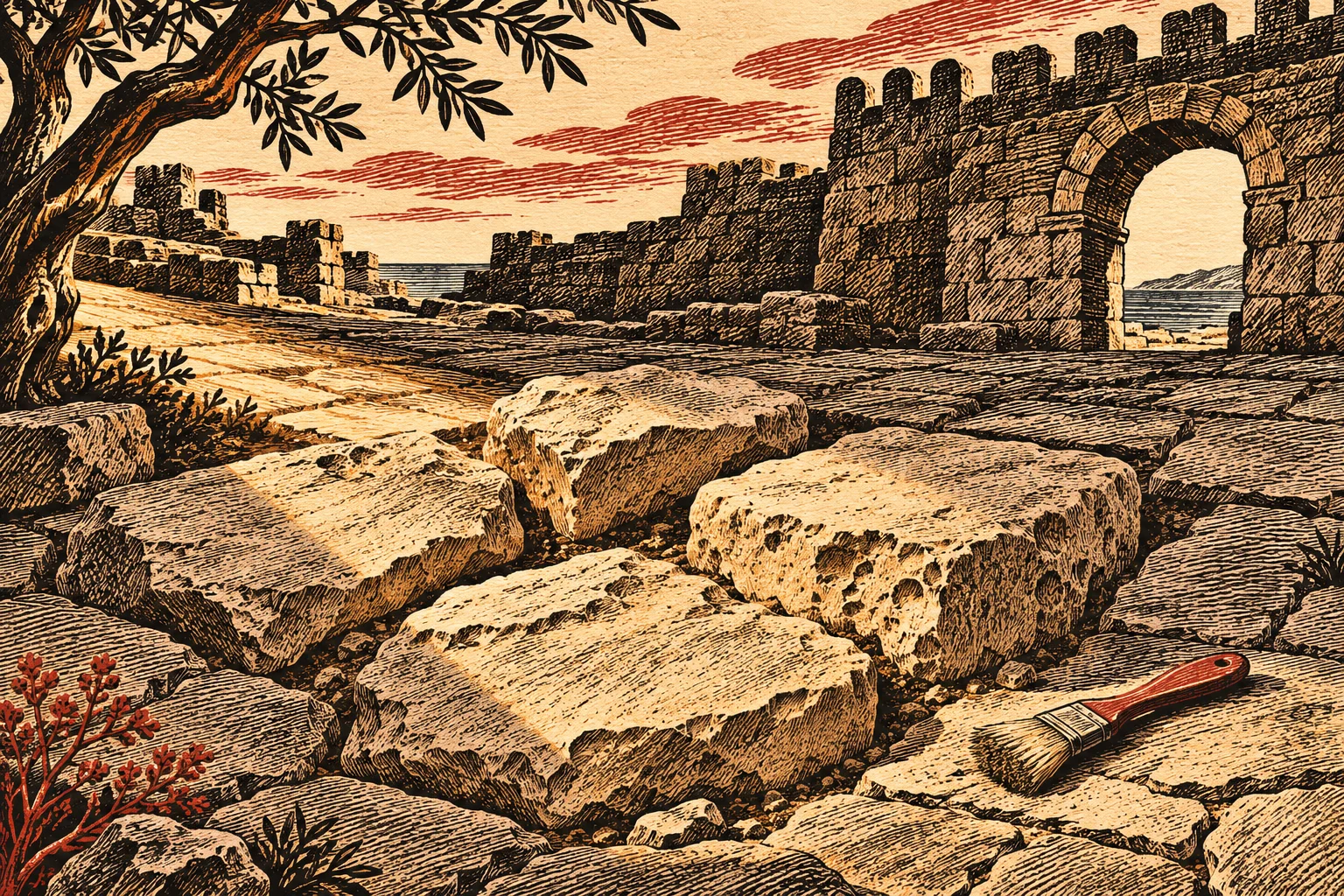
Laid side by side, the four blocks measure 3.25 metres across. The researchers estimate that the full inscription may have run to more than six metres. In the opening line the letters stand 15 centimetres high, large enough to suggest the text sat somewhere prominent, perhaps on the temple’s façade or portico.
Three gods and one family
With the new fragments, the team could reconstruct the opening line with some confidence:
IOVI OPTIMO MAXIMO IVNONI REGINAE MINERVAE AVGVST SAC
The line names Jupiter Optimus Maximus, Juno Regina and Minerva Augusta. These three formed the Capitoline Triad, whose chief sanctuary stood on the Capitoline Hill in Rome, where religious ritual and Roman political power supported each other. The inscription then asks for the welfare of the emperor Septimius Severus, his sons Caracalla and Geta, and his wife Julia Domna, who is styled the mother of the emperors and of the military camps.
The date comes from one title. Severus and his sons took the victory name Britannicus Maximus on March 31, AD 210, after their campaigns in Britain. Severus died on February 4, AD 211. That leaves a window of about ten months for the dedication.
Here is one reflection, offered as nothing more. A town on the African frontier of the empire showed its loyalty in fifteen-centimetre letters and wished health on a family whose members would soon start killing one another.
The fourth line
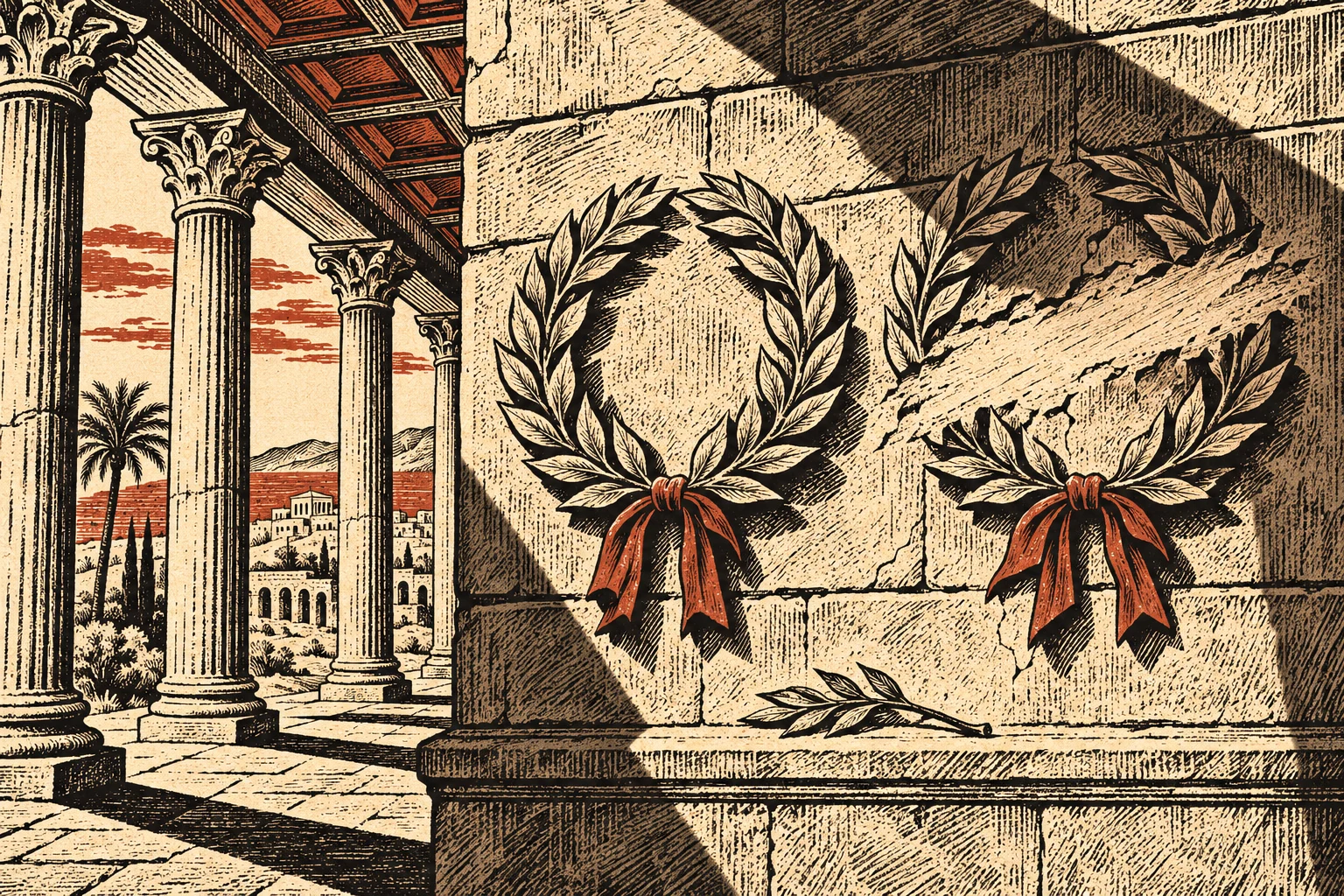
Someone deliberately chiselled Geta’s name and titles out of the fourth line. The work was not complete. Traces of three letters, AVG, the abbreviation for Augustus, survived, and they let the researchers restore what had been removed.
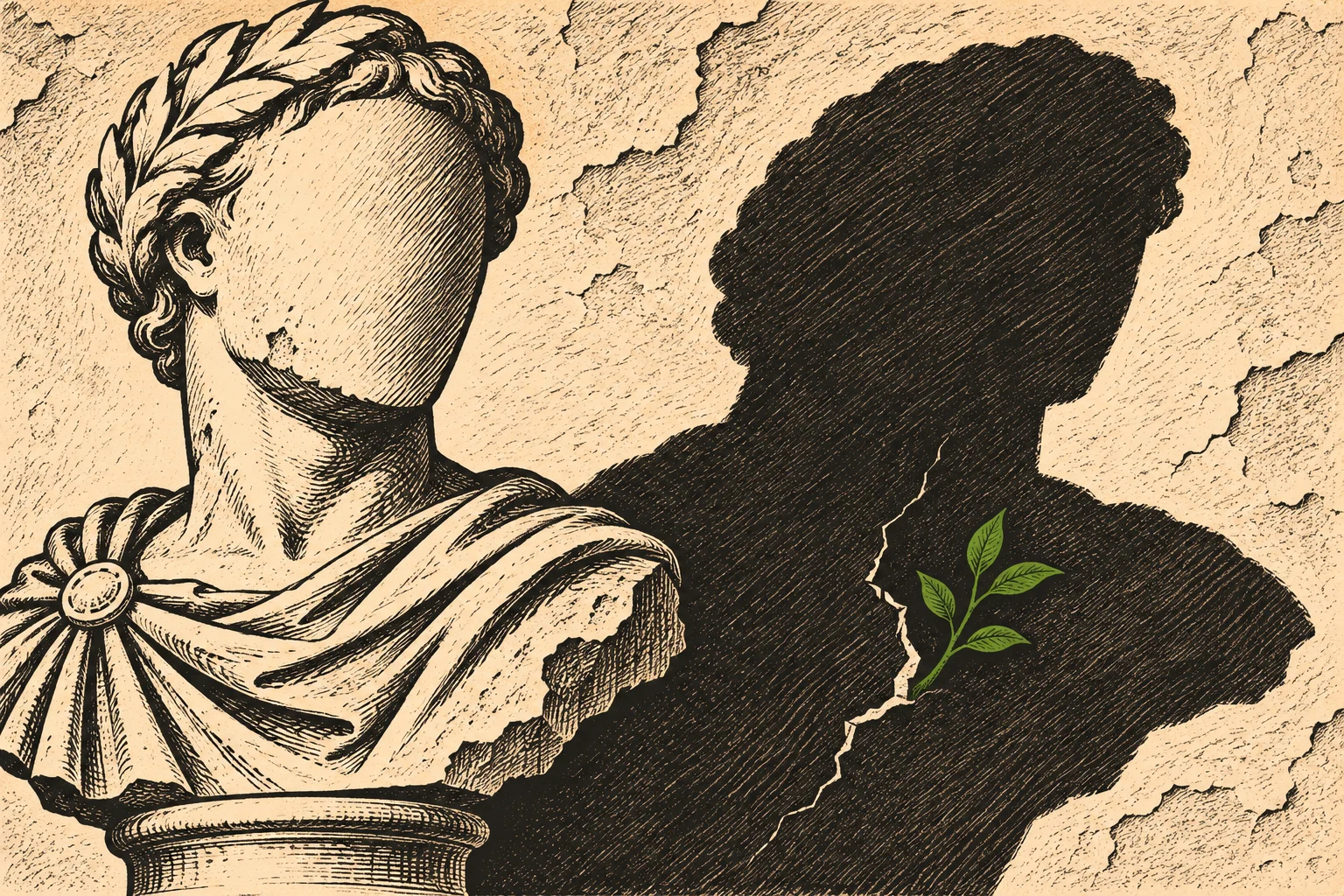
After their father died, the two brothers inherited the empire as joint rulers and quickly grew hostile to each other. Geta was murdered before the year was out. According to [the standard account of his life](https://en.wikipedia.org/wiki/Geta_(emperor)), he was killed on 26 December 211 by centurions at a meeting in his mother’s apartments, and he died in her arms. Caracalla, now sole ruler, then set out to erase his brother from public life. Across the empire his name was cut from inscriptions, his portraits were destroyed or altered, and monuments in his honour were taken down. Historians call this damnatio memoriae, the condemnation of memory.
The best-known image of that purge is the Severan Tondo, a painted portrait of the family in which Geta’s face has been scraped away. The block at Musti belongs with it. It was carved as a prayer for an imperial household and now records how that household fell apart. Caracalla did not outlive his brother by long: he was himself murdered in 217.
Regimes that erase people tend to assume the chisel will be thorough. It seldom is. In Musti, three letters were enough to bring the dead brother back.
Eagles at the gate
The fortress holds another clue. A monumental doorway about 3.5 metres wide is flanked by two pillars carved with eagles standing on thunderbolts, wings lowered. Both the eagle and the thunderbolt belonged to Jupiter. Because the carvings sit so close to the inscribed blocks, the researchers think they probably came from the Capitolium. They consider it plausible that the fortress stands on the site of the temple and the civic forum, or right next to them. Only further archaeological and architectural work can establish where the sanctuary stood, how it was laid out and what happened to it later.
Twenty-nine
Earlier scholarship counted 27 securely documented Capitolia in Roman Africa, more than in Italy and all the other provinces put together. The new study raises the count to at least 29. It adds Musti, along with an overlooked dedication from Uchi Maius, about ten kilometres to the northwest, whose Capitolium was built between AD 198 and 209.
Two neighbouring towns each built a temple to the gods of Rome within a few years of each other. For towns like these, such buildings were a way to show their wealth, their political loyalty and their religious ties to the capital. The authors note that this kind of religious building mattered a great deal in North Africa under the Severans.
Nobody yet knows who paid for the temple at Musti. Another inscription somewhere in the sanctuary may once have recorded their gifts. The emperor’s brother was cut out of the stone on purpose, and his name can still be traced. The donors who paid for the stone are, for now, simply missing.