
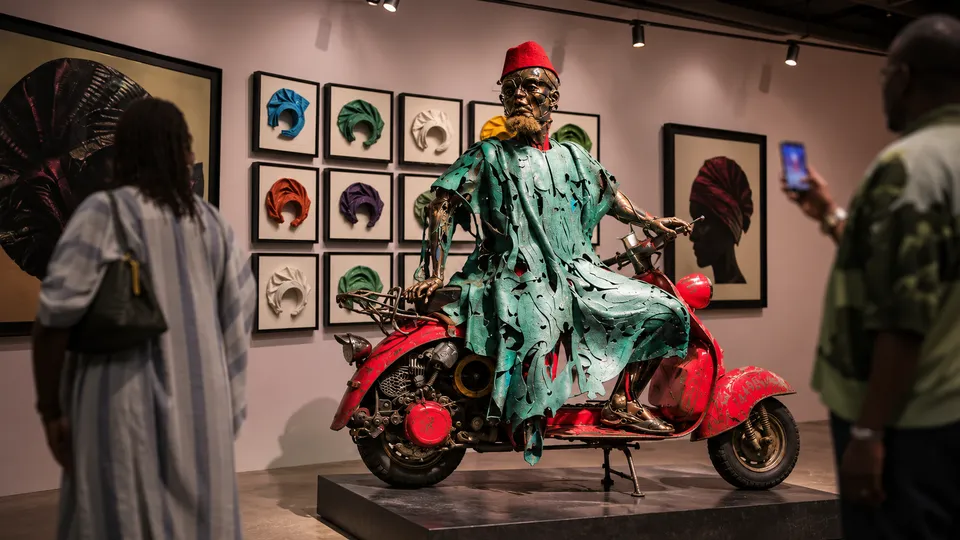
Badagry is a historic town on Nigeria’s Atlantic coast. It was once a notorious transit point for enslaved West Africans. This month some of its sand, and a recording of its waves, were installed in a booth at the Federal Palace Hotel on Victoria Island in Lagos, where ART X Lagos, which bills itself as West Africa’s premier and largest art fair, ran from November 5 to 8.
The fair, now in its 11th edition and the centrepiece of Nigeria’s annual art week, drew thousands of visitors, Pelumi Salako reported for Al Jazeera. They moved between 15 partitioned exhibition spaces. The organisers’ own closing account gives the same number of exhibitors, galleries from Lagos to Kampala. Around the main fair there were installations, music, talks and film screenings, and galleries and museums across the city put on shows of their own. Lagos is known for commerce, traffic and endless hustle. For four days it was also known for this.
The sculptor and multidisciplinary artist Ndidi Dike called her installation Residues of Past Encounters II. A wooden canoe hangs above a sheet of glass, with sand arranged around the edges. Above the canoe is fabric in the Adire style associated with Yoruba women of the southwest, printed with the silhouettes of people packed tightly together. The waves play quietly in the background. The glass reflects, and in the reflection there is absence.
“The sound of the waves makes you contemplate, makes you think deeper, and then you begin to imagine, perhaps, how those who have left our shores under various circumstances must have been feeling mentally, the prospect of leaving home and never, perhaps, seeing it again.”
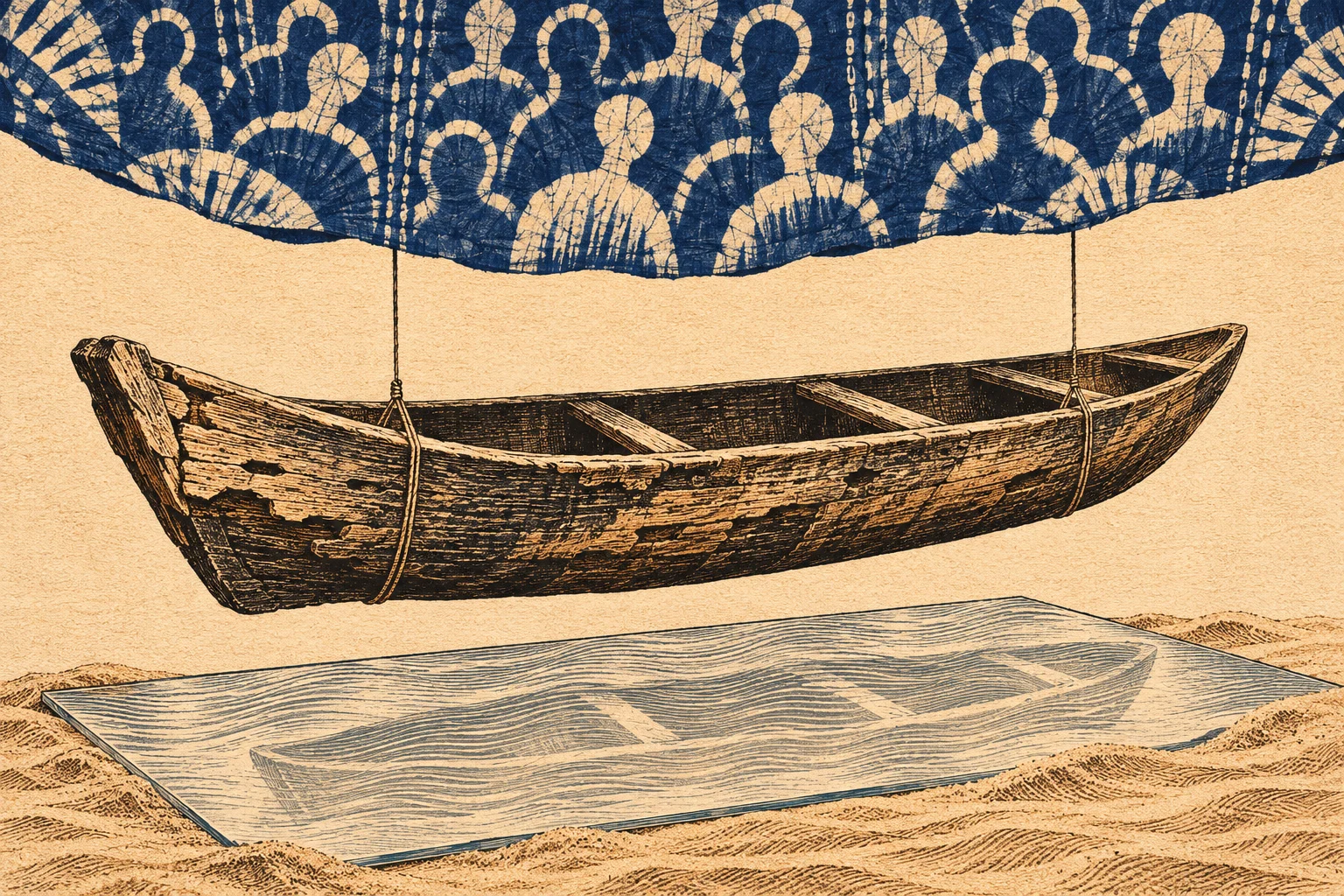
Dike does not keep the canoe in the past. Centuries after the transatlantic trade, young Africans still cross the Sahara and the Mediterranean towards Europe. Some die on the way. Others are exploited or trafficked. “I find that there is a correlation between slavery and what is happening now,” she said. “It’s always the best of our demographic that are taken or who decide to go abroad.”
That is her argument, and it is a hard one. The slavers took people by force. The young who leave now go by choice, of a kind. In both cases the shore loses the same people, those who could have built something at home.
A potter from Kwali
This year’s theme was “A New Chapter, A New Decade”, a nod to the first generation of Nigerian artists, architects, educators and thinkers who shaped the country’s modernism. The founder, Tokini Peterside, who started the fair in 2016, said that generation showed innovation did not have to mean leaving inheritance behind. “Our histories are not simply things to preserve or look back upon,” she said. “They are living sources of knowledge that can inform what we create next.”
The clearest case was Ladi Kwali. She came from a long line of Gbari women potters in the village of Kwali, near Abuja, where pottery was part of daily life. Her work went on to museums and collections around the world, and her face went onto Nigerian money. The exhibition Beyond the Vessel set her pots, with their scorpions, lizards, butterflies and dense patterns, beside a large photograph of her at work. Nigerian coverage of the opening said the show set out to make her more than the familiar portrait on the twenty-naira note.
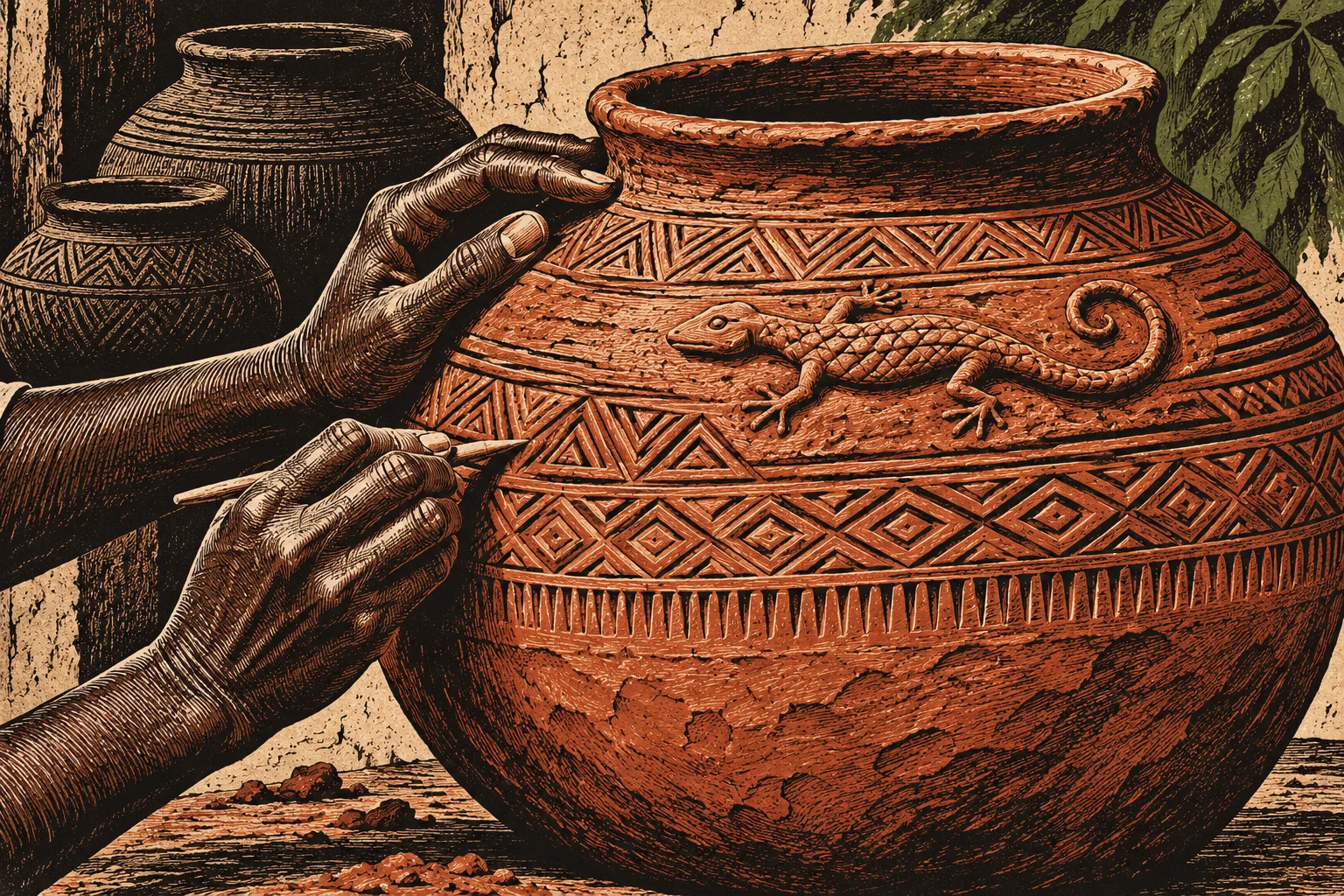
Its curator, Jareh Das, said keeping her legacy alive matters in a country where documenting and maintaining heritage can be difficult. “Culture is not always outside, but looking at what exists within and how you can draw from that, how you can rise above immediate challenges … through something as familiar as pottery,” Das said.
A state that prints an artist’s face on its currency has not necessarily built the archives to keep her work. Das’s remark points at that gap without saying so.
Coffee, fibreglass, Adire
Barbara Barungi, wearing Adire, was looking to buy. At Afriart Gallery, a Kampala space showing Ugandan work, she found a painting Daniel Atenyi had made with coffee. The fair, she said, was “very Nigerian” and caught “the vibe of Lagos”, while offering “a safe place to just relax to forget the hustle and bustle out there.” Half joking, she called it Nigeria’s Met Gala, for the outfits.
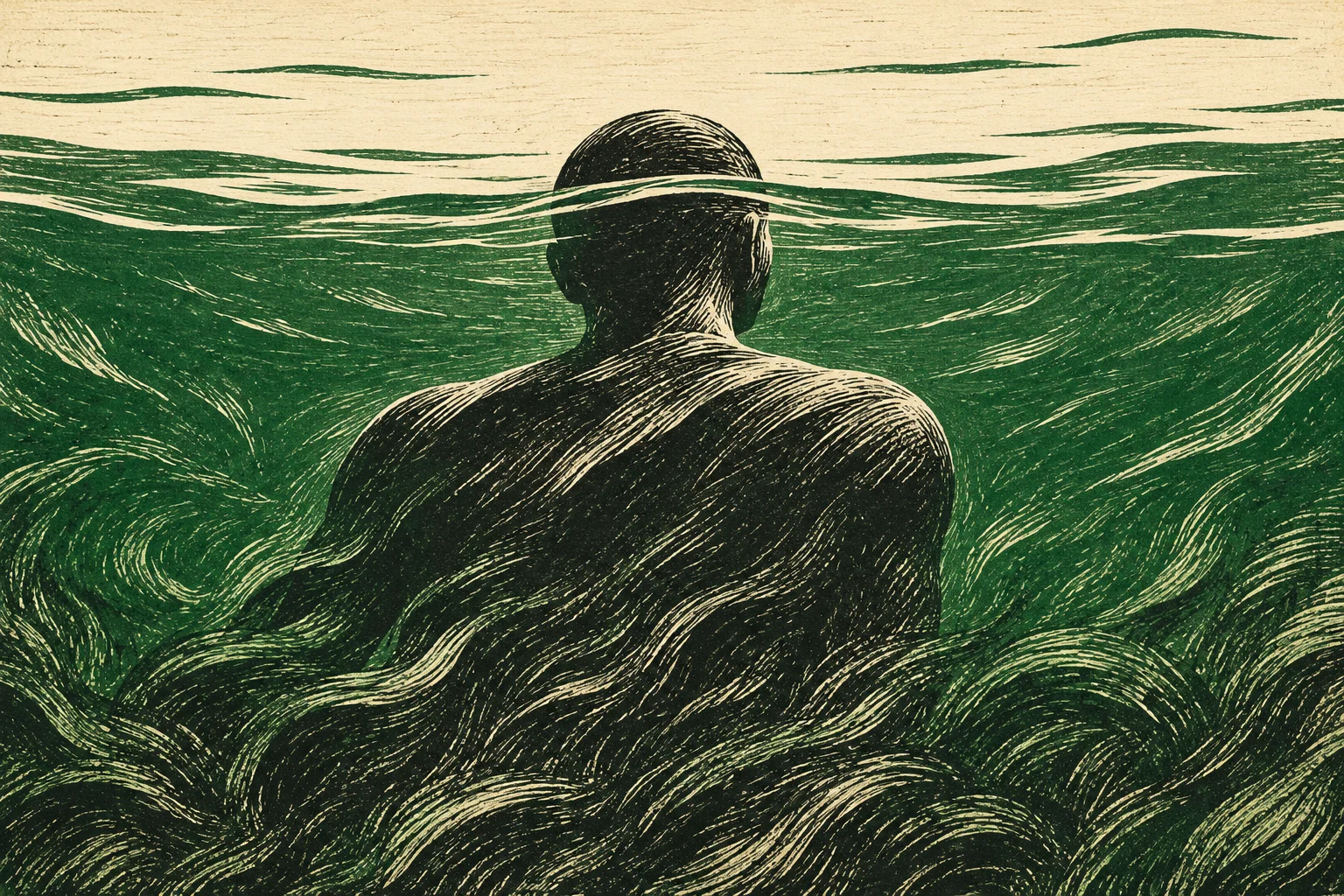
Adeniyi Adewole’s fibreglass sculpture Breath Beneath the Waters came out of his depression, which for a time kept him indoors and unable to work. “When I came back to work, I started creating work on how I have been able to move away from that blue period to a period of peace,” he said. He hopes viewers will feel sombre reflection first, and then calm.
More than 750 schoolchildren came through the fair’s education programme. Peterside said that for many of them it might be one of their first encounters with contemporary art, a chance to see creativity “not as something distant or inaccessible.” Across the city, Mercy Imiegha’s group show Every House Remembers brought together four artists working on how bodies, objects and houses hold memory and spiritual identity. The Guest Artists Space (G.A.S.) Foundation, an artist residency founded in Nigeria, organised a citywide art tour.
Chibok
Joel Benson’s feature documentary Mothers of Chibok follows three parents and a woman who was abducted and later freed. She was one of the 276 schoolgirls Boko Haram took from their dormitory in Chibok in 2014. In April 2024, on the tenth anniversary, Amnesty International said 82 girls were still in captivity. The same statement said it had documented at least 17 mass abductions since then, in which at least 1,700 children were taken from their schools.
Chibok was where it started, not where it ended. In Borno, a families’ group now says 10,000 people are missing after Boko Haram violence, and for many households the kidnapping is only the first bill.
“It is important to tell this type of story because it is more convenient to forget and just move on,” Benson said. After more than a decade, he said, the parents still carry on through laughter, humour, pain, tears and faith. The film started conversations about insecurity and attacks on girls in Nigeria. Benson wants audiences, and the authorities above all, to move from empathy to action that shapes policy and improves security.
Governments have always found forgetting cheaper than searching. The parents in his film have not forgotten.