
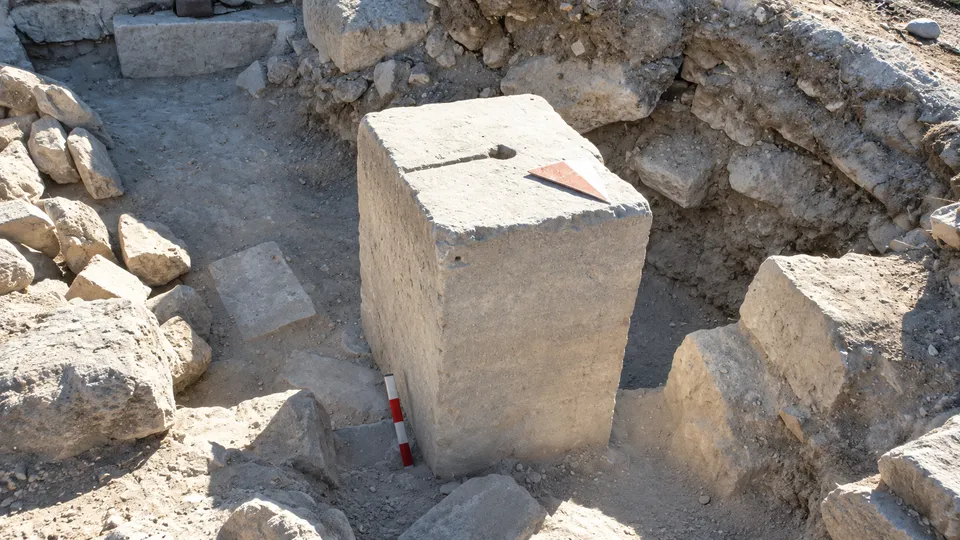
Somewhere in the second or third century after Christ, in Kibyra, a city in the hills of southwestern Anatolia, a person with a sick relative or a journey ahead or money at risk could put the question to a stone. The stone answered in Greek. It did not answer quickly. First the person had to throw the bones.
The stone has come back. Archaeologists working on the third terrace of the city’s agora found it in 2024: a limestone monument 1.24 metres tall, carved with Greek on all four faces and holding 56 oracles. As Leman Altuntaş reports for Arkeonews, the inscriptions are now the subject of a study in the journal Gephyra by Şenkal Kileci, Nihal Tüner Önen and Şükrü Özüdoğru. They identify the monument as astragalomancy, a way of drawing a message from the gods by casting animal knucklebones, and date the text to the second or third century AD.
The throw
The bones came from the ankle joints of sheep, goats and calves. Archaeology and the Greek called them astragaloi. Each had four faces it could land on, and each face counted for a number: 1, 3, 4 or 6.
Five bones, thrown together.
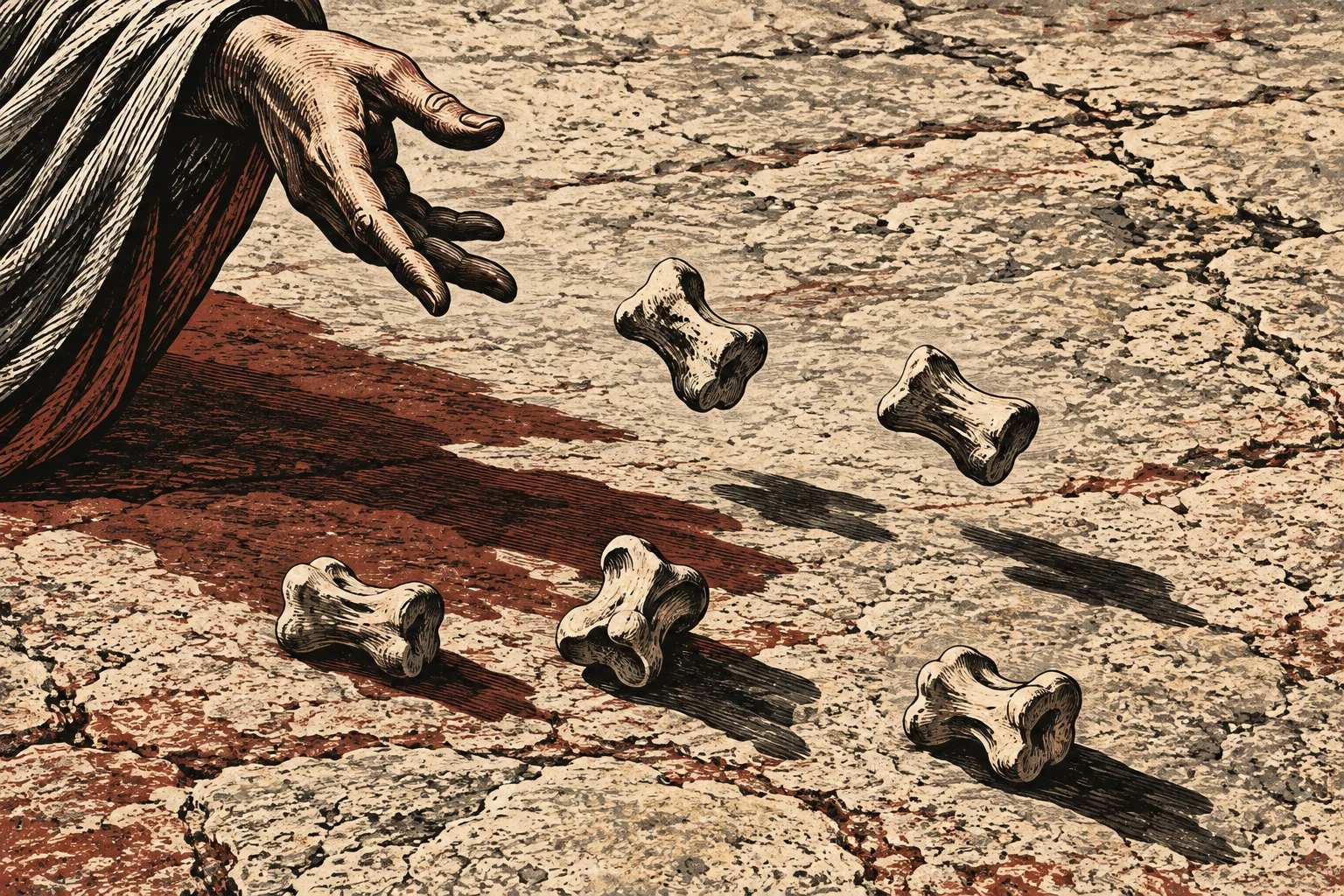
Five bones with four possible faces each, where the order does not count, give exactly fifty-six combinations. That is the number of oracles on the stone. Each combination belonged to a god, and each god had something to say. What sets Kibyra apart from several similar monuments elsewhere in Anatolia is that its surviving text keeps the numbers as well as the verses: the instructions for matching a throw to its answer, which other inscriptions lose or leave out.
If all five bones showed a one, the answer belonged to Olympian Zeus. It promised good judgment and happiness and told the questioner to honour Aphrodite and Hermes. Other throws were harsher. Some advised against setting out on a journey or starting a business. Others promised success, recovery from illness, or the safe return of someone far from home. Archaeology Magazine reports that the texts also deal with disputes, and that Athena, Apollo and Asclepius appear among the gods named.
Many of the answers were written in Greek hexameter, the metre of the old epics and hymns. The result rested on chance. The wording rested on centuries of poetic habit.
A reflection, and only that: an empire attends to its legions, its tax rolls and its governors, and the history it leaves is mostly theirs. This stone kept a record of something else, the small private questions of people who could not know what was coming. Will he live? Will the road be safe? Will the money come back? Nobody carves a decree about such things. People throw bones over them.
The donor and the god
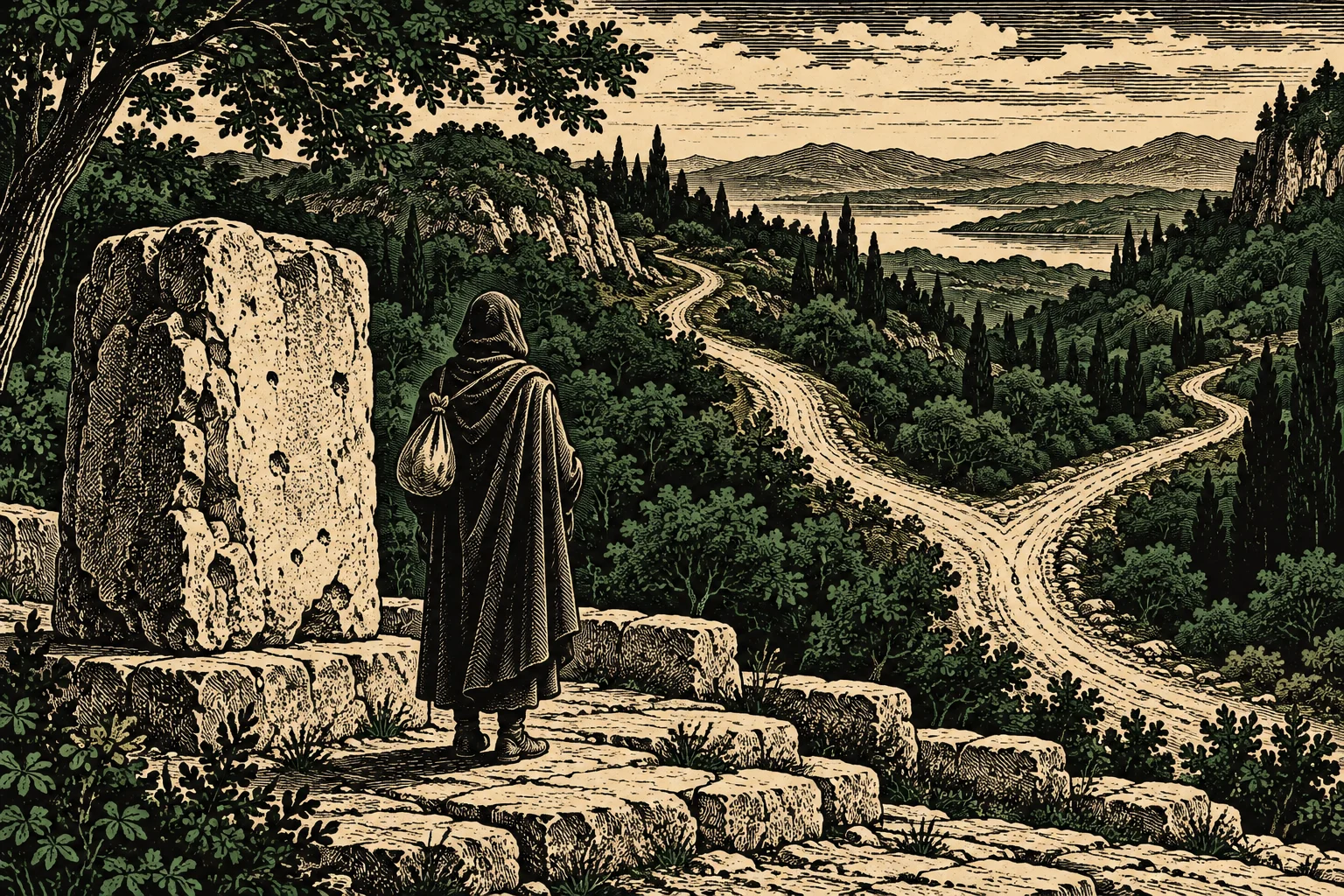
An inscription at the top of the monument records a gift. A wealthy benefactor paid for the oracle, a statue of Hermes, its pedestal and the decoration around it. According to La Brújula Verde, the text says the costs came out of the donor’s own funds. The donor’s name did not survive.
There is some irony in that. In the cities of the Roman East a benefactor paid for stone so that his or her name would outlast the giver. Here the gods, the verses and the arithmetic all survived. The name is gone.
Hermes was a fitting choice. He was the god of travel, trade and messages, and of divination by lots. Travellers, merchants and visitors were exactly the people likely to stand in front of the stone wanting to know about the road and the deal. The researchers think the monument originally stood in or near the agora, where residents and strangers could consult it. In other Anatolian cities, too, wealthy citizens and civic officials paid for oracles like this one in public places.
The chapel wall
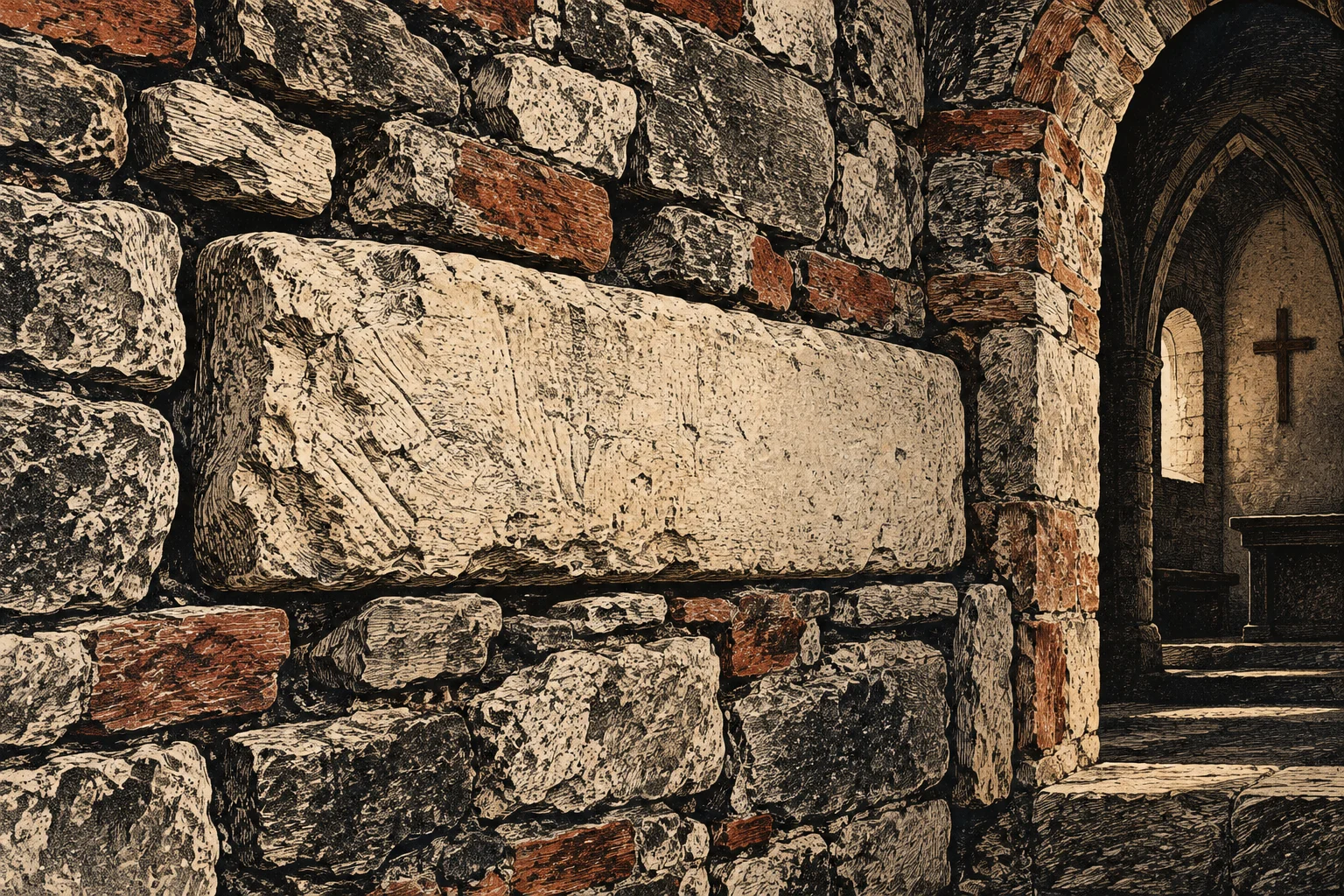
Then the city changed and the gods changed with it. Centuries later, builders put the oracle into the northern wall of a chapel on that same third terrace, and it stayed there as building material. Its answers faced the masonry while a different faith was practised on the other side of the wall.
The terrace has given up texts before. In 2024 Kileci published three inscriptions from Cibyra, another spelling of the city’s name, found during excavations in the agora.
Copies and mistakes
Kibyra was not alone. Between roughly AD 120 and 210, according to the study, people in several cities across southern and southwestern Anatolia used knucklebone oracles of this kind. Comparable inscriptions are known from Termessos, Kremna, Sagalassos, Perge and other settlements. One system of consulting the gods passed from city to city and picked up local variations along the way.
The Kibyra text is closest to the one at Kremna, but it is not identical. The researchers found differences in grammar, verses that had been changed, and lapses in the metre. Some of these may be stonecutters’ mistakes. Others suggest that local editors reworked the text they had inherited. Even a message from the gods, it seems, had to pass through a workshop, and the workshop left its marks.
The study, A New Astragalos Oracle Text from Kibyra: A Comparative Study with Southern Asia Minor Parallels, appears in volume 31 of Gephyra, pages 257 to 294. Its authors come from Akdeniz University and Mehmet Akif Ersoy University in Burdur, as La Brújula Verde notes. Its subject is a moment that happened thousands of times in a Roman provincial square: five bones hit the ground, someone counted the faces, and found the matching verse on the stone.