
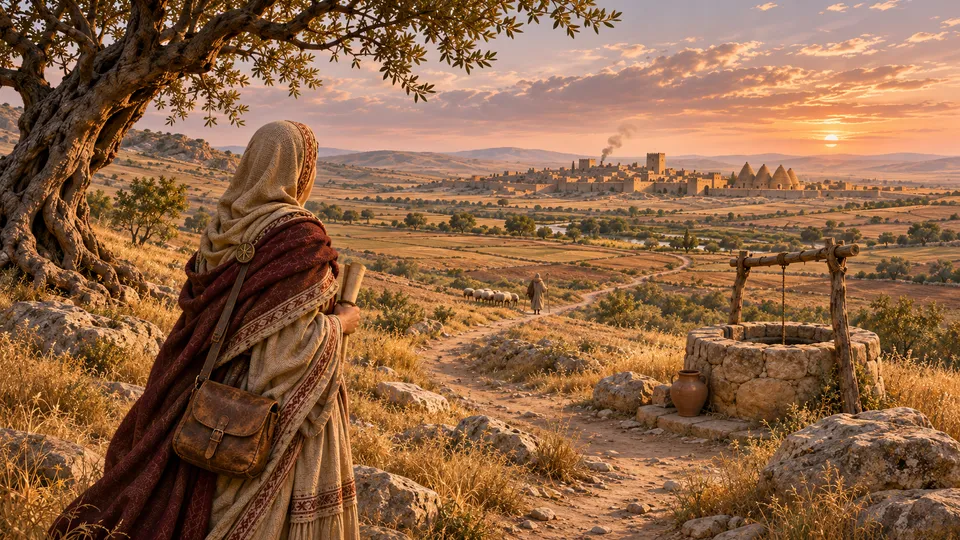
About 1,600 years ago a woman came to Harran because she had read about it. The city now lies inside the province of Şanlıurfa, in Türkiye’s southeast, on the plain that carries its name. In Genesis it is Abraham’s town, the place of Rebecca at the well and of Jacob paying off his love in years of labour. The woman, Egeria, wanted to stand where those things were said to have happened, and she wrote down what she was shown. Her diary, as Leman Altuntaş recounts for Arkeonews, keeps a rare picture of how the Christians of late antique Harran fastened scripture to soil.
A guest of the empire
She set out in the late 4th century AD; scholars usually date the journey to [around 381 to 384](https://en.wikipedia.org/wiki/Egeria_(pilgrim)). Her road ran from Jerusalem to the Sinai, from Egypt into Mesopotamia, thousands of kilometres across Rome’s eastern provinces. Who she was remains disputed. That she moved easily among bishops and could pay for such distances suggests money and powerful friends. She wrote for a circle of women back home, addressing them as sisters, which is perhaps why a later writer took her for a nun, according to the entry on her Itinerarium at Encyclopedia.com.
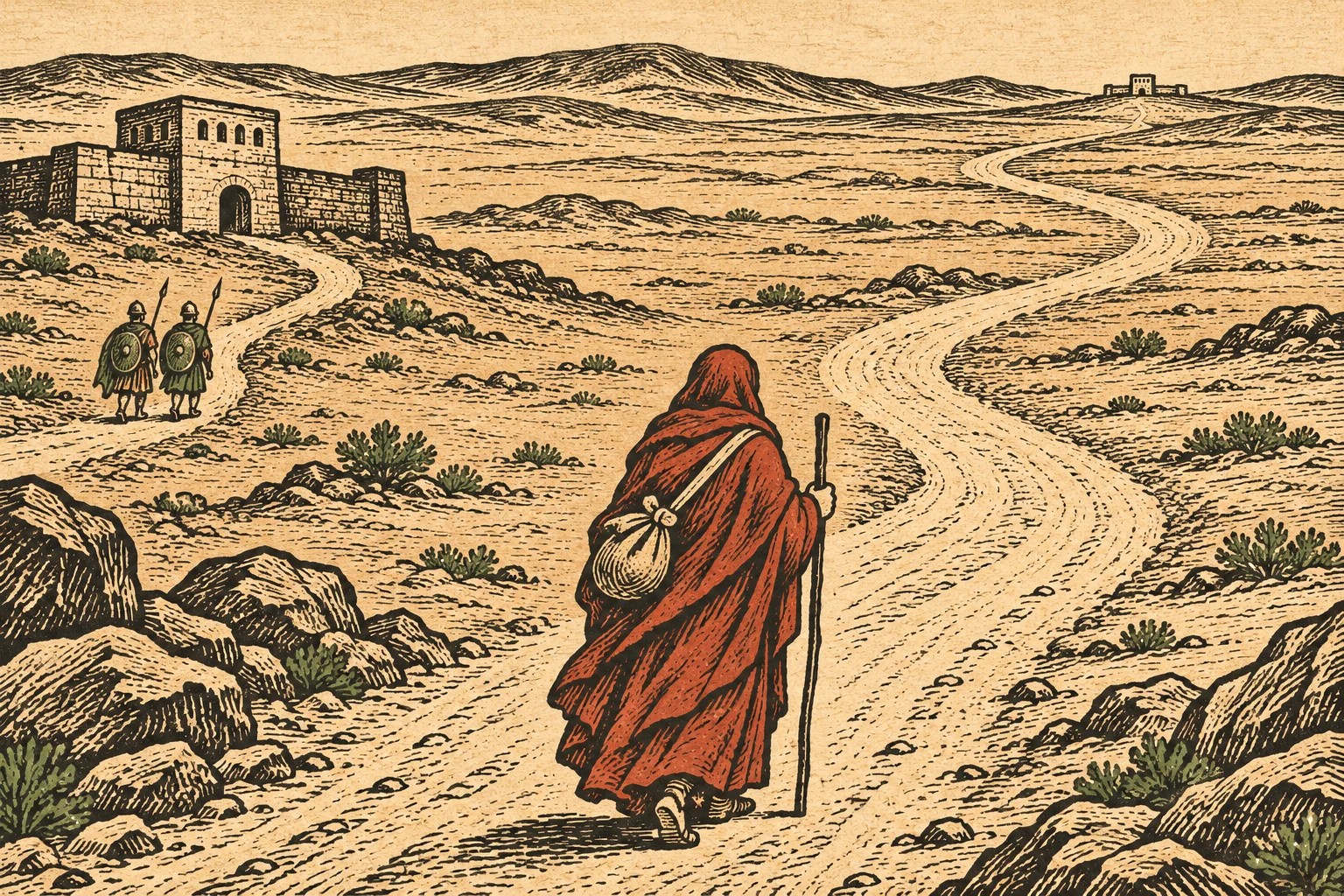
For a woman of that age, such a journey was anything but ordinary. Through the dangerous stretches of Egypt, Roman soldiers escorted her party from one military post to the next. Once the road was safe, they turned back to their stations and the travellers went on by themselves.
So the empire showed itself to a traveller: a chain of forts, armed men handing her along, and then empty road.
The bishop who could point
In Harran she went first to the church. The bishop agreed to show her what she had come for. He took her to a church outside the city which, he told her, had been raised on the foundations and from the stones of Abraham’s house. There she joined the prayers and heard passages from Genesis read. Next came the well where Rebecca was believed to have watered the camels of Abraham’s servant. Egeria did not simply look. She asked about Abraham’s family and checked what she was told against what she had read.
Chance gave her more than she had planned. Monks from across Mesopotamia had gathered in the city for a commemoration day, among them holy men she knew by reputation, who left their seclusion only on certain days. She wrote of how glad she was to meet them.
A thought, offered only as a thought: in every sacred geography, power belongs to whoever is allowed to point. The bishop says “here”, and old foundations become a patriarch’s house.
Six miles out
After two days in Harran, the bishop led her to a well roughly six Roman miles from the city. Local Christians tied it to one of the tenderest scenes in Genesis. Jacob, having left his family for his mother’s kin, came upon shepherds at a well whose mouth was sealed by a heavy stone. Rachel, daughter of his uncle Laban, arrived with her father’s sheep. Jacob rolled the stone away, watered the flock, kissed her and wept. She ran home to tell her father that a relative had come.
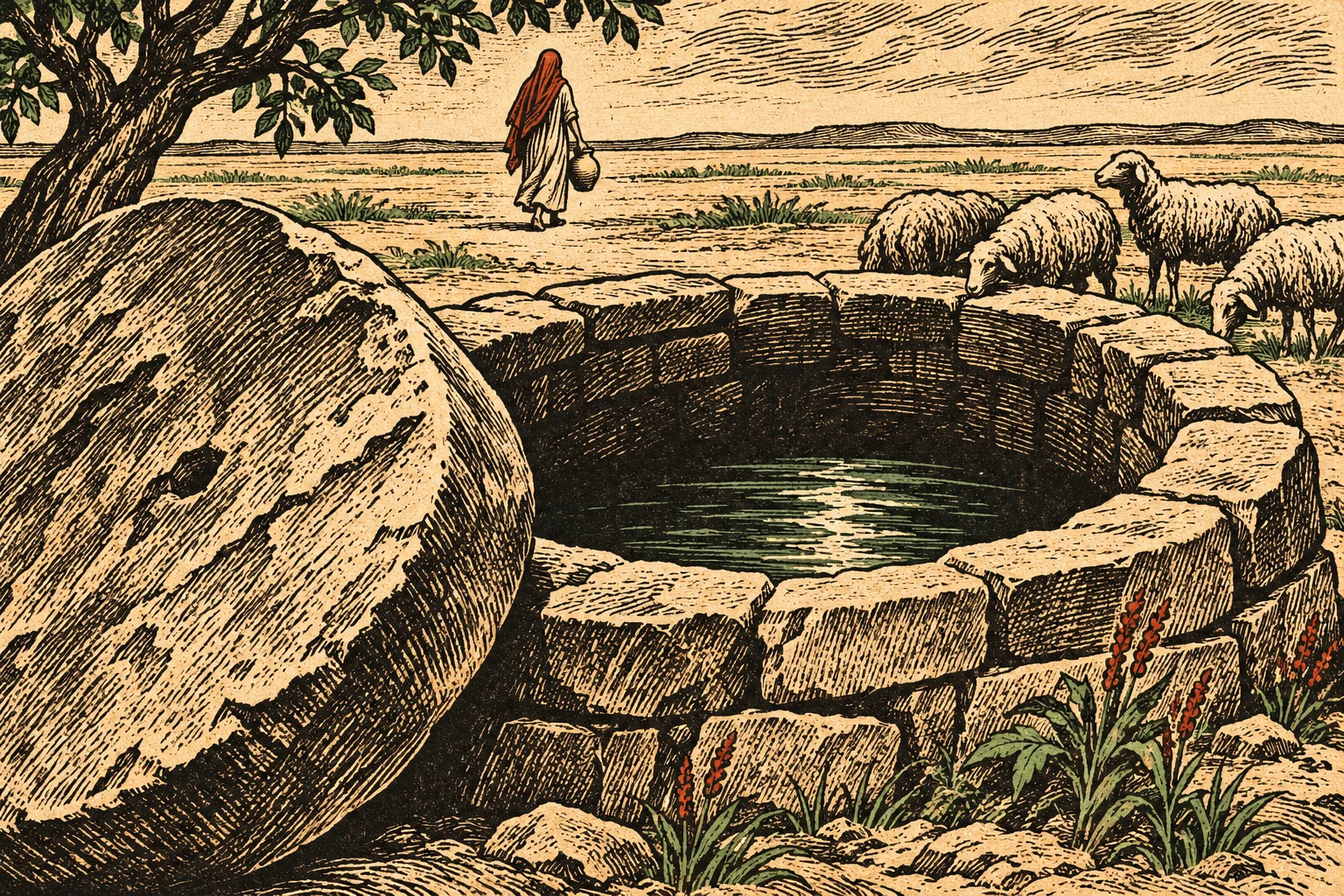
By the 4th century a large church stood beside the well and drew visitors. The bishop showed Egeria an enormous stone lying nearby, which local tradition named as the one Jacob had moved. Inside the church he led prayers; the passage from Genesis was read and a psalm was sung.
The story she knew went on from there. Laban promised Rachel, his younger daughter, for seven years of work, and in the biblical telling love made the years feel short. On the wedding night he gave Jacob the elder, Leah, instead. When Jacob found out the next morning, Laban cited a local custom: the older daughter marries first. Rachel would cost seven years more. Jacob agreed, married her once Leah’s wedding week was over, and kept working.
Laban is the employer every century produces, the one who discloses the terms only when the work is done.
Laban’s village
From the well Egeria walked some 500 paces across a broad plain to a large village called Fadana. The bishop said it had once belonged to Laban. Fadana, Anne McGowan and Paul Bradshaw note in their 2018 translation, is the Latin form of the biblical Paddan-aram. She was shown a memorial to Laban and the spot where, tradition held, Rachel had taken her father’s idols before leaving with Jacob.
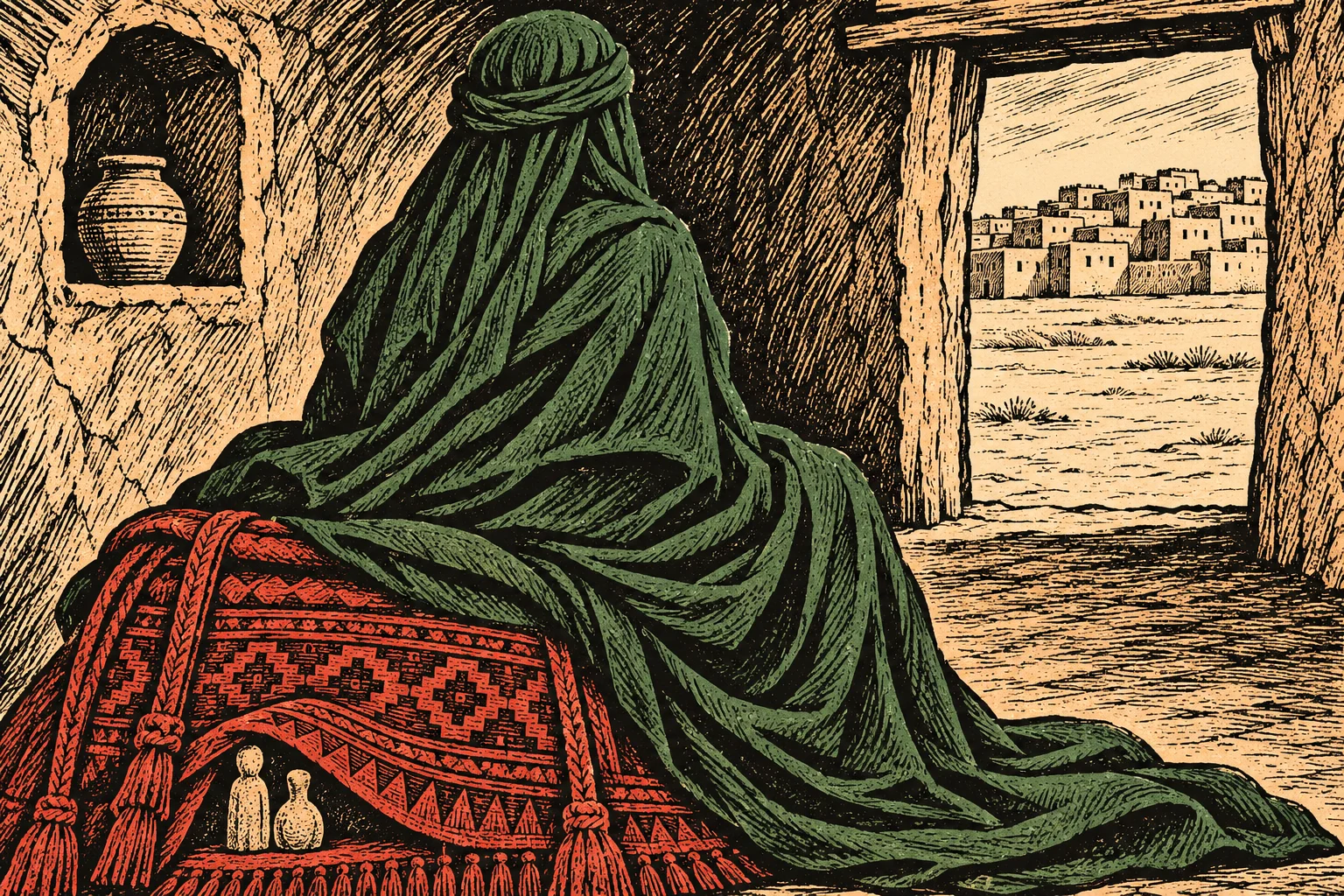
Genesis 31 tells it plainly. Rachel secretly took the teraphim, usually understood as household cult images. Laban chased the departing family and accused them of stealing his gods. Jacob, who knew nothing, told him to search. Rachel had hidden the objects in a camel saddle and was sitting on them; she said she could not rise because she was menstruating. Laban found nothing. What exactly the objects meant is still debated by scholars, but they mattered enough for him to demand them back.
Of all the places the bishop pointed out, this one held the quietest act of defiance: a daughter who beat a patriarch’s search simply by staying seated.
Where Fadana went
Which modern place Fadana corresponds to is still unsettled. Local history research published in Şanlıurfa links the name to Yukarı Beydaş, in the Akçakale district. Surface surveys of the mound near the village, once called Tell Fiddan, have found traces of settlement reaching back to the Ubaid period and the Early Bronze Age. Edward Lipiński, a scholar of the ancient Near East, reads Egeria’s distances differently and places Fadana at the Tell Feddan settlements west of Harran. Yukarı Beydaş, then, cannot be named as the ancient village with certainty.
The text that carries all of this nearly vanished. Only part of it survives, in a single manuscript copied at Monte Cassino in the eleventh century, which Gian Francesco Gamurrini found in a monastic library in Arezzo in 1884. Not until 2021 was the Latin published with a facing English translation. In the old McClure and Feltoe rendering, the Fadana chapter closes with the party turning back, by the same road and the same stations that had brought them from Antioch.