
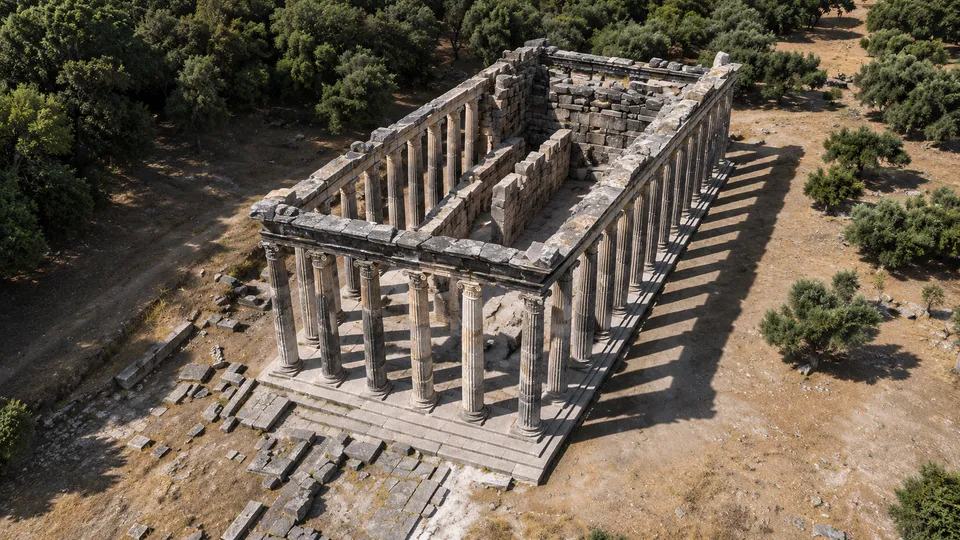
Near Milas, in Muğla Province in southwestern Türkiye, the columns of Euromos have kept their watch for nearly two millennia. Now the Temple of Zeus Lepsynos has recovered much of its ancient appearance after restorers returned hundreds of architectural stones to their original positions, Arkeonews reported. The sanctuary, built in the Roman period, is one of the best-preserved ancient temples in Anatolia.
The scale of the task was recorded block by block. Under the direction of Prof. Dr. Abuzer Kızıl, the team examined approximately 900 architectural elements; around 70 percent were reportedly returned to their original locations. The purpose was not to erect a new temple beside the old one’s remains. It was to preserve the ancient monument and put as much of it back together as possible.
The patience of stones
The work began in 2015 with architectural documentation. Specialists measured, numbered and catalogued the surviving stones before deciding where individual elements belonged. They strengthened the foundations and stabilized the columns. Where damaged pieces could not be used again, carefully prepared marble from quarries in the region took their place.
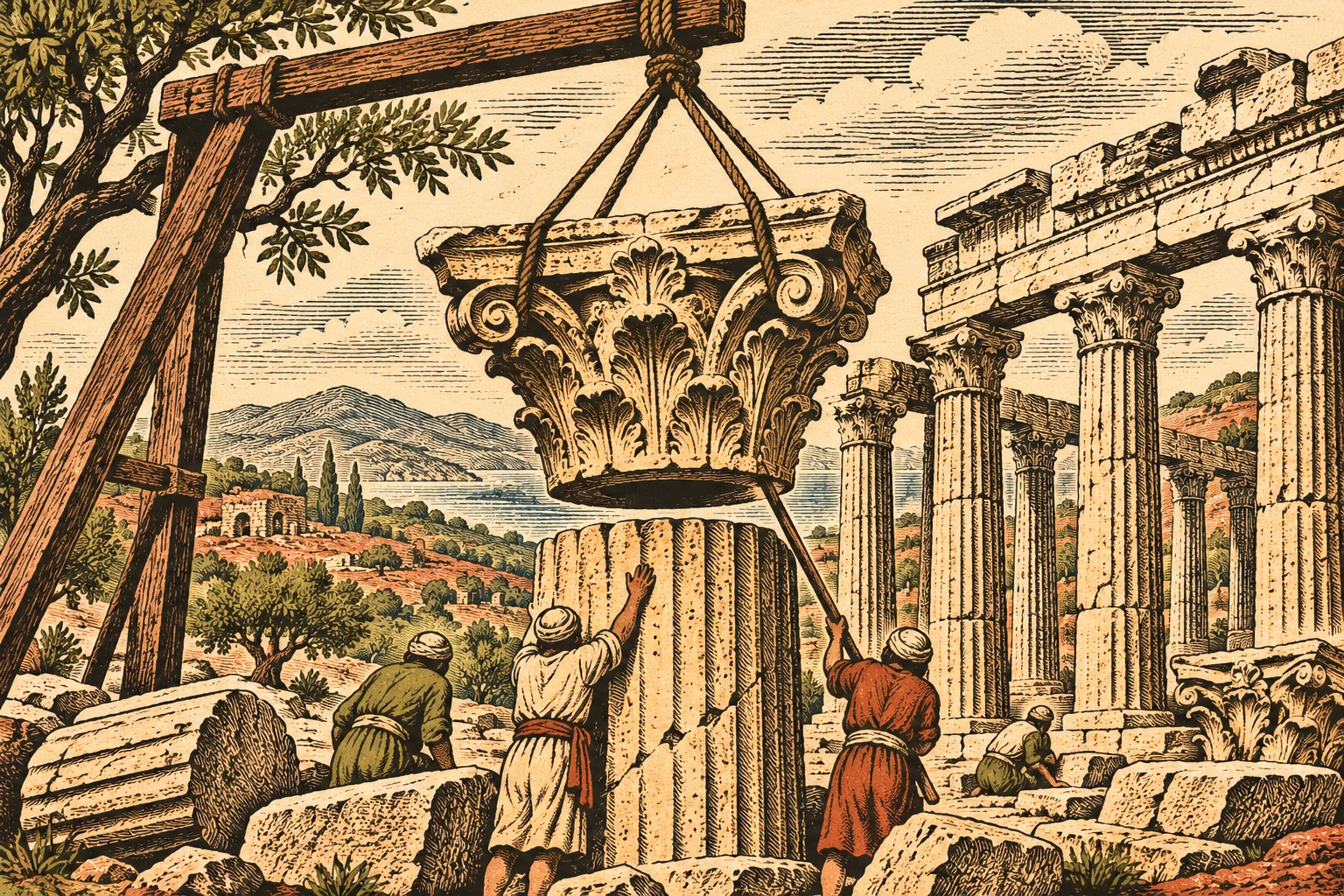
The temple is believed to have been constructed during the reign of Emperor Hadrian, between AD 117 and 138. Its Corinthian design called for six columns across the front and eleven along each side. Many temples of its age survive as little more than foundations scattered across the ground. At Euromos, a substantial part of the original colonnade remained, giving the restoration an architectural skeleton as well as a multitude of displaced pieces.
The names in the columns
Roman power supplied the age and the imperial setting, but not all the money. Several columns carry Greek inscriptions identifying people who contributed to their construction. Local benefactors paid for parts of the sanctuary and had their donations commemorated in stone. Empires often encourage the illusion that great buildings descend from a single ruler’s will. Here, the columns preserve a more dispersed obligation: devotion financed by members of a community whose names outlasted their city.
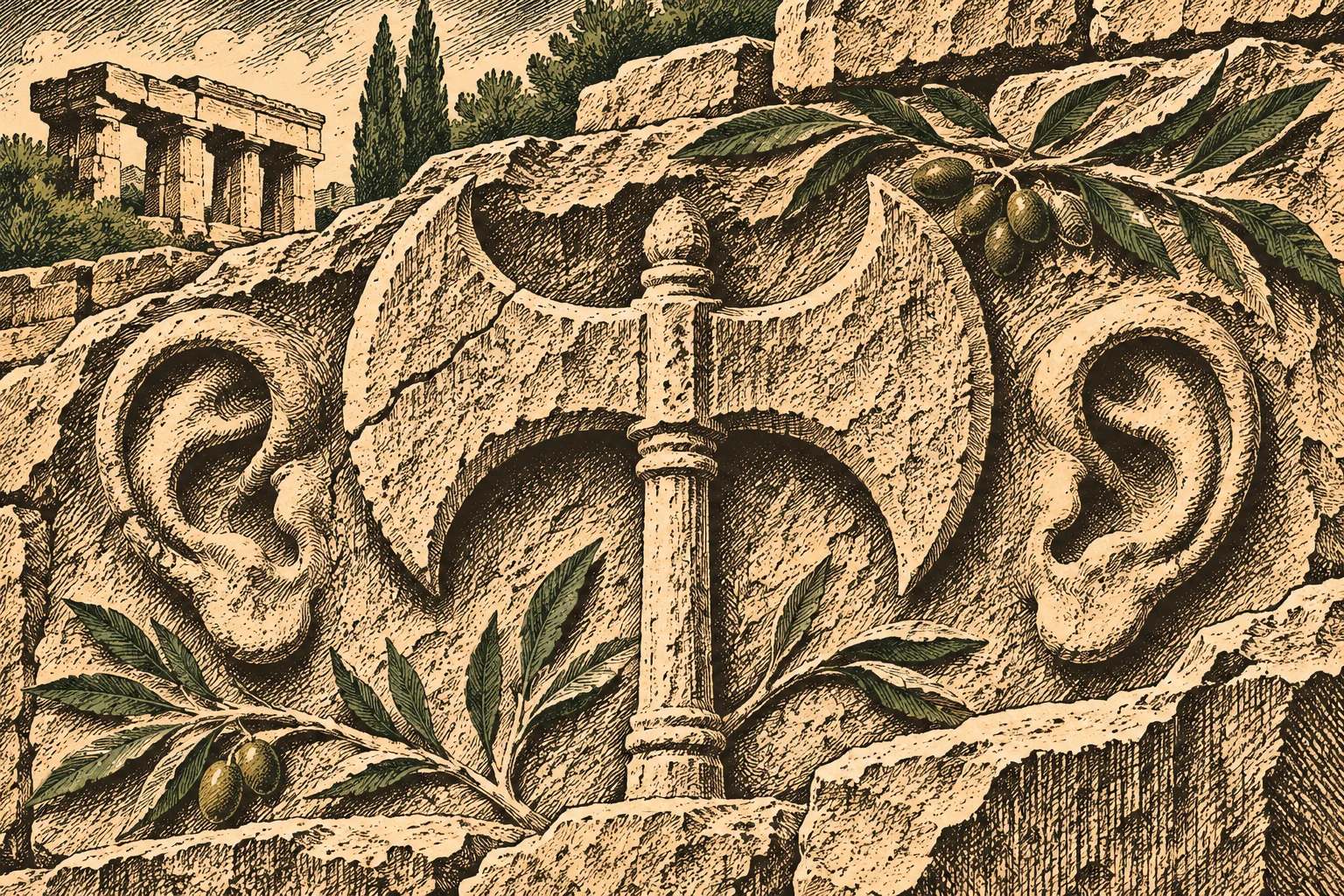
Another carved sign is less easily read. The temple bears a double-headed axe, the labrys, flanked by representations of human ears. Researchers have examined whether this imagery expressed a belief that Zeus Lepsynos listened to the prayers and appeals of worshippers. That interpretation remains a matter of scholarly discussion. The relief nevertheless offers a possible link to religious traditions older than the surviving Roman building.
Excavations have identified evidence of earlier sacred structures at Euromos. The sanctuary of Zeus was established centuries before Hadrian’s reign, while inscriptions and coins attest to the lasting importance of the god’s local cult. The Roman architects were therefore building on ground that already possessed a religious history.
Caria before Rome
Euromos lay in ancient Caria, where indigenous traditions met Greek and Persian influences and, eventually, Roman rule. Its position on the route between coastal settlements and the interior helped make it an important regional centre, second in the surrounding area only to nearby Mylasa. Its theatre, agora, fortifications and other public buildings have not survived as impressively as the temple.
In the fourth century BC, Caria was governed within the Persian Empire by the Hecatomnid dynasty. Its best-known ruler, Mausolus, pursued ambitious building projects and political reforms. His monumental tomb at Halicarnassus became the Mausoleum, one of the Seven Wonders of the Ancient World. Euromos was already an established settlement during his period.
Even the city’s name records successive changes. Earlier records called it Hyromos or Kyromos; the later adoption of the Greek name Euromos reflected the cultural transformation taking place across Caria. Beneath the reassembled Corinthian columns lies that longer history—of local worship, benefactors, shifting languages and rulers who arrived after the sanctuary had already become sacred.