
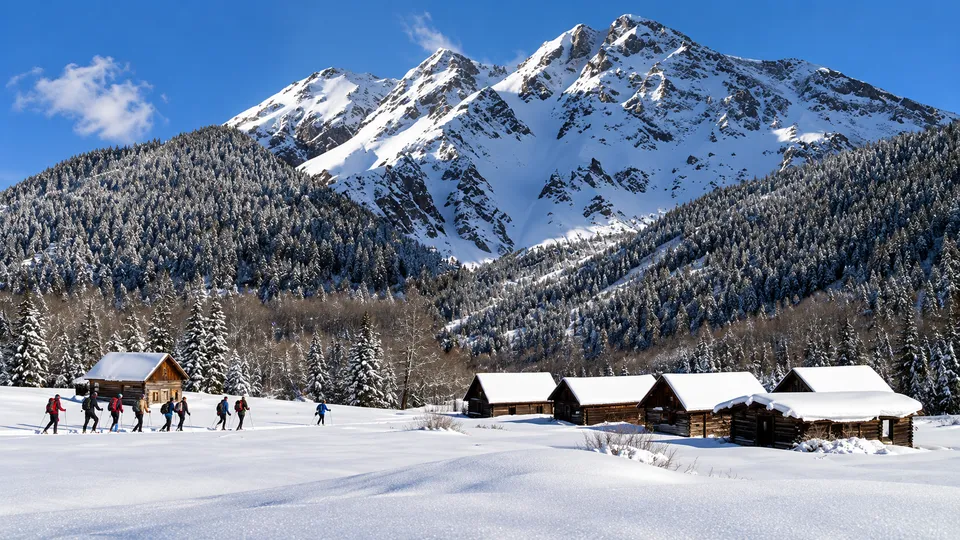
Here is a real estate story where the lesson seems to be that the best thing that can happen to a piece of land is for several groups of people to try to develop it and fail. The land is Ashcroft, a ghost town 12 miles (19.3km) from Aspen at the foot of Colorado’s Elk Mountains, which Shauna Farnell visited for BBC Travel. First it was a silver town. Then it was going to be a ski resort. It ended up as neither, and what’s left is a few log cabins, a creek and no phone signal.
The counterfactual is big. “Ashcroft would have been Aspen,” says Anna Lookabill, an archivist at the Aspen Historical Society. “I don’t think Aspen would have happened had the Ashcroft plans come together.” Aspen, for reference, is the one with the high-end boutiques and the $25m mansions.
The quick payoff
Prospectors flooded the Roaring Fork Valley looking for silver in 1879 and set up camps at Independence and Aspen. By 1880 Ashcroft was one of the hottest mining towns in the region, and Lookabill puts that down to geology: “The ore was close to the surface in Ashcroft compared to Aspen. It had the potential to be a good investment early on. Aspen was slower to get going because the ore was a little deeper.”
If you’re an investor, that sounds like the whole pitch. Shallow ore means you dig less before you get paid. In 1882, its peak year, Ashcroft had more than 1,000 residents, plus hotels, mercantile stores, a bowling alley, a dance hall, Pitkin County’s first school and 14 saloons. That works out to roughly one saloon per 71 people, which tells you something about how the money got spent. Within a few years only around 100 people were left, and a lot of the residents and businesses had moved down the valley to Aspen. So the fast-payback asset gave out first, and the patient one inherited its customers.
The Bavarian pitch
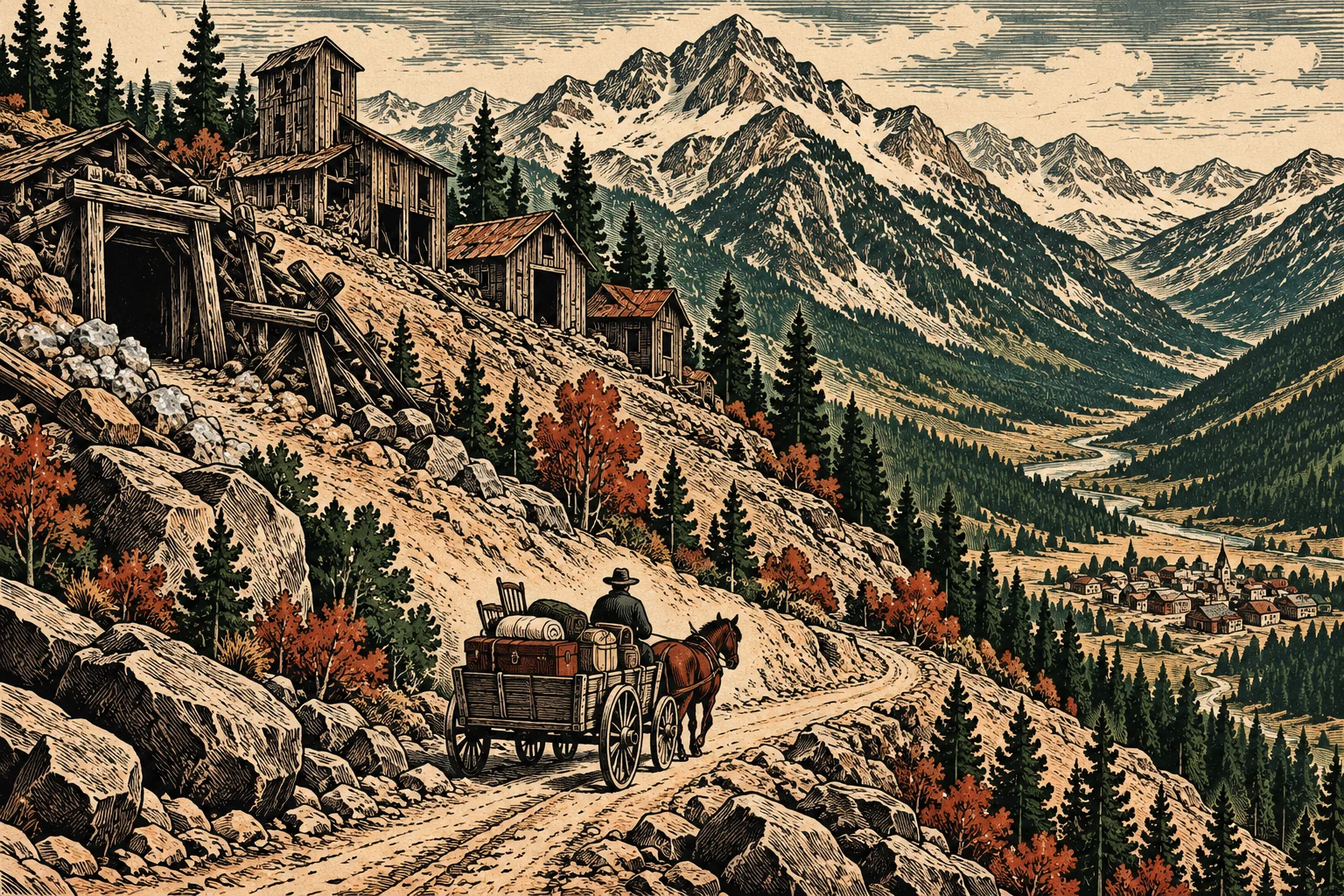
By the 1930s almost every building in Ashcroft was empty. Then three business associates who had skied in Europe came along: Ted Ryan, T J Flynn and Billy Fiske, an Olympic gold medallist in bobsled. They looked at a dead mining camp ringed by tall peaks and saw the Alps. They named their company the Highland Bavarian Corporation, which tells you the pitch in three words, and hired the Swiss mountaineer André Roch to survey the peaks on touring skis. Roch chose Hayden Peak above the town as the centrepiece. “Mount Hayden was going to be the mountain with the ski area. Ashcroft would be the Bavarian village,” Lookabill says.
The plan was ambitious. Ashcroft would have been Colorado’s first major ski area and, at that point, the highest in the world, with a tram running up Hayden Peak, dozens of runs and several chairlifts. The terrain topped 13,000ft (3,962m), and skiers would have come down straight into the village. In the meantime, according to Aspen Journalism’s timeline, the group opened a lodge in 1936 where Castle Creek meets the Conundrum Valley. Seven dollars a day got you a room, all your meals, ski lessons and “hike-to-ski” terrain. That last part means no lifts. You paid to walk uphill.
The money came together too. The corporation lined up $650,000 in state and federal funding, and construction was about to start. Then came World War Two.
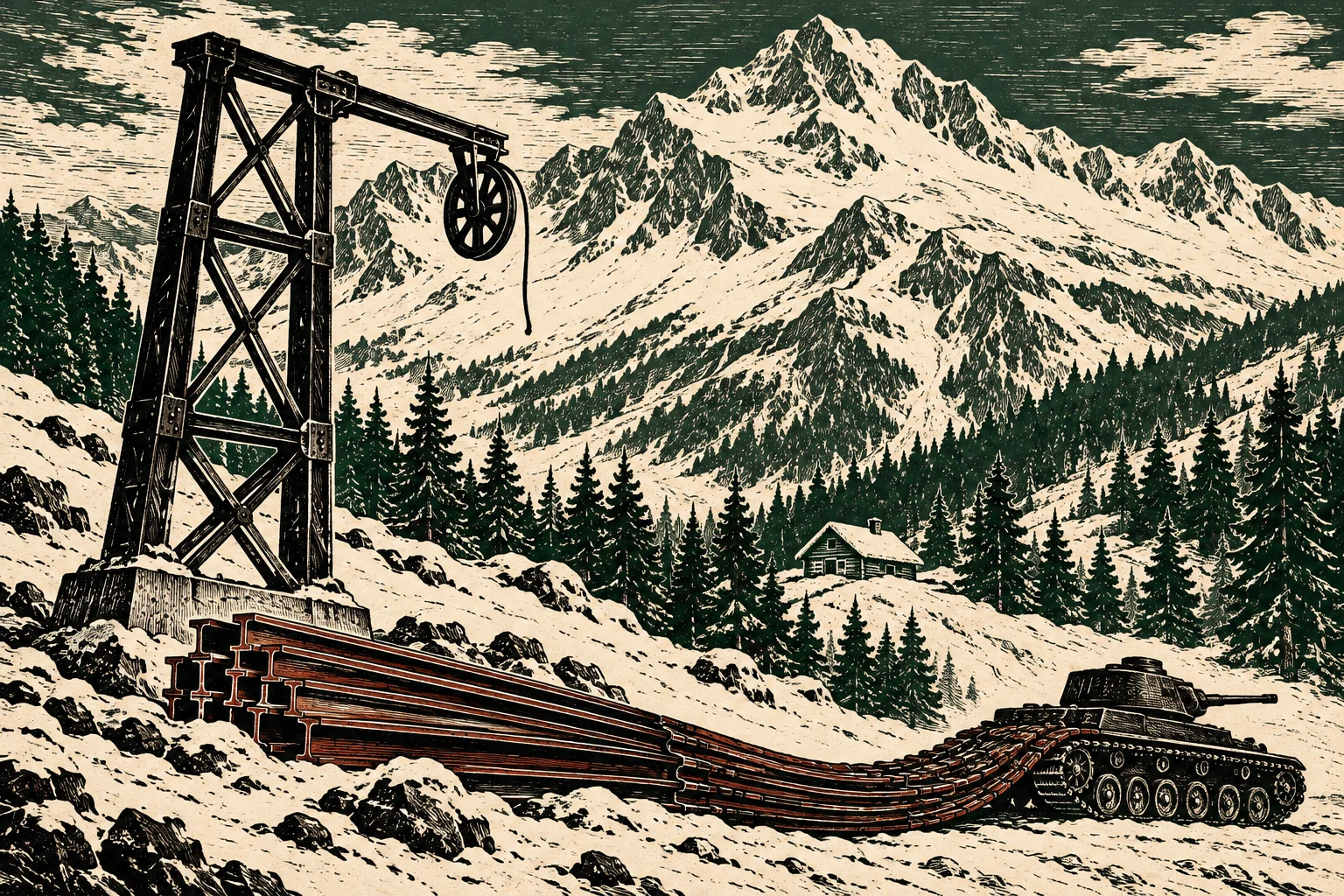
“They had the ski area laid out, the tram laid out. Washington was allocating funds to build this ski area, because it was going to be the new tourism driver for the US. They had an order for steel to build the lifts and the tram,” Lookabill says. “The US needed the steel to build tanks and fighter planes.”
I think the mechanism matters here. The project depended on two inputs, public money and steel, and the same government controlled both. A plan backed by Washington looks very safe right up until Washington has something more urgent to do. You can hold a signed order for steel, but in wartime that doesn’t make the steel yours.
Fiske never got to see what happened next. He flew for Britain’s Royal Air Force, and the Aspen Times has recounted that his Hurricane was shot down on 16 August 1940. He died of his injuries the next day, aged 29.
The cheap version wins
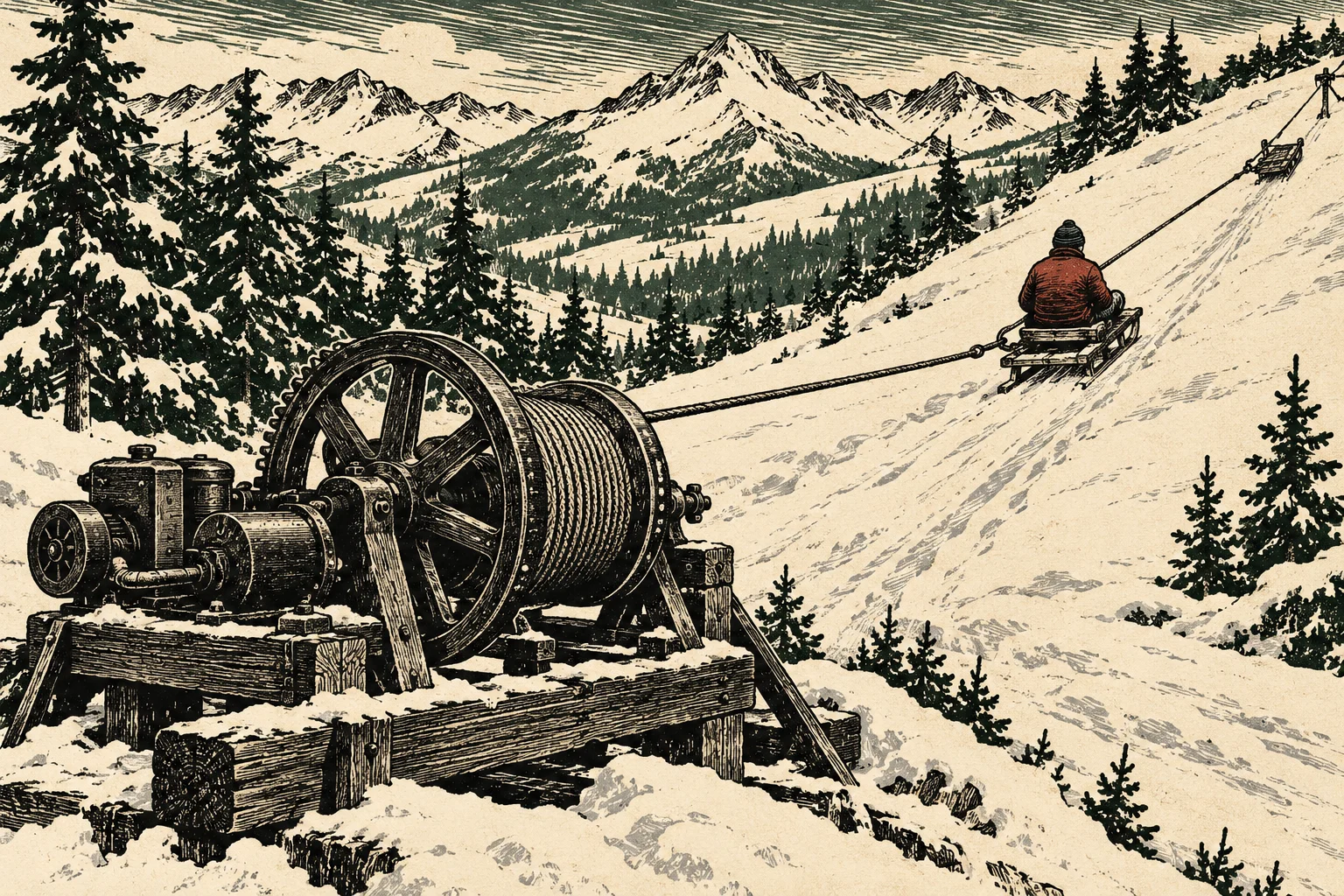
While Ashcroft stalled, skiing was catching on in Aspen. Roch had already been teaching locals and started the Roaring Fork Winter Sports Club, which became today’s Aspen Valley Ski and Snowboard Club. To make things easier to reach, he marked a run on Aspen Mountain that is still called “Roch Run”. Ryan oversaw the first lift there, a “boat tow” made from old mine hoists, a second-hand motor and a pair of sleds.
That’s a good bit of capital allocation. The $650,000 plan with a tram and the world’s highest ski area died. The one built from leftover silver-mining hardware and a used engine lived, and it grew into what Aspen is now. It also more or less ended Ashcroft’s chances of ever being a resort.
What failure buys
So Ashcroft ended up with nothing except the scenery. Today there are a handful of preserved cabins, one of them a former dance hall and another a saloon. Around them run 22 miles (35km) of Nordic ski trails and snowshoe routes in winter, with hiking and horseback riding in summer. The drive from Aspen is easy, but there are no chairlifts or cable cars, so in winter you get around under your own power. Down the road, Aspen has four ski resorts.
That emptiness is now the product. Johnny Wilcox, whose family runs the cross-country operation and who was described by the Aspen Times as resort manager of Ashcroft Ski Touring and Pine Creek Cookhouse, puts it as plainly as anyone selling an absence can:
“It’s a step back in time. We don’t have snow mobile tours. We have no Wi-Fi, no cell service. We are off the grid. In the winter, it’s not easy to get here, so people who come really want to be here.”
His recommended outing is to ski up at night with a headlamp, “breaking trail through the snow with no chairlift to be seen.” In other words, the selling point is that there’s no infrastructure.
“I always think of Ashcroft as a fortune of failures,” Lookabill says. “It was a boomtown and it died off. There was potential of being a ski area, that ended up dying off. Now it’s a touristy place, but a large, open, beautiful space. These booms, or fortunes that failed, ultimately preserved it.”
In Aspen, staying close to empty mountains costs a great deal. In Ashcroft the empty mountains cost nothing, because a run of earlier investors already paid for them by losing their money.