

On July 26, 2026, a GitHub user who goes by Autumn-27 published a program called ARTEX. As Help Net Security has recounted, it was an open-source penetration testing framework driven by large language models: the operator names a goal, and AI agents plan and carry out the steps on their own. Tools like this are made for defenders, who pay people to break into their own systems before strangers do.
On October 7, CrowdStrike reported that a “likely financially motivated threat actor” had used ARTEX to breach a South Korean finance company. On October 8 the author withdrew it. Autumn-27 denied any involvement, closed the source, and wrote in Chinese: “The malicious exploitation of this tool runs entirely counter to its original intent.”
The tool did not disappear. It multiplied.
The hydra
The count comes from a company that sees a large share of the internet’s traffic. Writing on its blog on November 13, Cloudflare said there are now more than 12,000 repositories, several hundred of them unique forks descended from the original, and that hundreds of similar agentic frameworks have been built since the takedown. Daily requests from AI pentesting and exploitation tools have grown 30 times since October 1, and more than tenfold since October 8. As of November 12, ARTEX and its offspring made up over 60% of the known AI penetration testing orchestrators.
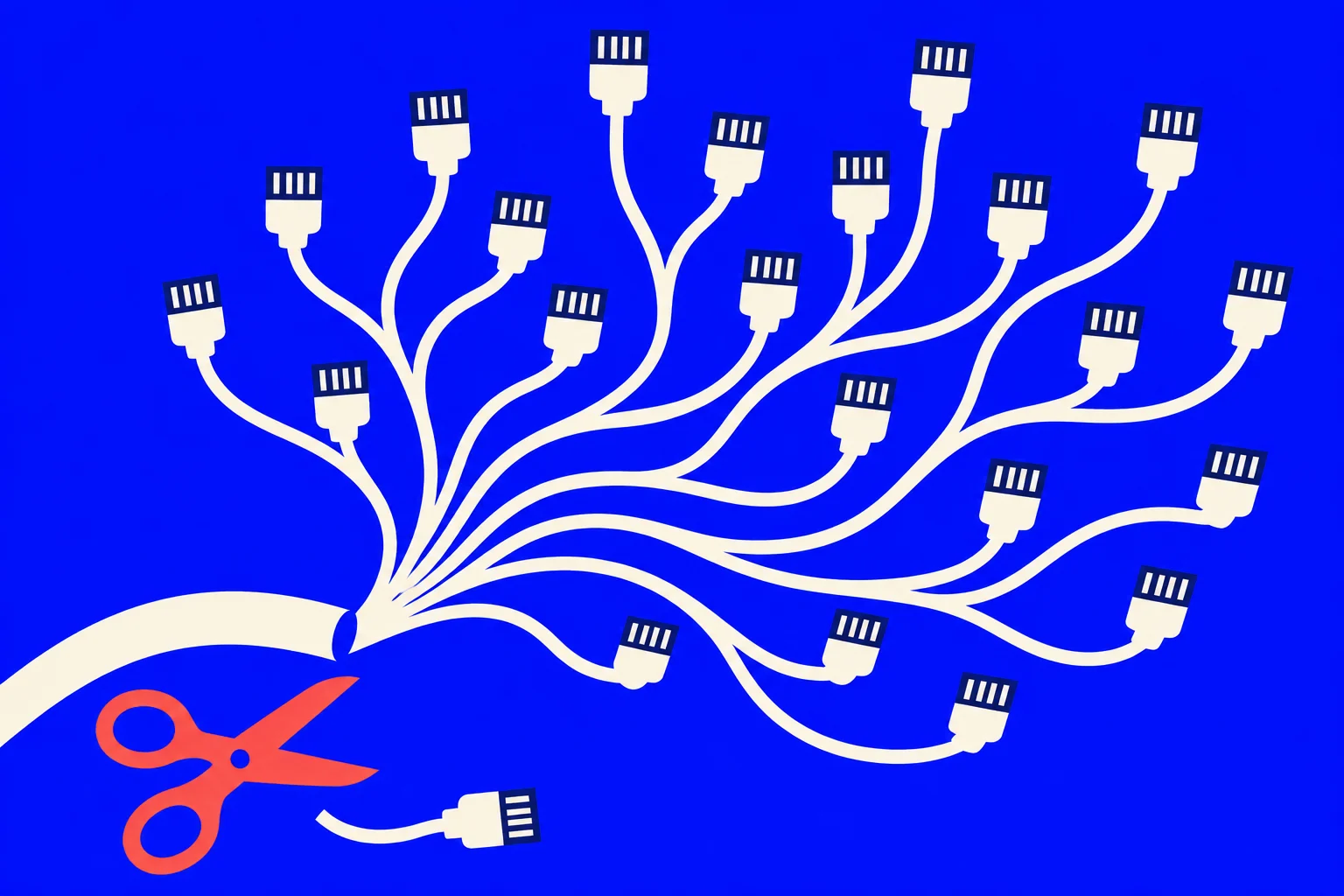
A few weeks earlier, Cloudflare wrote, ARTEX had been the only such framework. In the three days before its post, more than 50 framework families tried to scan Cloudflare customers around the world, from IP addresses that now number in the thousands and rise every day. The company concluded that defenders are struggling to keep pace with attacks that are autonomously guided and arrive in volume.
Cloudflare’s own name for this is a “hydra effect”. The removal, and the widespread reporting of it, likely produced the steep acceleration of new instances around October 8. Censors of every era have learned the same thing, usually too late: forbidding a text is one of the surest ways to advertise it. What once took a printing press now takes one click on a fork button.
The descendants have their own names. Google’s researchers, who grouped ARTEX with its rivals in a report titled ARTEX and Friends, say archived copies, translations and rebranded versions such as ScopeWeaver and “ARTEX PRO” are still circulating. GitGuardian has catalogued 45 AI pentesting tools beyond ARTEX. SOCRadar has mapped 916 exposed ARTEX consoles in the United States alone.
What the machine does
These orchestrators hand the stages of the old Cyber Kill Chain to AI agents. They can plug in existing Model Context Protocol tools and wire standalone hacking utilities together in new combinations. ARTEX and its forks plot a target’s assets on a graph, from inside or outside, and send many independent agents in parallel to enumerate, verify, prototype and attack “at the speed of inference”. In Cloudflare’s phrase, they make a compromise “a hill-climbable problem, which agents are specifically good at.”

Each of the five most popular frameworks has more than 1,000 GitHub stars and runs fully on its own. Cloudflare calls this a doctrinal shift. The harness observes, orients, decides and acts without waiting for a human. One operator can go after several organisations at once. And the machines are tireless: they test every exposed service and every configuration until they find the small mistake.
Who has used it
The users are not hobbyists. CrowdStrike says VAPOR PANDA, a China-nexus group, turned ARTEX on more than 200 organisations in an 11-day window, mostly government and defence bodies, with a human steering the agents at key decision points; it confirmed post-exploitation activity at nine targets. Microsoft says unnamed attackers have used the framework since August to comb GitHub for leaked secrets, then entered Azure and Microsoft 365 tenants and took Key Vault secrets, storage keys and AI service API keys. In one case the agent went from searching GitHub to stealing data in five minutes. Google describes a case of 15 minutes from a compromised account to deep system access, and a shift toward “intrusions occurring at machine speed.”
A token that never expired
Over the past eight weeks Cloudflare’s Cloudforce One team has been called into several incident investigations involving ARTEX and its derivatives. The pattern repeats. An attacker gets into a customer’s environment at a hyperscaler, one of the giant cloud providers, and pivots straight into that customer’s Cloudflare account. The root cause was the same each time: static, non-expiring tokens sitting in CI/CD pipelines, the automated machinery that builds and ships software, with broad access across the organisation’s cloud estate.

In one case ARTEX got hold of an account-level API token once used for CI/CD, with no IP restrictions and no rate limits. The evidence pointed to a compromise that most likely began at a third-party hyperscaler. Then came a crop of new Worker scripts with names like artex-, artex-pgrecon-, artex-pgw- and artex-do-, each tied to a distinct task and usually followed by an alphanumeric tag. Cloudflare recorded more than 69 requests a minute across several parts of the customer’s infrastructure, 400 database dump requests in an hour, attempts to dig in for persistence, and attempts to validate session tokens for other third-party applications. The company believes a human operator only “lightly guided” much of it.
That is how large events are often made: an empire’s worth of data held behind a key that someone forgot to expire.
The house on the estate
Cloudflare’s answer is what it calls the Modern Security Model, six pillars explained through the metaphor of a house on an estate. A web application firewall with rate limits at the front gate. Anomaly detection in the foyer. Bot defence to spot fake visitors. Identity-gated access to close the back door on high-risk applications. Validated schemas to inspect deliveries. Threat intelligence as a neighbourhood watch. Several of these are products Cloudflare sells, and the company has already turned AI models on its own firewall to look for gaps.
In the company’s telling, legacy security models are effectively “vaporized”. The automated prowlers, it writes, do not only kick at the door. They stuff paper into the lock and try paths like //front-door//back-room/, waiting for the mechanism to give.