
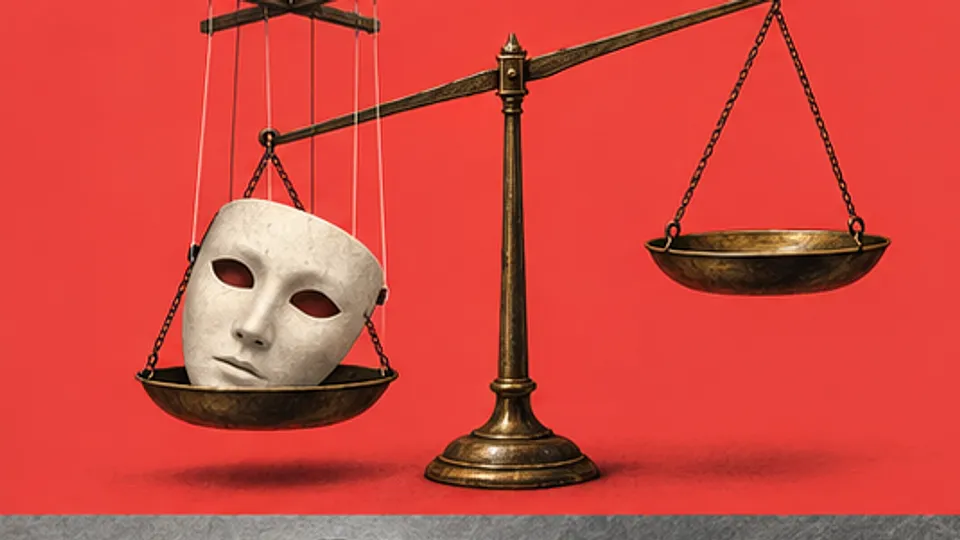
The Arizona Court of Appeals on Sept. 30 threw out a manslaughter sentence because the trial judge relied on an AI-generated video in which the dead victim appeared to forgive the man who shot him.
The ruling sends Gabriel Paul Horcasitas, 55, back to Maricopa County Superior Court to be resentenced in the death of Christopher Pelkey, 37, whom he shot during a road-rage confrontation at a stoplight in Chandler, a Phoenix suburb, in November 2021. His conviction stands. No date has been set for the new hearing, [Fox 10 Phoenix reported](<https://www.fox10phoenix.com/news/arizona-manslaughter-sentencing-vacated-due-use-ai-victim-impact-statement>).
The three-judge panel said the video wasn’t reliable because it didn’t record anything that had actually happened. “Indeed, rather than document an event or recording a particular moment, the AI video presents a depiction of the victim and his thoughts created from the imaginings of the victim’s sister,” the judges wrote. The video “erases the interpretive distance” between what the family believed Mr. Pelkey would have said and what he did say, they wrote, adding that “there is no question it played a role” in the sentence.
That reliance “so prejudiced Horcasitas as to render the sentencing procedure fundamentally unfair,” the panel found. It also noted that “no Arizona case has addressed the admissibility of an AI-generated depiction of a victim.”
The video, played at a May 2025 hearing, was believed to be the first of its kind in a U.S. court. It was the idea of Mr. Pelkey’s sister, Stacey Wales, who told the BBC last year that the family built it from his voice recordings, videos and photographs. Nine relatives and friends had already spoken when it ran.
“To Gabriel Horcasitas, the man who shot me, it is a shame we encountered each other that day in those circumstances,” the AI version of Mr. Pelkey said. “In another life, we probably could have been friends.”
Judge Todd Lang said from the bench that he “loved that AI” and that Mr. Pelkey’s “obvious forgiveness of Mr. Horcasitas reflects the character I heard about today.” He then imposed a sentence of 10 1/2 years, [according to accounts of the opinion](<https://www.lawcommentary.com/articles/arizona-court-ai-generated-victim-impact-video-sentence>), more than the nine years prosecutors had sought. The defense had asked for seven. The Associated Press, in a report published by CBS News, described the term as 10 years.
Kristen Reller, Mr. Horcasitas’s appellate lawyer, had argued that the video violated his right to due process. She told the court it never said who wrote Mr. Pelkey’s words, offered no proof that they matched his views and carried an “undue emotional weight” that a relative reading the same script wouldn’t have. Her client had no real chance to rebut it, she argued. His trial lawyer didn’t object when it was shown.
Prosecutors and Jessica Gattuso, a lawyer for the victims, said Judge Lang made no error and that the video fairly showed Mr. Pelkey’s character. Prosecutors also argued that the judge hadn’t weighed it in setting the sentence.
Ms. Gattuso and Ms. Reller declined to comment on the decision on Thursday, The A.P. reported. In a statement that day, the Maricopa County Attorney’s Office said its prosecutors knew the family would address the court but didn’t know what form that would take. Lawyers for the family have said Arizona law doesn’t require victims to tell anyone in advance what they plan to say, and lets them speak or submit written, audio or video statements.
Ms. Wales said she had expected an appeal but was disappointed the video was the reason, since she only wanted the judge to see her brother as a person.
“It feels unfair because there is a convicted murderer sitting in prison that has blankets and walls of protection around their rights. Where are the rights for the victim?” she said.
A victims’ appellate lawyer has warned the family that using AI again could bring another appeal. Ms. Wales said they would keep finding ways to speak for him “in whatever allowable medium we can convey that through the court system.”
Gary Marchant, a law professor at Arizona State University, said he understood the family’s choice but worried it could invite more AI-made material into courtrooms. “It’s easy to create it and anyone can do it on a phone, and it could be incredibly influential because judges and juries, just like all of us, are used to believing what you see,” he said.
He pointed to a New York case in which a man representing himself argued through an AI-generated avatar. The judges needed only seconds to see that the man on the screen didn’t exist. Last week, New Mexico judges punished a lawyer who filed testimony invented by ChatGPT.