
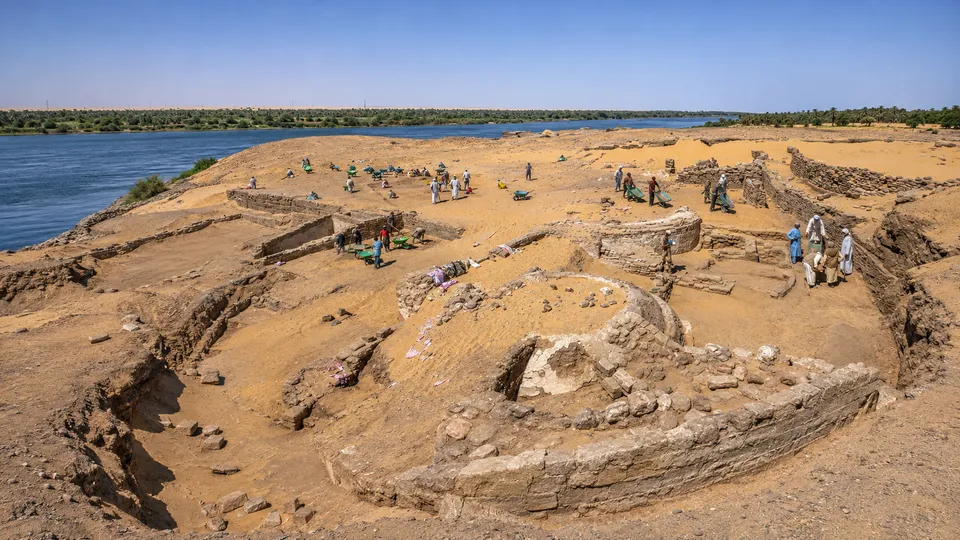
Archaeologists working at Old Dongola, on the Nile in Sudan, have reached the original floor of a medieval church larger than the White House, the University of Warsaw’s Center for Mediterranean Archaeology said this month.
The Polish-Sudanese team, led by Dr. Artur Obluski, who directs the center, uncovered a monumental staircase into the building it calls the Great Church of Jesus, as well as buttresses that held up its apse and a stretch of the floor, Arkeonews reported. The stairs let the excavators get down to floor level for the first time.
The church is about 47 meters wide and 57 meters long, roughly 154 by 187 feet, and its height is “cautiously estimated at 21 meters,” or about 69 feet, Polskie Radio reported, citing the Polish news agency PAP. Most of it is still underground, so none of those figures has been confirmed by digging. Only a small part has been exposed.
“This building is larger than the White House in Washington,” Dr. Obluski said. “And we plan to excavate it.”
That will take unusually deep digging and more money than an ordinary excavation, he said.
Old Dongola was the capital of Makuria, a Christian kingdom that ruled this stretch of the Nile in the Middle Ages. The church scholars have long treated as the city’s cathedral stands outside the walled center. The Great Church of Jesus is inside the walls, and its size and position have led the team to ask whether the cathedral was somewhere else all along.
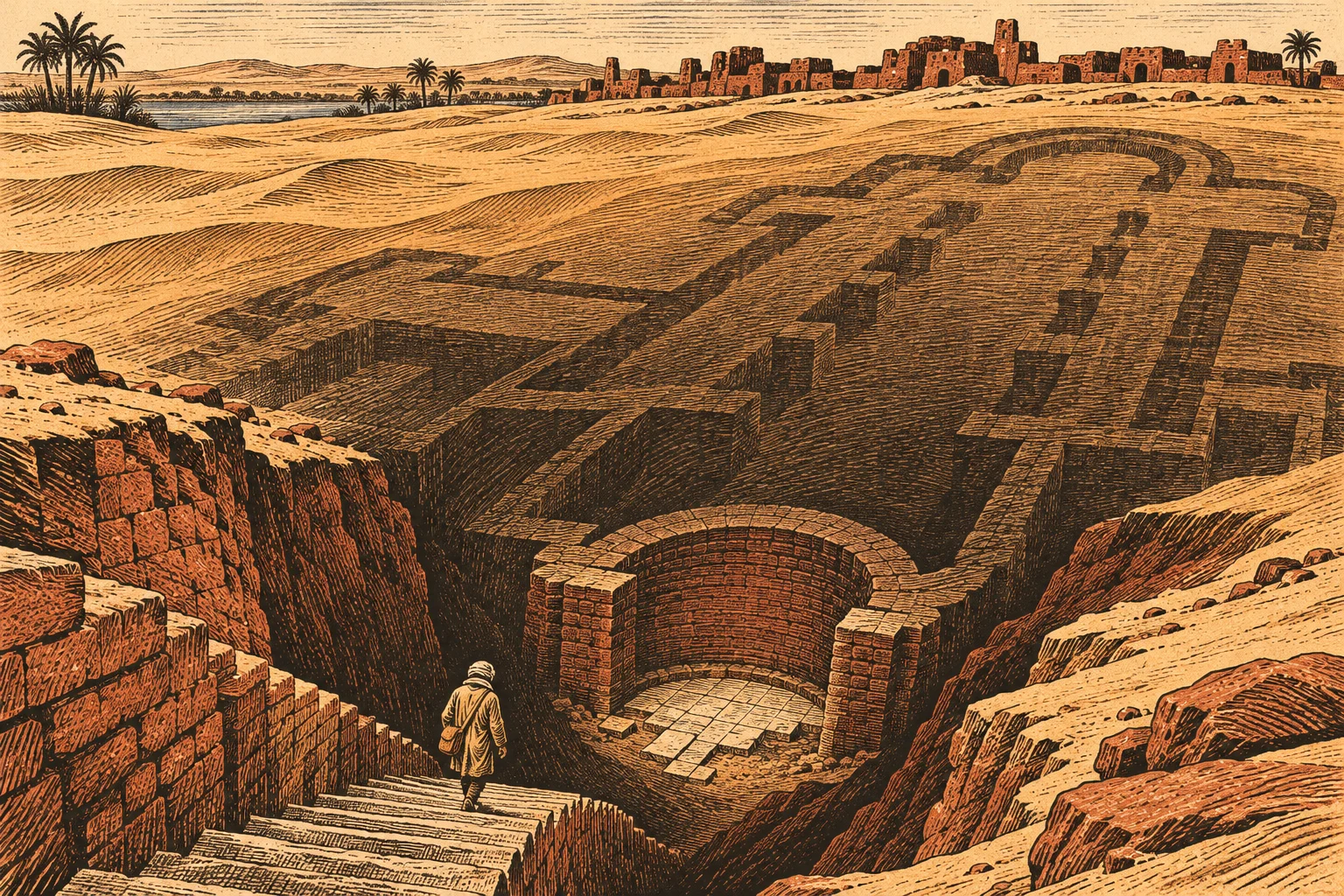
Dr. Obluski compared the building to Hagia Sophia in Constantinople, which shaped churches across its region. He suggested the Great Church of Jesus may have set the architectural fashion in Nubia, and perhaps more widely in that part of Africa, influencing both how later churches were laid out and how they were engineered. Nothing found so far proves it was a cathedral. The team still doesn’t know when it was founded, where it stood in the church hierarchy or how it related to the city’s other large churches.
The dig also turned up a church the team wasn’t looking for. It sits on the upper story of an addition built against the main church, and its walls survive to only about one meter, or a little over three feet. Traces of paint remain on them. Fragments of painted plaster from the room have filled six large shelves, Dr. Obluski said, though little decoration is left in place. The researchers are comparing them with the better-preserved murals of a church found in 2023 on the north side of the Great Church of Jesus, which is associated with King David, a 13th-century ruler.
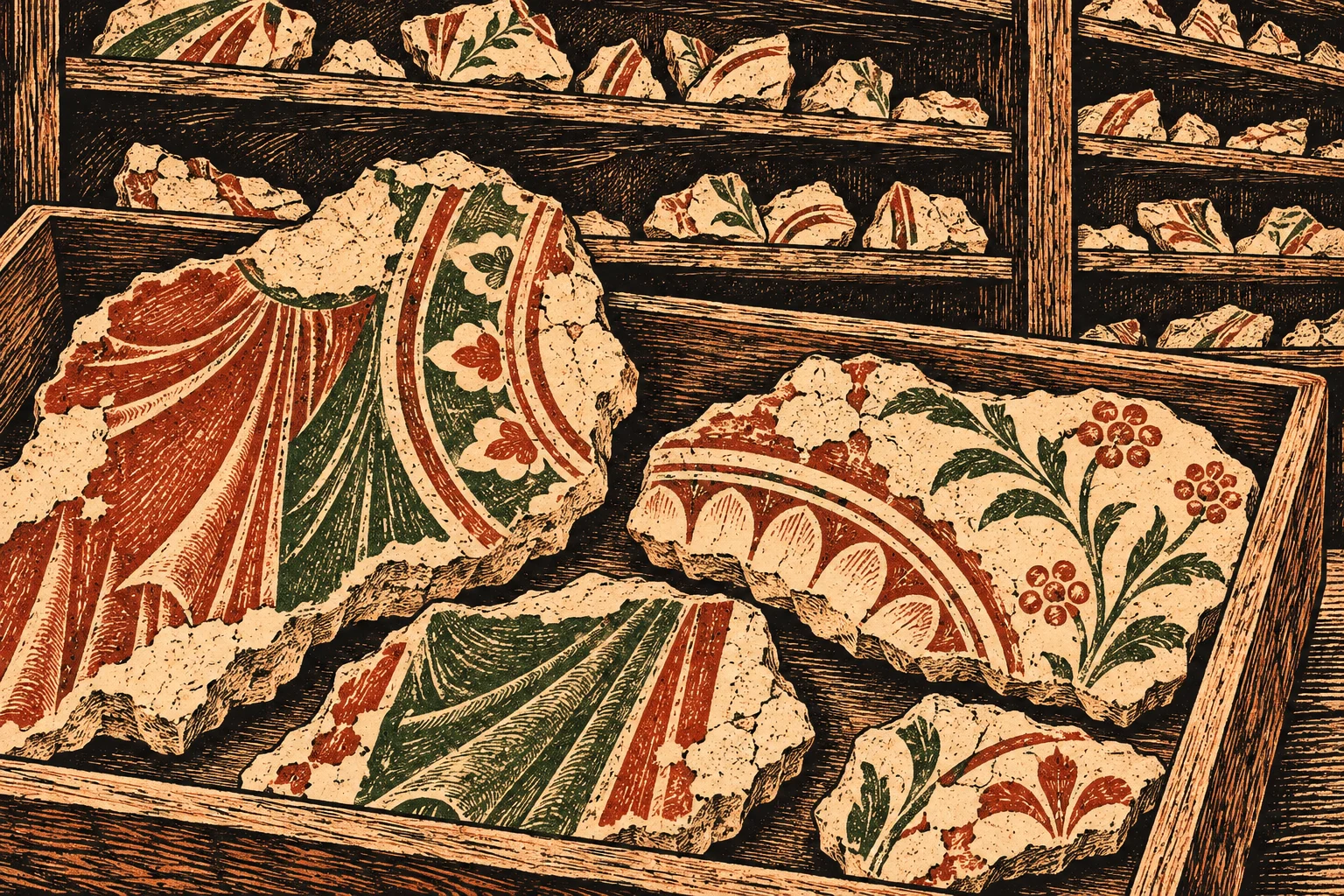
Small plaster fragments with Greek inscriptions came out of the fill of the smaller church. Dr. Agata Deptula, the expedition’s epigrapher, identified them as pieces of biblical canticles, religious songs that were appended to the Psalter. One is part of the prayer of Hannah, the mother of the prophet Samuel, written in letters about half a centimeter high. Texts from the Psalms had already been found in the region. These hymns had not.
The team first detected the church in 2021, and a grant from Poland’s National Science Center paid for the excavation. In the autumn of 2024, Old Dongola had its worst flood since 1988, which damaged some of the roofs sheltering the ruins. Before this season’s digging started, the archaeologists did conservation work on the site with the Faculty of Civil Engineering at the Warsaw University of Technology.
Polish Aid, the Polish foreign ministry’s development program, paid for a solar power system that serves the site and runs pumps carrying Nile water to the homes and fields of about 10,000 local residents, according to Polskie Radio.
The measurements so far are only a start, the Polish science site Kopalnia Wiedzy reported. The team’s next goal is to pin down the church’s real dimensions and layout, and that means digging much deeper.