
Archaeologists who dug into 20 of the 372 earth-and-stone mounds at Aguas Buenas, in central Nicaragua, found that people built and resurfaced them over centuries instead of in a single campaign, according to a study published on Wednesday in the journal Antiquity.
The team, led by Dita Auziņa of Leiden University in the Netherlands, found no clear evidence of an elite class or a central authority organizing the work. As Arkeonews reported, that supports the view that local communities built the site together. The mounds spread across more than 30 hectares in the Chontales region, in a geometric layout that curves in a semicircle. Today the vegetation makes the pattern hard to tell apart from the surrounding hills, whether from the ground or from the nearby hills.
The scale is large. Researchers estimate that about 50,000 cubic meters of stone were moved to build the site, which earlier studies put at a minimum of 426 person-years of labor. Nobody has explained how that labor was organized.
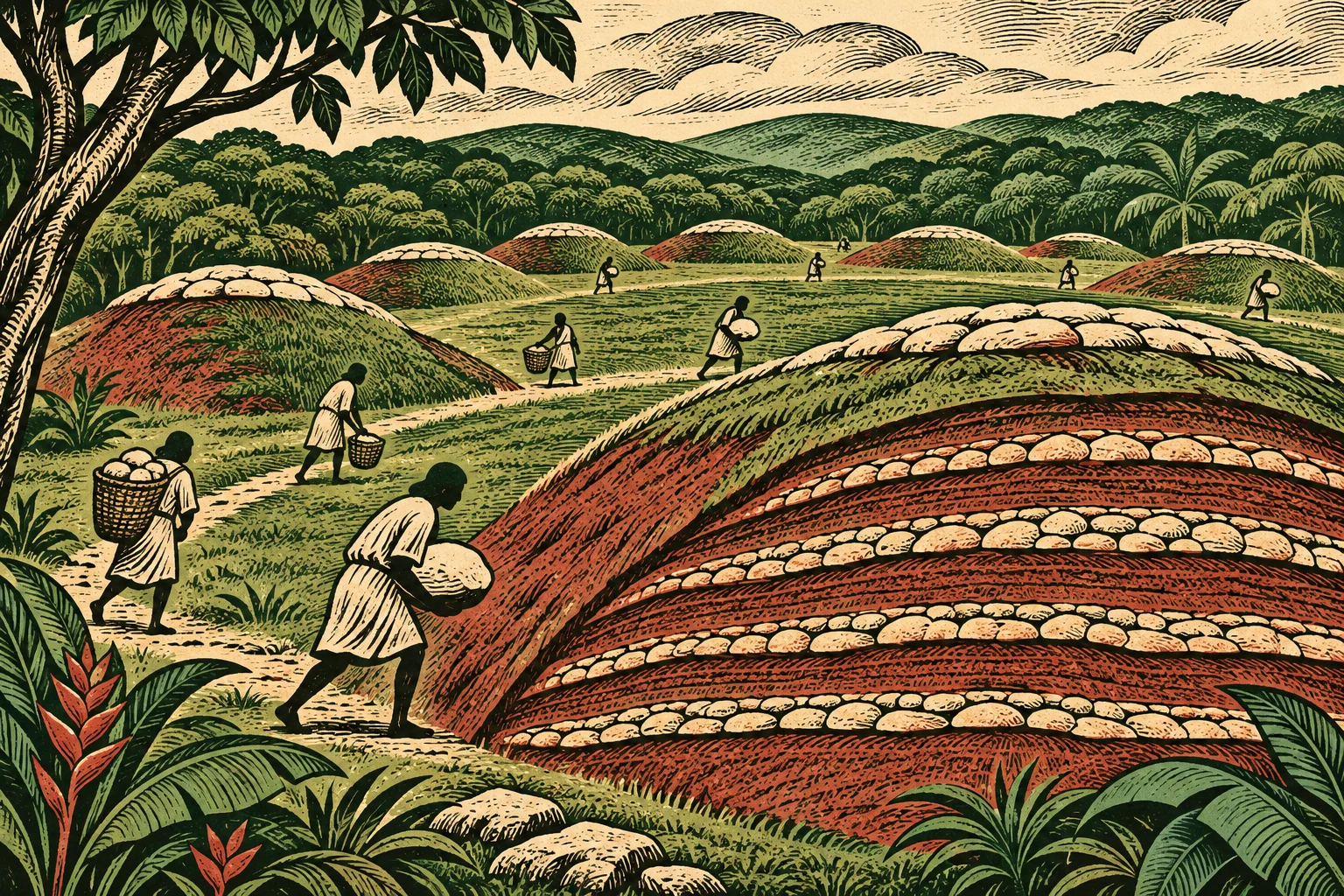
Archaeologists have long treated southern Central America as a secondary region for monumental building because it has no large pyramids or great stone structures like those of the Maya or the Andes. Societies there reshaped wide areas with earth and stone. Big projects are usually tied to strong rulers. In Costa Rica’s Diquís Delta, where settlements are known for artificial mounds, stone-paved areas and large stone spheres, UNESCO links the sites, dated from 500 to 1500, to hierarchical chiefdoms.
The authors don’t claim that Aguas Buenas had no political authority at all. They present it as a counterexample to the idea that large monuments require centralized management.
Digging at the site in 2011 to 2013 said little about its purpose or how it was built. In 2025 the team returned and picked 20 mounds from different architectural groups, digging a test pit one meter square at the summit of each, according to the paper’s listing on the Cambridge University Press site. They found between six and 14 soil layers per mound and used portable optically stimulated luminescence, which measures light signals stored in sediment, along with soil descriptions to work out the order in which stone and sediment were laid down.
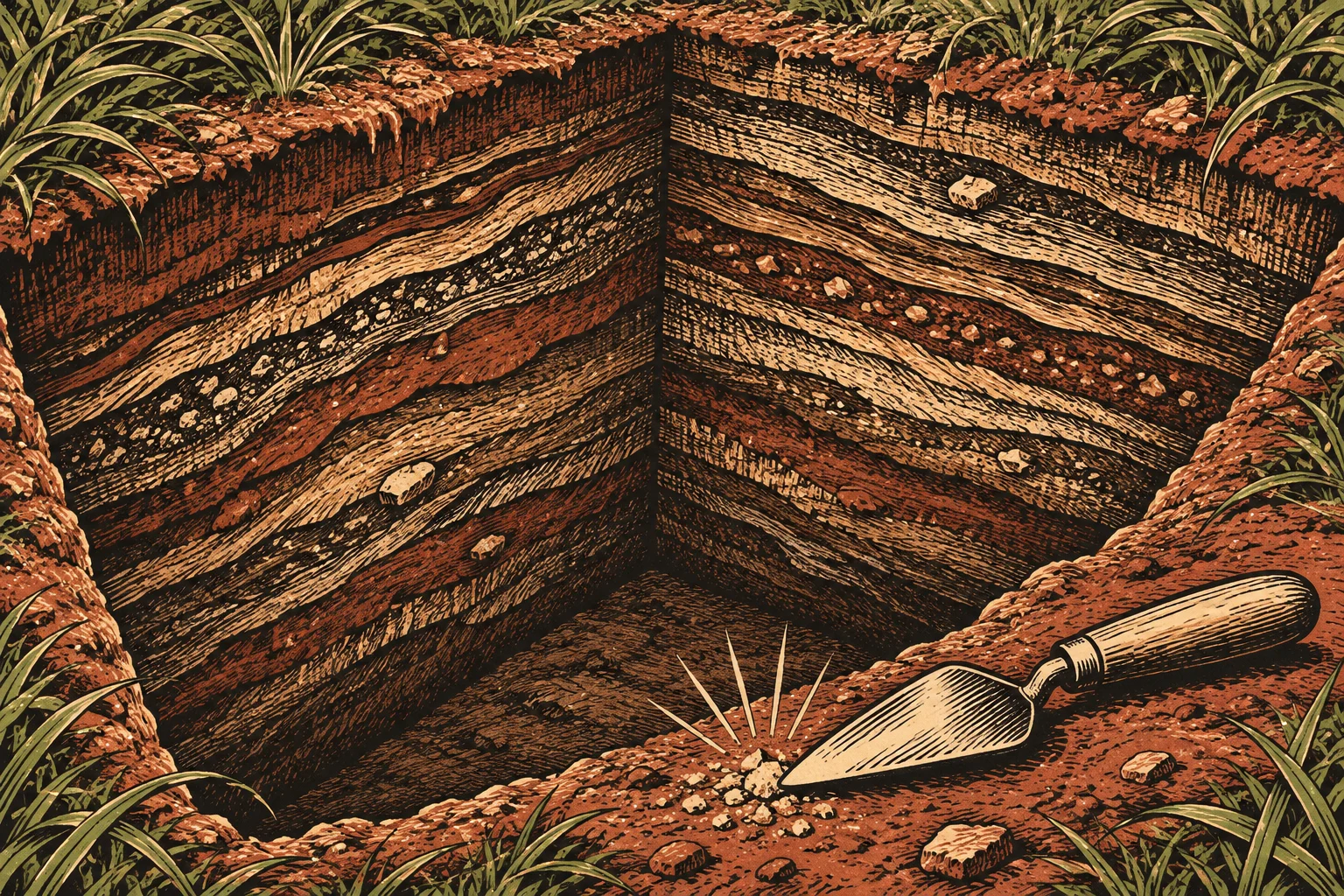
People added material, changed existing structures and resurfaced some areas at different times. Natural processes shaped the mounds too. In at least 10 mounds, caps of white rhyolite stone had been renewed again and again, which the researchers think may reflect a wish to keep the mounds looking a certain way.
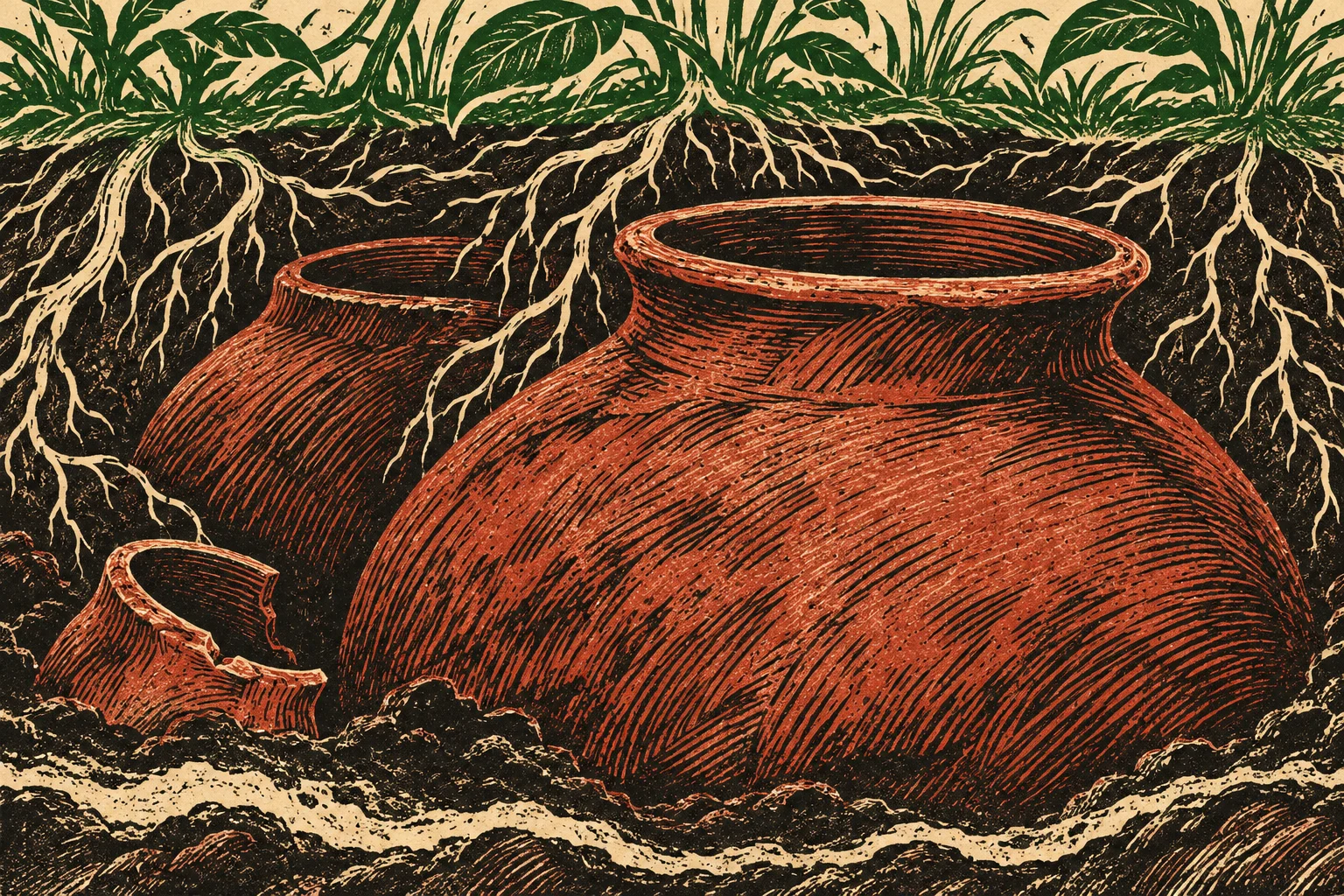
Different parts of the site may have had different uses. Under four of the 15 mounds excavated in the outer sections, the team found deposits of large ceramic vessels that may be tied to communal meals or left as offerings. The inner section held more pottery, along with stone tools, adobe-like building material and charcoal, which the researchers say may point to heavier human activity during construction and upkeep.
Layers of volcanic ash lay beneath nine mounds, suggesting that eruptions may have changed the environment before the site was used. The authors say more analysis is needed to connect the volcanic activity to the building. Dr. Auziņa’s postdoctoral work at Leiden, according to the university, looks at how monumentality relates to disruptive environmental events.
Dating is still loose. Only two radiocarbon dates relate to the use of the site, and they fall between 404 and 666. Comparisons of pottery suggest the site was in use from about 300 to 900. The team hasn’t been able to date the construction of individual mounds.
The count has shifted over time. Dr. Auziņa’s 2018 master’s thesis at Leiden, titled “Monumentality by Communities,” described 371 mounds over 28 hectares. Her co-author Alexander Geurds, of Leiden and the University of Oxford, earlier wrote about the site’s layout in a paper titled “Circular Reasoning in Mound Building?”.
The other authors are Ella Egberts and Axel Cerón González of Vrije Universiteit Brussel and Marlyn Martínez of the Museo Comunitario de Juigalpa “María Ramos” in Nicaragua. The work was funded through a VICI grant from the Dutch Research Council. Laboratory analyses still underway are meant to show how long each construction phase lasted and how often the mounds were renewed.